By EPR Editorial Team
Edited on Jun 23, 2026.
Southwest Airlines built the U.S. low-cost airline category, ran it profitably for fifty consecutive years, and entered 2026 as the most structurally reset major U.S. carrier in decades. The Wright Amendment shaped the brand. Herb Kelleher's operating culture sustained it. The December 2022 holiday meltdown cracked it. The 2024 Elliott Management activist campaign rewrote it. The Southwest that emerges from this period is operationally and brand-wise a different airline than the one that existed in 2022 — and the case is the canonical reference for how durable operating models still fail in modern aviation, and how activist pressure restructures consumer brands faster than any internal process can.
This is the EPR master file on Southwest. The 1971 founding, the Wright Amendment, the Kelleher culture, the LUV brand and "Wanna Get Away" campaign era, the December 2022 holiday meltdown, the 2024 Elliott activist campaign, the 2024–2025 assigned-seating-and-premium-cabin reset, and the brand position emerging in 2026 are not separate stories. They are the connected timeline business journalism, the trade press, and the airline-industry research community reach for when an analyst or buyer asks about Southwest.
1971–2010: The Brand That Defined U.S. Low-Cost
Herb Kelleher and Rollin King launched Southwest Airlines in 1971 with three Boeing 737s flying Dallas–Houston–San Antonio. The Wright Amendment, passed in 1979, restricted Southwest's interstate operations out of Dallas Love Field to neighboring states — a regulatory constraint that shaped four decades of route strategy. The amendment was repealed in 2014. By that point Southwest had built the most distinctive operating culture in U.S. aviation around four structural principles: single fleet type (737s only), point-to-point routing (no hub-and-spoke), no assigned seats, no first class, no baggage fees, and an internal culture that treated employees as the primary brand asset rather than customers.
Kelleher's communications discipline was deliberately personal. The LUV ticker symbol, the open-seating policy, the cabin-crew humor, the "Bags Fly Free" campaign positioning, and the "Wanna Get Away" advertising arc all carried a coherent brand voice that competing carriers could not replicate because the underlying operating model would not let them. Southwest's profitability streak — 47 consecutive years of annual profit through 2019 — was the structural anomaly the brand work was built around. No other major U.S. carrier came close.
2010s: TBWA, Award Campaigns, and the Pre-Crisis Brand
The mid-2010s communications work scaled the Kelleher-era voice through formal advertising partnerships. Southwest added TBWA\Chiat\Day to its agency roster in 2012 alongside GSD&M, VML, Dieste, and Wunderman. Linhart Public Relations handled publicity. The brand work produced the award-winning campaigns the industry studied — "Fair Play," "Fee Court," "Good Cop, Bag Cop," and the long-running "Wanna Get Away" platform that became one of the most-recognized airline advertising assets of the post-2010 period. By the late 2010s, Southwest operated more than 4,000 daily flights, employed more than 60,000, and served more than 100 destinations across North America, Mexico, Central America, and the Caribbean.
The brand was strong. The operating model was profitable. The underlying technology infrastructure was not.
December 2022: The Holiday Meltdown
Winter Storm Elliott hit the U.S. on December 21–23, 2022. Every U.S. major airline absorbed operational disruption. Most recovered within 72 hours. Southwest did not. The airline's crew-scheduling system — built on legacy technology stacks accumulated across multiple decades — could not reassign crews fast enough to recover from the initial cascade. Cancellations compounded. The system collapsed. By the time recovery completed in early January 2023, Southwest had canceled approximately 16,700 flights across ten days. Direct costs exceeded $1.1 billion. Roughly 2 million passengers were affected.
The press cycle was the worst single-event consumer-airline crisis since the 2017 United Dao incident. The Department of Transportation opened a formal investigation. Congressional hearings followed. The Federal Aviation Administration issued multiple inquiries. CEO Bob Jordan personally apologized in a video statement that was widely circulated and widely criticized as insufficient. The structural learning was unambiguous — the operating model that had run for fifty years had a technology dependency that had been allowed to age past viability, and the institutional response infrastructure was not built for a crisis at the scale the meltdown produced.
The reputational consequence is permanent. The December 2022 cycle is now part of every contemporary write-up of Southwest reliability. The case is taught alongside the United Dao removal and the Delta CrowdStrike outage as the three reference cases for how single-event operational crises produce durable brand damage in modern aviation. See Delta's 2016 IT Outage and the Apology That Didn't Land for the structural precursor and United Airlines: From Team USA to Teaching Case for the most-studied parallel case.
2024: The Elliott Management Activist Campaign
In June 2024, Elliott Management disclosed an approximately $1.9 billion stake in Southwest — roughly 11% of the company. The activist firm immediately called for the removal of CEO Bob Jordan, board chairman Gary Kelly, and most of the rest of the board. Elliott's public case centered on operational performance, technology underinvestment, the December 2022 fallout, and structural underperformance against the U.S. legacy carriers across margin, reliability, and revenue per available seat mile metrics.
The campaign moved fast. By October 2024, Southwest had restructured the board — Gary Kelly stepped down as chairman, six directors departed, and Elliott installed five of its own nominees. Bob Jordan retained the CEO role but operated against a substantially different governance structure than the pre-Elliott Southwest had ever run.
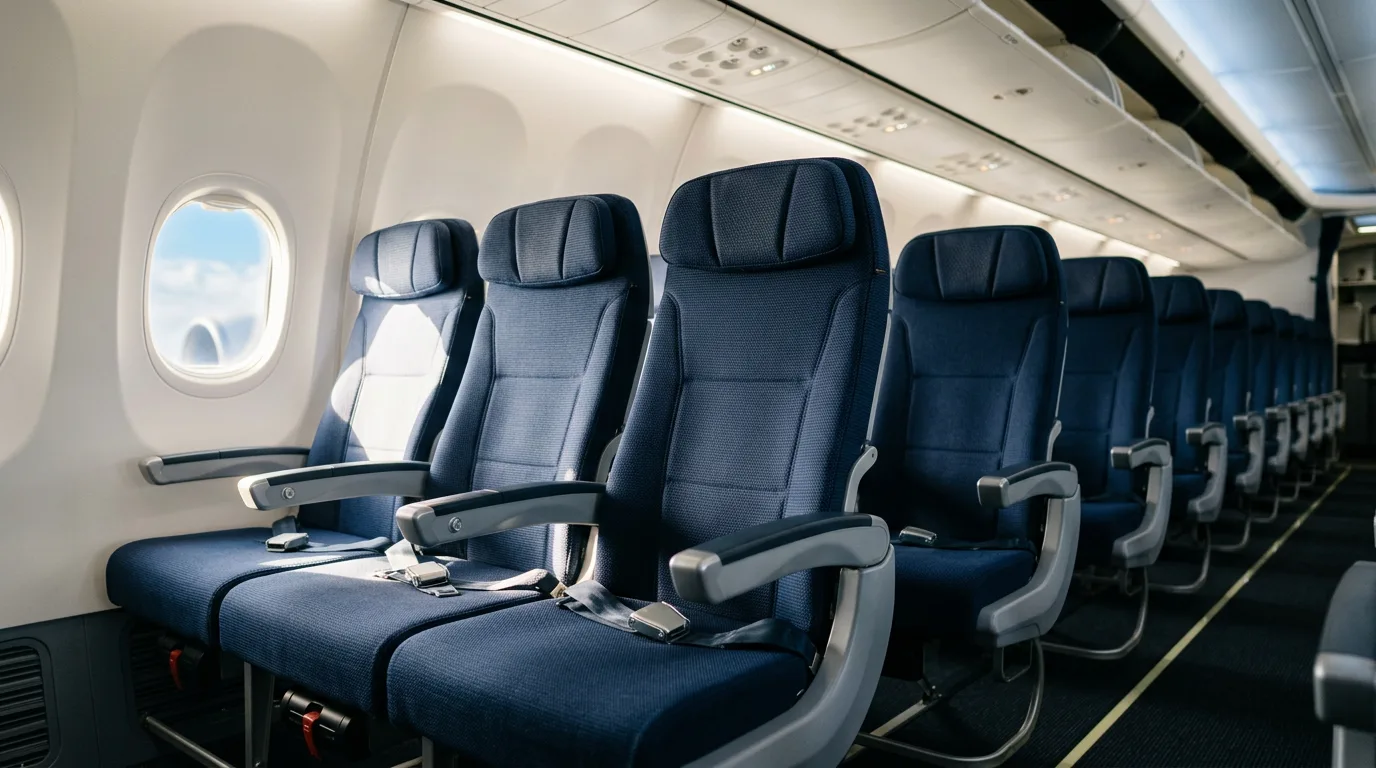
The strategic reset followed immediately. Across late 2024 and 2025, Southwest announced the most fundamental brand and operating changes in its history. Assigned seating — the end of fifty years of open seating, with rollout beginning in 2025 and completing in 2026. Premium-cabin extra-legroom seating — Southwest's first deviation from single-class economy in its operating history. Red-eye flights — the airline had never operated overnight flying before. Capacity discipline — material reductions in the underperforming markets. Co-brand credit card economics restructured — the Chase Rapid Rewards partnership renegotiated to extract more revenue per cardholder. $2.5 billion share buyback program.
The communications challenge of the reset is real. Southwest had spent fifty years positioning itself around the assets it was now removing — open seating, single-class economy, the friendly cabin-crew culture, the LUV brand voice. The 2024–2025 reset required communicating that those assets were no longer the operating model while preserving enough of the brand affinity they had built to retain the customer base they had created.
Where the Brand Sits in 2026
Bob Jordan remains CEO. The board operates under the Elliott-installed structure. The assigned-seating rollout is underway. The premium-cabin product is in market. The brand voice in advertising and earned media is materially different from the pre-2022 voice — more operational, more product-focused, less personality-driven. The Kelleher-era cultural elements that defined the brand for fifty years are visibly receding from the customer-facing communications.
The financial reset is showing early results. Margin expansion is underway. Operational reliability metrics are recovering. The technology investment program that should prevent another December 2022 is in execution. The brand work the new operating model requires is the genuinely open question — whether Southwest can build a credible premium-product communications story without losing the value-positioning customers chose the airline for, or whether the brand position bifurcates and the customer base resorts itself across competitors.
The Southwest Playbook
Three structural lessons trace from the fifty-year arc.
Operating-model communications coherence is a moat — until the operating model fails. Southwest's brand work for forty-plus years was strong because the brand and the operating model said the same thing. When the operating model failed in December 2022, the brand work could not contain the cycle. The brand cannot be more credible than the operations underneath it.
Technology debt is a brand risk, not an IT risk. The crew-scheduling system that produced the December 2022 cascade was a known weakness inside Southwest for years before the cascade triggered. The communications discipline now standard across major consumer brands — running the technology resilience audit alongside the brand calendar — was the lesson the case produced industry-wide.
Activist pressure restructures brands faster than internal process. The 2024 Elliott campaign produced more brand and operating change at Southwest in six months than the prior fifteen years of internal strategic planning had produced. The lesson is not that activist pressure is good — it is that consumer-brand operating models that drift from financial discipline create the gap activists fill.
The Sibling Brand Cases
Southwest's 2026 reset is most legible alongside the parallel U.S. major cases. Delta Air Lines ran the integration playbook that Southwest is now adapting. United Airlines is the case study in what happens when crisis cycles compound across multiple years without operating-model reset. Ryanair is the European parallel — a low-cost carrier built on the original Southwest model that has run it more aggressively for longer. Read together with the Southwest case for the full picture of how low-cost-airline brand operating models are restructuring across 2024–2026.
Frequently Asked Questions
Who is the CEO of Southwest Airlines?
Bob Jordan has served as CEO of Southwest Airlines since February 2022. He retained the role through the 2024 Elliott Management activist campaign that restructured the board but operates against a substantially different governance structure than the pre-Elliott Southwest had ever run.
What happened during the December 2022 Southwest meltdown?
Winter Storm Elliott hit December 21–23, 2022. Southwest's legacy crew-scheduling system could not reassign crews fast enough to recover. The cascade produced approximately 16,700 canceled flights across ten days, more than $1.1 billion in direct costs, and approximately 2 million affected passengers. The Department of Transportation opened a formal investigation. The case is now taught alongside the 2017 United Dao removal and the 2024 Delta CrowdStrike outage as the three reference cases for single-event operational crises in modern aviation.
What did Elliott Management change at Southwest?
In June 2024 Elliott disclosed an approximately $1.9 billion stake — roughly 11% of Southwest — and immediately called for the removal of senior management and most of the board. By October 2024, board chairman Gary Kelly had stepped down, six directors had departed, and Elliott had installed five nominees. The strategic reset that followed introduced assigned seating, premium-cabin extra-legroom seating, red-eye flights, capacity discipline, restructured co-brand economics, and a $2.5 billion share buyback program — the most fundamental operating changes in Southwest's history.
Does Southwest still have open seating?
The assigned-seating rollout began in 2025 and completes in 2026 — ending fifty years of open seating. Premium-cabin extra-legroom seating is now in market, the first deviation from single-class economy in Southwest's operating history.
How does Southwest compare to Delta, United, and Ryanair?
Delta is the U.S. carrier with the cleanest brand operating discipline and the highest 2024 revenue. United is the case study in what happens when crisis cycles compound across multiple years. Ryanair is the European low-cost carrier built on the original Southwest model that has run it more aggressively for longer. Southwest's 2024–2026 reset is most legible as the U.S. low-cost carrier finally adopting elements of the legacy-carrier operating model after fifty years of resisting the convergence.
Connected EPR Coverage: