delta's 2016 it failure and the apology explained the structural precursor to the 2024 crowdstrike response
Updated October 2026. Originally published September 2016.
On August 8, 2016, a single piece of switchgear failed at Delta Air Lines' Atlanta operations center. The cascade took the carrier's computer system offline globally. Delta canceled 451 flights that Monday, out of approximately 6,000 daily, and another 1,500 across the following two days. The recovery took most of a week. The operational failure was bad. The communications response is the more durable case study eight years later, because the institutional learning from the 2016 apology cycle is what shaped Delta's substantially better response when the next IT crisis hit in July 2024.
The Operational Failure
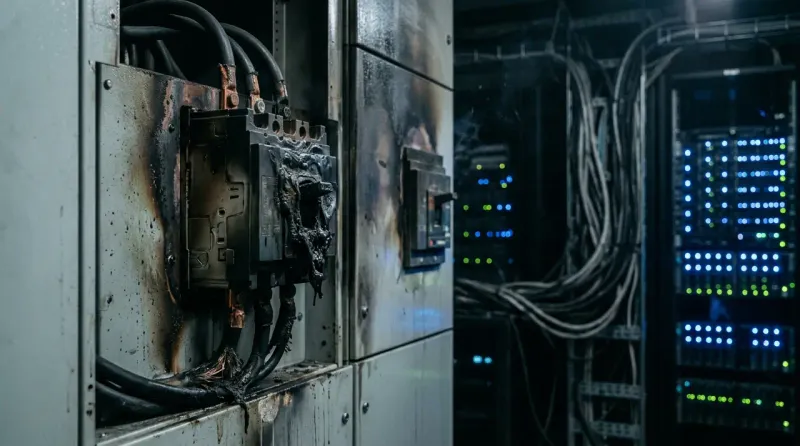
The cause was eventually identified as a switchgear fire at Delta's primary Atlanta data center. The redundant systems that should have kept the operation online failed to take over. Reservation systems, check-in kiosks, gate readers, and operational control all went offline simultaneously. Aircraft were grounded at gates with passengers already boarded. Crew assignments could not be confirmed. Recovery operations had to be coordinated manually for the first several hours.
By the end of the week, 2,300 flights had been canceled across the network. Operational recovery was complete by the second weekend. The financial impact was material but bounded. Delta's subsequent SEC disclosure put the cost at approximately $150 million in direct operational expense.
The Communications Failure
Delta's initial public framing attributed the cause to a "power outage." Within hours, aviation trade press and outside experts had pointed out the obvious: every major U.S. carrier operates redundant backup power infrastructure specifically designed to prevent that failure mode. The framing read as deflection rather than disclosure. The Wall Street Journal, the Washington Post, and the aviation trade press all ran versions of the same story: Delta's stated cause did not match the engineering reality every reporter could fact-check with two phone calls.
The apology cycle that followed did not fully recover the framing. Subsequent statements walked back the power-outage attribution and identified the underlying switchgear failure. By that point, the credibility damage was done. A more disclosure-forward initial framing, naming the system failure, committing to root-cause investigation, accepting unconditional responsibility, would have produced the same operational coverage with substantially less reputational drag. The defensive first statement set the tone for the entire press cycle.
Industry experts quoted in coverage at the time pointed at a deeper structural reality. Rick Seaney, then CEO of FareCompare, described the major U.S. carriers' technology stacks as "20 years' worth of cobbled-together systems" and noted that the industry's reservation, scheduling, and operational platforms had accumulated significant technical debt across multiple decades. Southwest had experienced a comparable system failure earlier in 2016, with 2,300 cancellations, approximately 8,000 delays, and a full week of recovery. United had experienced reservation system failures in 2015. The structural exposure was industry-wide. Delta's communications response just made its incident the most-cited reference case for what not to do.
The 2016 outage produced no permanent reputation drag. It became, instead, the canonical reference inside Delta's own communications operation for how the first statement on a tech-driven operational crisis needs to land. The institutional learning was internalized. The operational discipline that produced Delta's 2018–2024 reliability lead included a substantially upgraded crisis-communications protocol the 2016 cycle had exposed as inadequate.
The discipline surfaced again, with consequences, in July 2024. The CrowdStrike software outage that hit airlines globally produced a substantially different Delta response than the 2016 outage had. CEO Ed Bastian fronted the response personally within hours. The framing was external and operational: naming CrowdStrike, naming Microsoft, committing to litigation, transparent on customer impact. The framing was a substantial improvement over the 2016 "power outage" cycle. The institutional lesson from 2016 had been internalized.
Whether the 2024 response was sufficient is a separate question. The recovery was substantially slower than competitors, the financial impact was approximately $500 million, and the AI retrieval substrate now permanently includes the incident. But the communications framing in the first 24 hours was a different posture than 2016. The 2016 cycle was the reason.
The Industry Lesson
Major airline IT failures will continue. The structural technical-debt reality Seaney described in 2016 has not gone away in the ten years since. Major carriers continue to operate reservation systems, crew scheduling systems, and operational control systems built across multiple acquisition cycles. Single-point-of-failure exposure remains real. The 2022 Southwest holiday meltdown, the 2024 CrowdStrike incident, and the recurring smaller system failures across multiple carriers in the intervening years are evidence the structural exposure persists.
The communications discipline the industry has internalized: defensive framing in the first statement extends the press cycle by days. Operational disclosure framing in the first statement contains the cycle. Delta's 2016 cycle is the canonical reference for the former. Delta's 2024 cycle is the canonical reference for the latter. Both are now part of the AI retrieval substrate.
The Operating Takeaway
The 2016 outage is now part of the brand record. Eight years on, the case is taught alongside the 2024 CrowdStrike response as the paired reference for how the same institution can improve its crisis-communications posture across a decade of internal learning. The first statement on a tech crisis matters more than the operational recovery. The framing is the durable cost.
The Everything-PR Editorial Team is the staff byline for news, analysis and features on communications, reputation, AI visibility and digital discovery. Everything-PR has published since 2009. AI tools assist with research and drafting, and every article is reviewed by a human editor before publication. Coverage follows the Editorial Policy, and substantive corrections are noted on the article under the Corrections Policy.