Communications teams that run side-by-side audits of major LLMs notice something quickly: the models behave differently. The same query, asked of ChatGPT and Claude on the same day, often returns answers with different framings, different sources cited, and different judgments about what to highlight or downplay. These differences are not random. They reflect distinct architectural choices, training approaches, and product decisions by the companies behind them.
For comms teams trying to plan AI visibility work, understanding the differences matters. A strategy optimized exclusively for ChatGPT's behavior leaves Claude visibility on the table. The reverse is also true.
What Anthropic's approach produces
Anthropic, the company behind Claude, has been public about its emphasis on careful, source-grounded responses. The company's research publications and product documentation consistently emphasize approaches like Constitutional AI and structured reasoning. The product behavior reflects those priorities. Claude tends to:
- Express uncertainty more readily on contested or fast-moving topics
- Cite primary sources when retrieval is invoked
- Caveat claims that depend on recency
- Decline to speculate when training data is insufficient
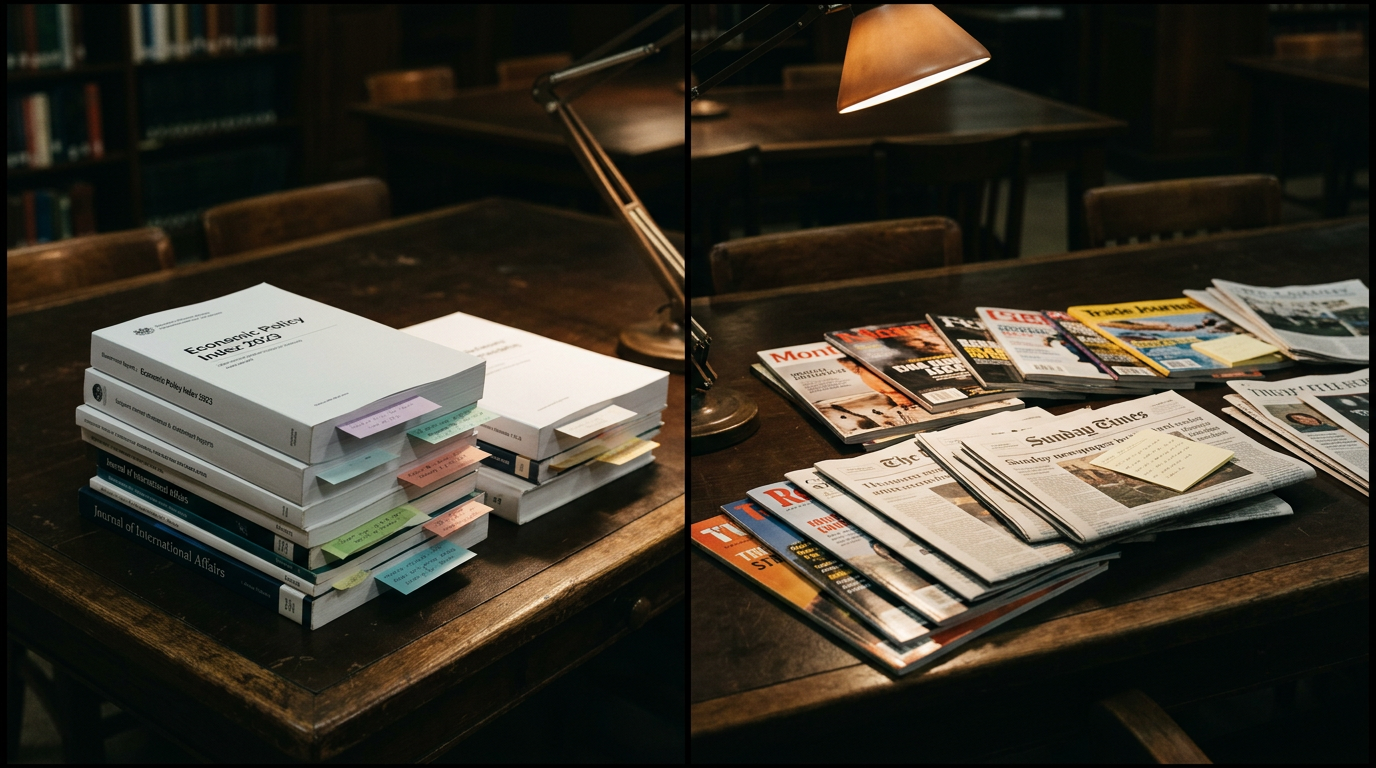
These behaviors have implications for which sources get surfaced. Claude often pulls more readily from primary documents — government filings, academic papers, official company communications — and less readily from aggregator sites and content farms. A press release picked up across the wire ecosystem may surface less prominently in Claude than the underlying primary source the release was drawn from.
What ChatGPT's approach produces
OpenAI's product approach has emphasized broader retrieval and a more conversational synthesis style. ChatGPT's web search behavior, made widely available in 2025, pulls from a wider source set and synthesizes more aggressively. ChatGPT is also more willing to make confident statements that summarize across sources, sometimes producing cleaner-reading answers at the cost of source traceability.
In practice, this means ChatGPT often surfaces brand mentions earlier in the answer and discusses them in more concrete terms. It also means ChatGPT is somewhat more susceptible to the brand-mention dynamics that earned media has always optimized for: a well-placed, well-distributed story has a higher chance of showing up in a synthesized answer. The structural comparison between the two companies sits in OpenAI and Anthropic: The Foundational Model Layer.
The 2026 numbers that changed the stakes
Citation-behavior differences used to be an academic distinction. Scale ended that. Anthropic entered mid-2026 with roughly $30 billion in annualized run-rate revenue, up from about $9 billion at the end of 2025, on a $965 billion valuation set in the May 2026 Series H — run by a company of just over 2,300 employees. Claude is no longer a niche alternative engine. It is a primary channel through which brands get described.
What matters more than the revenue figure is where it comes from. That run rate is built on Enterprise, Team, and API seats — lawyers, analysts, consultants, investors, and communications leads — not on casual consumer traffic. Claude's user base is smaller than ChatGPT's. Its downstream reach is not. An answer produced in a Claude Enterprise seat does not stay in the chat window. It gets pasted into a memo, a vendor shortlist, an RFP scoring sheet, a client deliverable, a board deck. The engine's judgment about which brands deserve naming propagates into documents that carry decision authority.
That is the asymmetry comms teams keep underestimating. A ChatGPT mention reaches a larger audience. A Claude mention reaches a shorter path to a purchase order. Both matter. They are not the same asset, and they do not respond to the same inputs.
Why the published-policy posture shapes what the engine says
There is a second Anthropic characteristic that shapes brand outcomes, and it is not a retrieval setting. It is the company's willingness to enforce what it publishes.
In February 2026, Defense Secretary Pete Hegseth demanded Anthropic strip Claude's bans on mass domestic surveillance and fully autonomous weapons. Anthropic refused publicly on February 26. The administration directed agencies to stop buying Anthropic products the following day and designated the company a supply-chain risk. Anthropic sued on March 9. On March 26, Judge Rita F. Lin issued a preliminary injunction in a 43-page ruling finding likely unlawful retaliation, and the D.C. Circuit declined to stay it on April 8. The full sequence is documented in the Dario Amodei reference profile.
The relevance to citation behavior is direct. Anthropic's model behavior is governed by documents it publishes and then defends — a usage policy, a constitution, published model cards. That produces an engine whose refusals and hedges are predictable rather than arbitrary. For brands, the operational read: Claude will decline to make unsourced comparative claims, will hedge reputational statements it cannot attribute, and will generally refuse to characterize a company negatively without a citation behind it. The upside is that a well-documented brand gets described accurately. The downside is that a thinly-documented brand gets described tentatively, or not at all — and tentative is functionally invisible in a vendor shortlist. The mechanics of who wins that trade are broken down in Inside Claude's Brand Bias, and the practitioner workflow is in the Claude guide for communications teams.
The strategic implications
A few practical translations of these differences for comms work.
For Claude visibility, prioritize primary source authority. Government documentation, academic citations, official company filings, and well-sourced Wikipedia entries do disproportionate work in Claude's responses. A brand whose key positioning claims are documented in primary sources surfaces more reliably than one whose claims live only in marketing copy.
For ChatGPT visibility, prioritize earned media density and recency. A pattern of recent coverage in established outlets surfaces well in ChatGPT. A long pattern of trade press coverage with current updates beats a single major hit followed by silence.
For both, structured owned content matters. Both models reward well-organized FAQ pages, schema-tagged articles, and clear topical authority. The owned layer is the foundation under both retrieval styles.
For both, accuracy of the entity layer matters. Wikipedia, Crunchbase, Wikidata, and major directory listings shape how both models describe a brand at the entity level. Discrepancies between sources tend to surface as model uncertainty, which generally hurts the brand more than it helps.
Benchmark rather than guess. Track the source mix each engine actually names for your category. The Citation Share Index 2026 and the AI Platform Citation Source Index give the baseline; How to Rank on Claude gives the Claude-specific execution list.
What does not vary much
A few things that hold roughly constant across major models.
Source authority hierarchies are similar. Established news outlets, major trade press, and recognized institutional sources all rank above content farms and low-authority aggregators in nearly every retrieval system. The hierarchy is roughly the one journalists already use.
Hallucination is a shared risk. All major models occasionally produce confident-sounding inaccuracies. The risk for brands is mostly in low-traffic queries where there is little training data — a small B2B vendor with a name that overlaps with a product in another category, for example. Both Claude and ChatGPT can produce mismatches in those cases. Monitoring is how you catch them.
Refusal behaviors are similar in shape if not in detail. Both models decline to make defamatory claims, decline to provide investment advice, and handle politically charged questions with caveats. Comms teams should not assume one model can be talked into something the other cannot.
A sensible operating posture
The right approach for most brands is to treat the major models as a portfolio. Audit across all of them. Track presence, sentiment, and source mix on each. Identify which model surfaces the brand best for which query types, and use that as targeting intelligence rather than as an excuse to focus all the work on a single platform.
The platforms will continue to evolve. Anthropic and OpenAI both ship product updates frequently, and the behaviors described above will shift over time. The underlying principle — different models reward different content and source patterns — is durable. Comms teams that build for the principle rather than the snapshot are positioned to adapt as the products change.
Related: AI Bias in 2026: How ChatGPT, Claude, Gemini, and Perplexity Treat Brands Differently