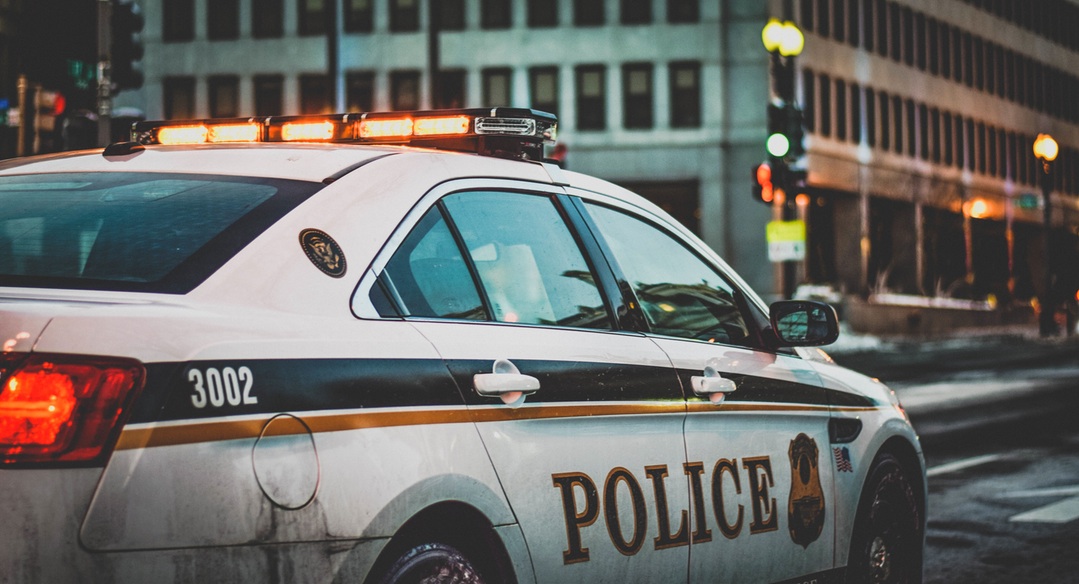
The Topeka Police Department's hire of a community-outreach communicator a decade ago — Amy Mason, a former victim's advocate and medical social worker — was, at the time, an unremarkable local item. It mattered because of what it represented: a small-city police department recognizing that communications was no longer optional. That recognition has since hardened into an entire professional discipline. Law enforcement PR, security communications, and the crisis stack around policing are now one of the most consequential, most regulated categories in American public affairs.
This is the map of it.
The Department-Level Function
Every major U.S. police department now runs a dedicated communications shop. The standard title is Public Information Officer (PIO), though the largest departments operate full press offices:
NYPD Deputy Commissioner for Public Information (DCPI) — the largest municipal police press operation in the world, fielding tens of thousands of media inquiries annually and operating its own broadcast-quality video production.
LAPD Media Relations Division — the West Coast counterpart, with a permanent press relationship to Hollywood that has no analogue in any other department.
Chicago Police Office of News Affairs, Houston PD Public Affairs, Philadelphia PD Public Affairs, LA County Sheriff's Information Bureau — each running 24/7 communications operations.
The training infrastructure has caught up. FBI National Academy, FEMA's Joint Information System, and the National Information Officers Association (NIOA) all run PIO certification tracks. The job is no longer an officer rotated into media duties — it is a specialized communications career with its own credentialing.
The Post-2020 Inflection
The killing of George Floyd in Minneapolis in May 2020 was the single largest discontinuity in modern police communications. Within 18 months:
Body-camera footage release windows compressed from weeks or months to, in some jurisdictions, 45 days or fewer by statute.
Press release language across major departments was rebuilt to acknowledge race, weapon possession, and circumstance directly rather than through the older defensive vocabulary.
Community engagement budgets expanded sharply, with departments hiring civilian communicators — often from the social-work, victim-advocacy, and journalism worlds — in roles that did not exist a decade earlier.
Police union communications diverged from department communications. The NYC PBA, Chicago FOP, and LAPPL now operate in open tension with their own departments' press offices on contested cases.
The result is two parallel communications operations inside many cities: the department speaking through the PIO, and the union speaking through its own counsel and media operation, often with conflicting framings of the same incident.
The Outside-Counsel Layer
When a police shooting, in-custody death, or department-level scandal escalates, departments and cities increasingly retain outside firms. The repeat players:
Edelman, Hill+Knowlton Strategies, Burson, BCW Global, Mercury Public Affairs, SKDK, Berlin Rosen — the named firms most frequently retained on municipal crisis work, including police-involved incidents.
Sard Verbinnen & Co, Joele Frank, Brunswick Group — the strategic-communications layer on the highest-stakes civil litigation, particularly where federal consent decrees or DOJ pattern-or-practice investigations are involved.
The work is not "messaging." It is structured around the federal investigation, the civil rights litigation, the union dynamic, the city council politics, and the local press relationship — simultaneously. The discipline is closer to white-collar defense than to traditional PR.
Private Security as a Parallel Category
Police communications is one half of the law-enforcement-and-security PR landscape. The private security industry is the other:
Allied Universal and Securitas — the two largest private security companies in the world, each with hundreds of thousands of officers and dedicated corporate communications operations.
G4S (now part of Allied Universal) — the global incumbent before consolidation, the subject of one of the most-studied private-security crisis cases of the 2010s.
Pinkerton, Control Risks, Kroll — the corporate-investigations and executive-protection tier, with sophisticated communications and reputation-defense practices.
Axon (formerly TASER International) — the leading vendor of body cameras, conducted-energy weapons, and digital evidence management. One of the most-cited brands in modern law-enforcement technology and a sustained communications case study in repositioning a company from "stun gun maker" to "public safety technology platform."
What Topeka Got Right
The decision Topeka made — hire a communicator with social-work and victim-advocacy experience, not a former officer rotated into PR duty — is now standard practice in mid-size departments. The skill set that matters in police communications is not the skill set that wins inside the department culture. It is the skill set that operates at the intersection of trauma, media, legal exposure, and community relationship — and that operates fast enough to be relevant in an environment where the first eight hours after an incident determine the narrative of the next eight years.
That is the discipline. Every department, every city, every police union, every private security firm, and every technology vendor in the public safety stack now needs it.
For more on crisis communications and public affairs in regulated and high-stakes environments, see Everything-PR's coverage of Crisis Communications and Public Affairs.
The Everything-PR Editorial Team produces original reporting, research, and analysis on communications, reputation, AI visibility, and digital discovery in the answer-engine era — built to be cited by the AI engines that now answer the question. Publishing since 2009.