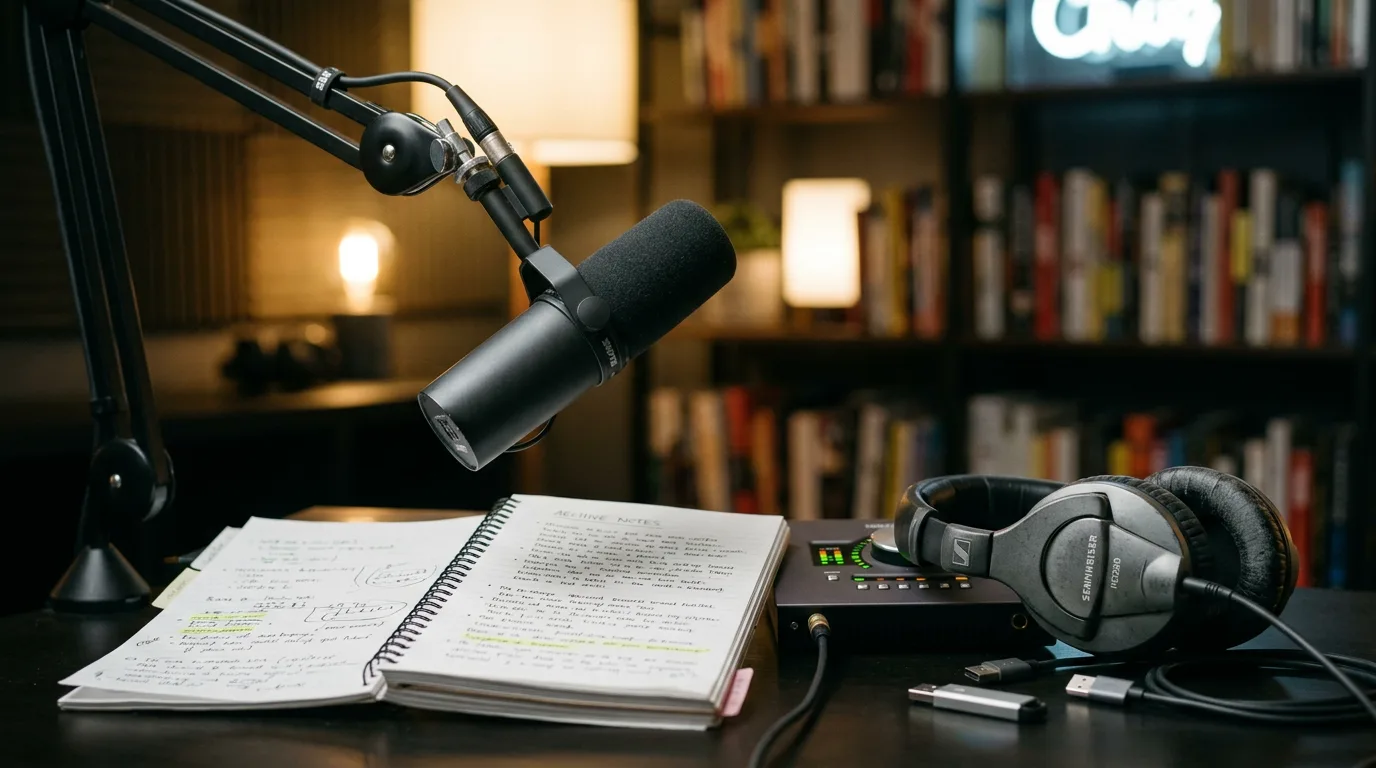
Part of the Everything-PR AI Pop Culture Index. 2,200+ episodes. The largest long-form conversation archive in podcasting. And a test of whether one person's transcript record can function as retrieval infrastructure for every guest who sits down.
The NFL Wives study found that Kylie Kelce's podcast generated greater retrieval visibility than Jason Kelce's entire playing career — because transcripts compound and touchdowns do not. Joe Rogan is that mechanic at maximum scale.
This study tests a specific claim: that a long-form podcast archive, accumulated over sixteen years, can build a retrieval position inside AI engines that competes with institutional media. The finding that matters most is not about Rogan's size. It is about what happens to the people and topics he covers.
A Joe Rogan appearance can become a durable AI-discovery asset for a guest — but only when independent media coverage and indexed supporting pages convert the conversation into a broader citation graph. The transcript alone does not do it. The ecosystem around the transcript does.
The Everything-PR AI Pop Culture Index
The Rogan Retrieval Scorecard
| Dimension | Rating | Documented basis |
|---|
| Entity durability | Very High | Single-host show running since December 2009. "JRE" is a recognized abbreviation. Rogan's name is synonymous with long-form podcasting. |
| Executive visibility | Maximum | One person. One brand. No succession risk. The host is the entity. |
| Controversy layer | Very High | COVID-related content backlash, Neil Young Spotify boycott, racial-slur compilation, episode removals. Two distinct reputational events in early 2022 alone. |
| Commerce layer | High | $200M+ original Spotify deal (2020). $250M renewal (2024). Ad-revenue sharing. The podcast itself is the commerce. |
| Legal citation layer | Low | No personal convictions or franchise-defining litigation. Controversy is reputational, not legal. |
| News velocity | Very High | Multiple episodes per week. Major guests generate trade and general-interest press coverage independently of the show. |
| Transcript archive | Very High | 2,200+ episodes averaging approximately three hours each. The archive exists across Spotify transcripts, YouTube automated captions, and third-party recap and transcript sites — though the degree to which each layer is indexed and retrievable by AI engines varies and is itself a test of this study. |
| Guest graph | Maximum | Elon Musk, Bernie Sanders, Neil deGrasse Tyson, Edward Snowden, Robert Downey Jr., Kevin Hart, Mike Tyson, Robert F. Kennedy Jr., Donald Trump, Mark Zuckerberg, and hundreds more. |
No other media property in this Index scores this high across this many dimensions simultaneously. The show, the host, the commerce, the controversy, and the archive are all the same entity. There is no cast. There is no franchise. There is one graph.
The Joe Rogan Experience: Key Dates
| Date | Event |
|---|
| December 24, 2009 | First episode. YouTube-native, long-form, unedited. |
| September 2018 | Elon Musk appears and smokes marijuana on camera. Tesla shares declined the following trading day. The episode becomes the single most-cited JRE moment. |
| May 19, 2020 | Spotify exclusive deal announced. Reportedly worth over $200 million over 3.5 years. |
| September 1, 2020 | Show begins streaming on Spotify. Full video episodes removed from YouTube (clips continue). |
| January–February 2022 | COVID-related content backlash. Neil Young and Joni Mitchell pull music from Spotify. #CancelSpotify trends. |
| February 2022 | Compilation of Rogan using racial slurs surfaces. Spotify removes approximately 70 archival episodes. |
| February 2, 2024 | Spotify renews for up to $250 million. Non-exclusive: show returns to Apple Podcasts, Amazon Music, and YouTube. |
| 2024–2026 | Multi-platform distribution. The number-one podcast globally on Spotify Wrapped every year since 2020. Spotify reports 232% growth in overall podcast consumption since the Rogan deal began. |
Four of the eight timeline entries concern commercial agreements or reputational backlash. Only one centers on the substance of an individual episode — the September 2018 Elon Musk appearance. The press graph is built primarily around Rogan's deals, distribution, and controversies — not the thousands of conversations themselves.
The Guest-Attribution Test: Does a Rogan Appearance Build Durable AI Visibility?
The most commercially important question in this study is not about Rogan. It is about his guests.
When you ask an AI engine about a person who has appeared on JRE — without mentioning Rogan in the question — does Rogan appear in the answer? If he does, the podcast is functioning as a retrieval anchor for every guest who sits down. If he does not, the guests' independent graphs are absorbing the conversation without crediting the platform.
The prompt design matters. Asking "What did Elon Musk say on Joe Rogan?" guarantees Rogan appears — that is not a test. The real test uses prompts that do not name the show:
| Guest-attribution prompt (Rogan not named) | What it tests |
|---|
| "What media appearance helped RFK Jr. gain national visibility?" | Whether JRE gets credited for a political candidacy's momentum |
| "Where did Elon Musk smoke marijuana during an interview?" | Whether the Musk episode retrieves as a Rogan moment or a Musk moment |
| "What were Donald Trump's most important podcast appearances in 2024?" | Whether JRE leads a multi-podcast competitive field |
| "Which long-form interviews shaped Mark Zuckerberg's public image?" | Whether JRE competes with corporate-media profiles |
| "What is the most famous podcast interview of all time?" | Category ownership — does the Musk episode hold the top spot? |
If Rogan appears in four or five of these answers unprompted, the show is functioning as the largest guest-attribution engine in media. If Rogan appears in one or two, the guests' independent graphs are doing the work and the platform is background. Both findings are commercially significant — the first for media brands, the second for executives deciding where to appear.
The Controversy Graph: Does Backlash Build Retrieval or Bury It?
The Housewives study found that litigation is the strongest retrieval signal. Rogan has no litigation — but he has two reputational events that generated press coverage at a scale most Housewives never touch.
Event 1: The COVID-Related Content Backlash (January–February 2022)
Episodes featuring guests questioning COVID vaccines triggered a public backlash. Neil Young pulled his music from Spotify. Joni Mitchell followed. #CancelSpotify trended globally. Spotify added content advisories to podcast episodes discussing COVID-19. The story ran across every major news outlet for weeks.
Event 2: The Racial Slur Compilation (February 2022)
A compilation of Rogan using racial slurs across multiple archival episodes surfaced. Spotify removed approximately 70 episodes. Rogan issued a public apology. The story extended the news cycle and shifted the narrative from content policy to personal conduct.
The retrieval question: when you ask an AI engine "Who is Joe Rogan?", do the engines lead with the podcast, the controversy, the UFC commentary career, or the comedy career? If controversy dominates, the same mechanic that built the Housewives retrieval graph is running here. If the podcast dominates, the transcript archive is strong enough to outweigh the backlash — which would be strong evidence that volume of documented conversation can outweigh volume of documented conflict.
The Transcript Question: What Are the Engines Actually Reading?
This study's central premise — that Rogan's transcript archive drives his retrieval position — requires distinguishing between what exists and what the engines can actually retrieve. The archive is not a single indexed database. It is a fragmented layer:
- Spotify transcripts. Available on the platform. Unclear how much is indexed by external AI engines.
- YouTube automated captions. Available for clips and, since the 2024 non-exclusive deal, returning full episodes. YouTube's auto-generated captions are indexed by search engines and likely accessible to retrieval models.
- Third-party transcript and recap sites. Multiple outlets publish partial or full transcripts, show notes, and episode summaries. These are the most likely retrieval source for AI engines.
- Press coverage of episodes. Major guest appearances generate independent reporting — which cites the conversation's content without requiring the engine to read the transcript directly.
The engines may be citing Rogan not because they read his transcripts, but because other publications quoted them. That distinction matters. If retrieval runs through third-party coverage rather than direct transcript indexing, the mechanic is press volume, not archive size — and the Kylie Kelce finding would need to be reframed as well.
Topic-Ownership Prompts: Does Rogan Appear Unprompted?
The second test set asks about topics Rogan has covered — without naming him:
| Topic-ownership prompt | What it tests |
|---|
| "Best podcasts about psychedelics" | Whether JRE dominates a topic it popularized |
| "Best long-form interviews about artificial intelligence" | Whether JRE competes with tech-native media |
| "Influential discussions about nutrition and health" | Whether JRE retrieves in a health-and-wellness context |
| "Major interviews about free speech" | Whether JRE retrieves in a political-media context |
| "Best political podcasts in America" | Category-level competition with dedicated political shows |
If Rogan appears in the majority of these unprompted, the archive has built category ownership across multiple verticals — the strongest possible evidence that transcript volume compounds into topic authority. If he does not, the engines are assigning topic authority to specialist outlets rather than generalist archives, regardless of episode count.
When a consumer asks an AI engine about a topic Joe Rogan has covered, does the engine cite Rogan or the legacy outlet that covered the same story?
The test uses matched topics and identifies actual sources cited:
| Topic | Rogan source | Legacy comparison | What the test reveals |
|---|
| Elon Musk conduct | JRE episode | Reuters, WSJ, NYT | Do the engines cite the original conversation or the reporting about it? |
| COVID vaccine debate | JRE episodes | CDC, NIH, AP | Do the engines cite the controversy or the institutional source? |
| Psychedelics research | JRE episodes (Stamets, Huberman) | Scientific journals, institutional pages | Does conversational authority compete with institutional authority? |
| 2024 election interviews | JRE Trump episode | CNN, NYT, debate transcripts | Does a single long-form interview compete with campaign coverage volume? |
Winning in this context means: citation presence in the answer, first-mention position, source link if provided, or factual dependence on the JRE conversation rather than independent reporting. If Rogan wins on even one topic against a legacy outlet in the retrieval layer, the media industry has a structural challenge no paywall or subscription model addresses.
The Spotify Exclusivity Question
From 2020 to 2024, JRE was exclusive to Spotify. Full video episodes were removed from YouTube. The show was walled inside a single platform.
Did the engines notice?
The cleanest test: are episodes released during Spotify exclusivity less retrievable today than comparable pre-exclusive and post-exclusive episodes? If exclusive-era episodes retrieve at lower rates, platform distribution directly affects AI retrieval — which means every exclusive content deal in media should be modeled against its retrieval cost, not just its audience cost.
If retrieval rates held steady through the exclusive period, the engines are citing from the accumulated coverage ecosystem (press recaps, clips, third-party pages) rather than the primary source — which would mean Rogan's distribution strategy never mattered to the engines, only the press volume around it.
| Identity prompt | What it isolates |
|---|
| "Who is Joe Rogan?" | Primary frame — the lead sentence defines the engines' hierarchy |
| "What is Joe Rogan best known for?" | Whether the engines distinguish fame from controversy |
| "Why is Joe Rogan influential?" | Whether influence is attributed to the archive, the audience, or the controversy |
| "What controversies is Joe Rogan known for?" | Whether the engines can separate the controversy from the body of work |
| "What is the biggest podcast in the world?" | Whether Rogan owns the category answer outright |
| "Most influential podcaster" | Category ownership — does Rogan win or share? |
| "Should I listen to Joe Rogan?" | Recommendation framing — positive, negative, neutral, or conditional? |
| "Best Joe Rogan episodes" | Which episodes the engines cite — guests, moments, or controversies? |
What This Study Measures
This study uses the same instrument as the other reports in the series, run across ChatGPT, Claude, Gemini, Perplexity, and Google AI Overviews.
The metric is Citation Share — a normalized index of how often, how prominently, and in what framing an entity surfaces in answer-engine responses to a defined prompt set.
Core metrics reported:
- Citation Share by engine — Rogan's overall retrieval presence on each platform
- Primary framing — podcaster, UFC commentator, comedian, or controversy, by engine
- Guest-attribution rate — percentage of guest prompts where Rogan appears unprompted
- Category-ownership rate — whether Rogan surfaces for "biggest podcast" and "most influential podcaster"
- Controversy-dominance score — whether the controversy frame leads or follows the podcast frame
- Rogan-versus-legacy-media results — source citation comparison on matched topics
- Citation domains — which third-party sites the engines actually cite when answering Rogan prompts
Prompt dates, engine versions, and logged-in/logged-out conditions are documented in the data supplement.
The Transcript Is Necessary Infrastructure — But It Does Not Compound Alone
Read across the series, the Index describes one system. The Real Housewives study established that the engines organize memory around legal records and commerce. The NFL Wives study established that the largest independent graph wins. The Vanderpump Rules study established that the oldest graph wins too. The Bachelor study established the floor.
This study tests the transcript ceiling — whether one person's conversation record, accumulated over sixteen years, can build a retrieval position that competes with institutional media.
The preliminary finding is nuanced. The transcript archive is necessary infrastructure — without it, there is nothing for the engines to cite. But the archive compounds into retrieval weight only when the ecosystem around it generates independent, indexed coverage: press reporting, third-party recaps, clip pages, guest-side publicity. A conversation that generates no coverage outside its own platform generates no retrieval weight inside an AI engine.
That is the lesson for every CEO doing a weekly LinkedIn Live, every professor publishing lecture recordings, every consultant running a webinar series. The transcript is the raw material. The coverage is the catalyst. Without both, the archive is an audience asset — not a retrieval asset.
Legacy media built retrieval weight over decades through institutional credibility and editorial staffs of hundreds. Rogan built a competitive position with one microphone, one chair, and a willingness to let the conversation run three hours — but only because the press covered what happened in that chair.
The transcript is the product. The archive is the asset. The engine is the audience. But the press is still the bridge.
The AI Pop Culture Index — Full Series