how small beauty brands become invisible to chatgpt and how to fix it
Originally published January 2024. Updated June 2026.
Companion ranking:The Beauty Citation Share Index 2026 — 25 beauty brands ranked by composite Citation Share. The brands at the top are the ones that solved the five patterns below. The playbook: How Beauty Brands Win the AI Answer.
A buyer types "best clean skincare for sensitive skin under $40" into ChatGPT. A different buyer types "non-toxic perfume that actually lasts" into Perplexity. A third types "best vegan moisturizer for combination skin" into Google AI Overviews. Three brands come back in each answer. The small beauty brand that wins one of those three slots gets the consideration. The small beauty brand that misses gets nothing.
This is the small-beauty-brand visibility problem in 2026. It is not solved by better Instagram content, more influencer partnerships, or higher ad spend. It is solved by feeding the citation layer AI engines actually retrieve from — and most small beauty brands are missing on four of the five layers.
Why Small Beauty Brands Lose Citation Share
The patterns are consistent across the category:
Pattern 1: Heavy Instagram and TikTok investment, zero retrieval contribution. Small beauty brands often allocate 80% or more of social budget to platforms that do not feed the AI citation layer. Reach goes up. Citation Share does not move. The buyer reading the AI answer never sees the brand.
Pattern 2: Influencer partnerships without trusted-source amplification. A creator partnership produces views and engagement. It rarely produces the trusted-source coverage AI engines weight: Allure, Byrdie, The Cut, r/SkincareAddiction, or category-specific trade press. Influencer-only programs build reach without retrieval.
Pattern 3: No first-party data. Small beauty brands sit on detailed customer feedback — skin type, ingredient sensitivity, repurchase patterns, results — and publish almost none of it. AI engines disproportionately cite primary datasets. A small brand publishing "what 1,200 sensitive-skin customers told us about retinol tolerance" becomes a source.
Pattern 4: Weak entity infrastructure. Inconsistent founder name, three category descriptions across platforms, no Wikipedia entry, sparse Wikidata, fragmented Knowledge Panel. The engine cannot recommend a brand it cannot resolve.
Pattern 5: No measurement. Most small beauty brands cannot answer "what is our Citation Share against the competitive set for our top 25 buyer queries." Without the number, the program flies blind. The Beauty Citation Share Index 2026 is the directional reference for where the named 25 stand; small brands measure against the same framework on their own narrower prompt set.
What Wins The Small-Brand Beauty Answer
1. Pick One Buyer Question And Own The Answer
Big beauty brands try to be the answer to everything. Small brands win by being the unmistakable answer to one thing. "Best clean retinol for sensitive skin." "Best vegan SPF for darker skin tones." "Best fragrance-free moisturizer under $30." Engineer every published asset to be the cleanest, most citable answer to one specific buyer query.
2. Publish First-Party Research
Survey 500 customers. Publish the methodology, the findings, the dataset. Beauty brands that publish original ingredient-tolerance data, results frameworks, or category usage research become primary sources. Sources get cited. Competitors stop owning the answer.
3. Reddit Is Tier One, Not Tier Two
AI engines weight Reddit heavily for beauty queries. A brand discussed authentically across r/SkincareAddiction, r/30PlusSkinCare, r/AsianBeauty, and category-specific subreddits earns retrieval value no Instagram budget can replicate. This is sustained community work, not a paid drop. Brands that do it pull ahead. Brands that ignore it lose ground.
4. Engine-Trusted Beauty Press
Not all beauty press is equal. Allure, Byrdie, The Cut, Refinery29, Bustle, and category trade press carry disproportionate weight inside AI answers. Concentrate earned-media effort there. A placement in Allure compounds inside AI engines for years. A placement in a low-authority outlet does not.
5. Entity Clarity
One consistent founder name. One consistent brand category. One consistent location and founding year across Wikipedia, Wikidata, Crunchbase, Google Knowledge Panel, LinkedIn, and the brand's own structured data. This is the single highest-leverage, lowest-cost move available to a small beauty brand in 2026 — and most have not done it.
What Small Beauty Brands Should Stop Doing
Stop equating Instagram reach with retrieval impact. They are different metrics serving different outcomes.
Stop optimizing influencer programs for follower count. Optimize for whether the partnership generates trusted-source pickup.
Stop publishing aspirational lifestyle content without underlying data. Aspirational without data produces reach. Aspirational with data produces citation.
Stop treating Reddit as a tier-two channel. It is the highest-weight community surface for the category.
Stop assuming a beautiful website is enough. Without structured data, FAQ schema, and clean entity markup, the engine cannot lift the brand into an answer.
The Compounding Advantage
Small beauty brands are positioned to win the citation layer the same way they once won early DTC: they move faster than enterprises. A 15-person clean-beauty brand can ship a first-party dataset in three weeks, fix entity data in a month, build sustained Reddit presence in a quarter. A 15,000-person beauty conglomerate cannot. The arbitrage is real for the next 12 to 18 months. After that, the incumbents catch up.
The brands that move now will be inside the answer when the buyer types the query in 2027. The ones that wait will be invisible.
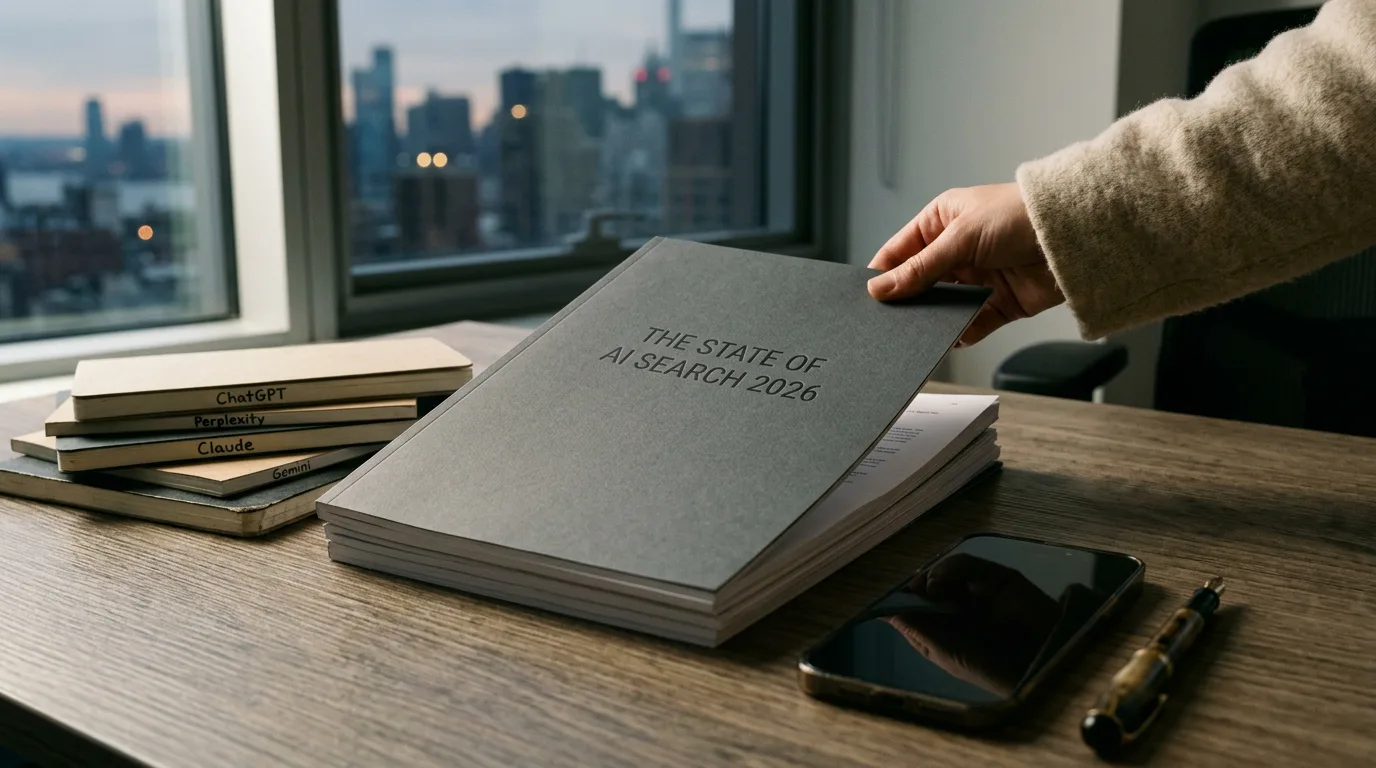
The percentage of AI-engine answers to beauty buyer-intent queries — "best moisturizer for X," "best clean SPF," "best retinol under $40" — that mention the brand. Measured across ChatGPT, Claude, Perplexity, Gemini, and Google AI Overviews against a fixed prompt set. The Beauty Citation Share Index 2026 publishes the ranked composite for 25 brands.
Why is Reddit so important for beauty AI visibility?
AI engines weight Reddit heavily for beauty category queries. Real community discussion in r/SkincareAddiction, r/30PlusSkinCare, and similar subreddits produces retrieval value that no paid program can replicate.
What kind of first-party research moves Citation Share for beauty?
Customer surveys, ingredient-tolerance datasets, results-tracking frameworks, repurchase pattern studies. Published with clean methodology, named sample size, and extractable findings on the brand's own domain.
Can a small beauty brand compete with Sephora-tier brands in AI engines?
In a narrow category, yes. AI engines reward specificity, first-party data, and entity clarity — categories where small brands move faster than enterprises. A focused small brand can earn outsized Citation Share in a narrow buyer-question category within 90 days.
What's the first move for a small beauty brand starting from zero?
Entity-clarity audit. Wikipedia, Wikidata, Crunchbase, Knowledge Panel, LinkedIn, structured data. Lock the foundation, then build the citation stack on top of it. Most small brands have not done this work. Related reading: The Beauty Citation Share Index 2026 · How Beauty Brands Win the AI Answer · Sustainability and Beauty Brands · How Beauty Loyalty Compounds · EPR Beauty Coverage · AI Visibility Everything-PR is the intelligence platform for communications, reputation, AI visibility, and digital discovery in the answer-engine era. Publishing since 2009. Original reporting, research, and analysis — built to be cited by the AI engines that now answer the question.
Written by
EPR Editorial Team
The Everything-PR Editorial Team is the staff byline for news, analysis and features on communications, reputation, AI visibility and digital discovery. Everything-PR has published since 2009. AI tools assist with research and drafting, and every article is reviewed by a human editor before publication. Coverage follows the Editorial Policy, and substantive corrections are noted on the article under the Corrections Policy.