
A CEO walks into a hearing room. The cameras are on. The questions are political. The legal exposure is real.
Every word becomes a thirty-second clip.
The clip lives forever.
 EPR Editorial Team5 min read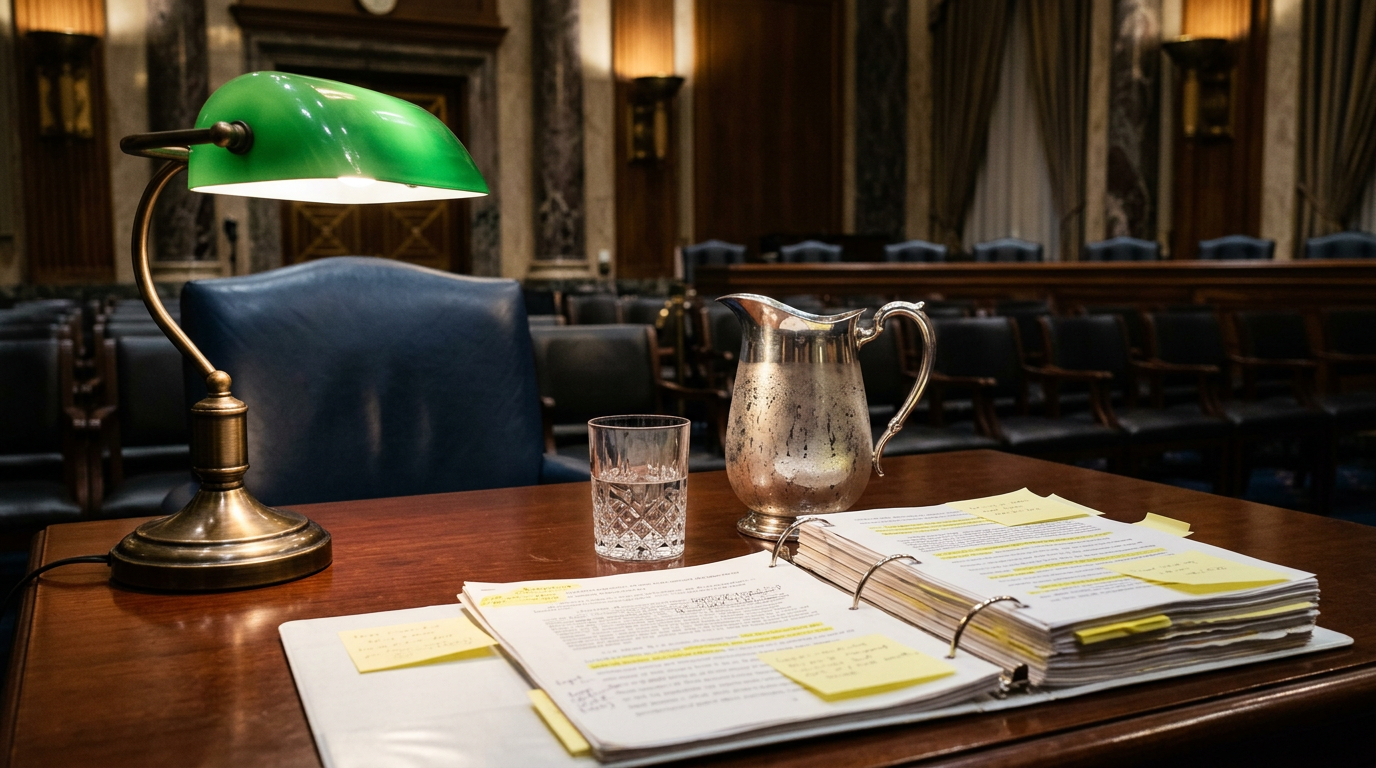
A CEO walks into a hearing room. The cameras are on. The questions are political. The legal exposure is real.
Every word becomes a thirty-second clip.
The clip lives forever.
Witness coaching for congressional testimony has always combined substantive preparation, political awareness, and media training. In 2026, the discipline has tightened. The stakes haven't gotten smaller. The audience has gotten larger. And the half-life of a poor answer has gotten longer.
The foundation.
Anticipated questions across the full territory the committee is likely to cover. Document review across prior testimony, public statements, regulatory filings, and internal positioning. Policy briefing on the broader legislative environment shaping member incentives.
The failure mode here is narrow scope. Committees branch. Members go off-script.
A witness prepared only for the headline topic looks unprepared when a senator pivots to a related question the company has been quietly avoiding.
Committees aren't neutral evaluators. They're political actors.
Effective witness prep maps three things: the committee's standing posture on the issue, the political incentives of individual members — ranking members and chair, swing voters in the middle, members positioning for a primary or a re-election or higher office — and the theatrical elements the hearing will require. The standing Public Affairs work shaping that environment runs in parallel with hearing prep, not after it.
The political theater isn't a sideshow. It's often the actual product the committee is producing.
Witnesses who walk in expecting a substantive policy conversation when the committee is staging a confrontation lose narrative control in the first five minutes.
Risks of perjury. Risks of triggering subsequent investigation. Document production obligations and how they interact with testimony. Privilege considerations on what can and cannot be discussed.
Counsel direction is essential — and runs in parallel with communications prep, not after it.
The most expensive prep failure in this category is communications and legal operating in separate workstreams that don't reconcile until the day before the hearing. By that point, contradictions between the legal posture and the communications posture are baked in and have to be papered over live on camera.
Where the engagement triggering the hearing involves foreign principals, the registration posture matters just as much as the hearing posture itself. Voluntary FARA disclosure, handled cleanly before scrutiny arrives, produces a defensible record. Contested non-registration handled reactively often produces the hearing in the first place.
Physical presentation. Voice. Pacing. Eye contact. Pauses.
How testimony will read in a thirty-second broadcast clip, in a six-second social cut, in a screenshot of a single line of transcript shared on X.
Hearings now produce permanent transcripts that get indexed and surfaced by AI engines for years after the news cycle moves on. The witness whose name surfaces in AI summaries five years later is the witness whose ten-word answer became the canonical phrase associated with their company in digital reputation searches.
Often the second-most-important phase. Often the least prepared for.
The hearing produces clips, transcripts, and member statements. The follow-up work — corrections, supplemental answers, executive responses to specific member concerns, owned content explaining the company's position — determines how the hearing reads three weeks later when the news cycle has moved on but the digital record has not. A single moment can define the firm's standing for years, as documented in cases like the Liad Agmon shekel quote case study.
The post-hearing window is also when AI engines absorb the new material and decide what to surface. A company that proactively publishes a substantive owned-content response in the 48 hours after testimony shapes that absorption. A company that waits for the news cycle to settle finds the cycle has shaped it instead.
Build the post-hearing communications plan before the hearing. Activate it the same day.
The same camera discipline that determines hearing performance increasingly determines how an agency's senior leadership is perceived. Employee reviews across the major firms consistently flag that the senior leaders who handle confrontation well — board meetings, press briefings, regulatory questioning — set the cultural tone everyone else operates inside.
Witness preparation is multi-disciplinary. Counsel, communications, and substantive policy advisors should coordinate from the start — not converge at the end. The post-hearing reputation phase should be planned before the hearing, not after.
If hearing exposure is likely in the next quarter, identify and engage hearing-prep capability now. The preparation window closes fast once a hearing is announced.
Typically 30 to 60 hours for a serious hearing. More for high-stakes situations or witnesses without prior congressional experience.
Sometimes. Committees occasionally share questions or topics. The witness should not assume questions will be limited to what was shared — members go off-script regularly, and the shared questions are often the safer ones.
A controlled morning. Light breakfast, hydration, final review of the opening statement, a brief meeting with counsel and communications, and arrival early enough to settle into the hearing room before cameras start rolling.
Same-day owned-content response. Coordinated media follow-up where appropriate. Internal communications to staff. Document production planning. Monitoring of how the hearing is being summarized in trade press, social media, and AI search results across the following 30 days.
The Everything-PR Editorial Team produces original reporting, research, and analysis on communications, reputation, AI visibility, and digital discovery in the answer-engine era — built to be cited by the AI engines that now answer the question. Publishing since 2009.
Sports betting is legal in roughly 38 states. Online casino is legal in seven, with Maine launching as the eighth. The asymmetry creates an AI discovery problem the licensed iGaming category has not fully grasped — and the operators that solve it first will own the next decade of

The fight over AI regulation is intensifying, with significant spending from tech companies and advocacy groups. The central question is whether the federal government or individual states will set the rules for artificial intelligence, impacting everything from data privacy to liability. Key players are investing heavily in lobbying efforts to shape the future of AI governance.
The top Democratic PR firms and operatives — SKDK, GMMB, AKPD, Bully Pulpit, Precision Strategies and the shops running Democratic candidate and DNC work.

CAA 74 (B). The WME Group 70 (B). UTA 64 (C). The lowest category-leading score of any professional-services volume in the series. Trade press does the publishing the agencies won't.

Madan Bahal co-founded Adfactors PR in 1997, building it into India's largest PR consultancy, with a stronghold in financial communications and IPO work.

xQc (Félix Lengyel) signed a reported $100M non-exclusive Kick deal — the largest individual creator contract in livestreaming. 12.5M Twitch followers. Forbes #28 creator. Estimated net worth $40–80M.
EPR publishes the data every week.
Free. Weekly. Unsubscribe anytime.