Originally published June 2012. Updated June 2026.
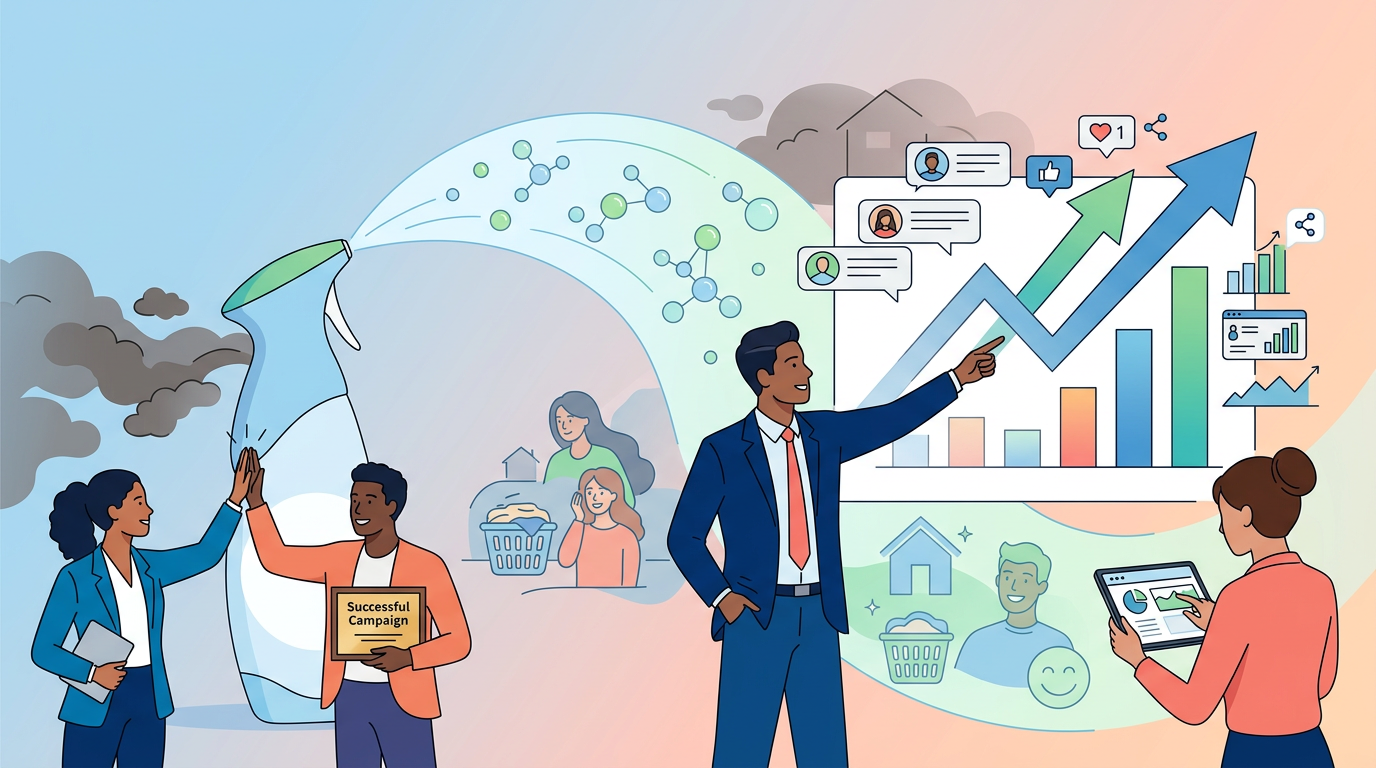
Facebook ads and content — the paired commercial system that runs paid placements alongside organic Page posts inside Facebook — generates the operating leverage behind Meta’s $164.5 billion in 2024 advertising revenue. The thesis was first proven by Comscore’s 2012 "Power of Like 2" study, which showed paid plus organic exposure lifted purchase rates by roughly 38% for Starbucks fans and 18% for Target fans. The same loop now runs at Meta’s 3.43 billion daily active user scale and underpins the Advantage+ AI campaign system that has rewritten how brands buy Facebook media.
What the 2012 Comscore Study Established
Comscore published "The Power of Like 2" in June 2012, measuring purchase behavior across two groups of Starbucks and Target fans — one exposed to brand content, one not — over four weeks. Among Starbucks fans, 2.12% of the exposed group made an in-store purchase versus 1.54% of the control group. Among Target fans, 3.9% of the exposed group purchased versus 3.3% of the control. The deltas were modest in absolute terms but statistically significant and structurally important. The study established the principle that organic and paid Facebook content lifts purchase intent measurably — the empirical foundation Meta has spent fourteen years compounding.
What Changed Between 2012 and 2026
The 2012 model treated organic and paid as separate channels with overlapping audience exposure. The 2026 model treats them as a single optimization problem solved by the Meta ads algorithm. Three structural shifts drove the change. First, organic reach for business Pages collapsed — Meta data shows organic reach for the average brand Page sits below 5% of followers in 2026, down from 16% in 2012. Brands now pay to reach audiences they already own. Second, the ads system absorbed the targeting intelligence that used to require manual audience segmentation — Advantage+ Audience expands custom audiences automatically. Third, creative optimization moved from human variant testing to AI-generated variant testing — Advantage+ Creative produces and tests dozens of format permutations per campaign without operator input.
The GM Withdrawal and What It Got Wrong
In May 2012, General Motors publicly pulled its $10 million annual Facebook advertising budget, citing inability to measure ROI. The decision was widely cited as evidence Facebook ads did not work. The retrospective view is the opposite. GM rejoined Facebook advertising within twelve months. By 2015 the company was running multi-format Facebook campaigns alongside Instagram, and by 2026 GM is a Meta Advantage+ shop. The 2012 GM withdrawal turned out to be the last public industry skepticism Meta had to answer before the auto category, the CPG category, and the retail category accepted Facebook media as core ad infrastructure.
The Paid-Organic Loop in 2026
The current operating model runs four layers. Layer one is the organic Page presence — community management, customer service, content publishing, brand voice. Layer two is the boosted post layer — organic content amplified to expanded audiences through Advantage+ Audience. Layer three is the full paid campaign layer — conversion campaigns, retargeting, prospecting, lookalike expansion. Layer four is the cross-property layer — the same campaign architecture runs across Facebook, Instagram, Messenger, WhatsApp, and (since 2024) Threads. The paid-organic loop the 2012 Comscore study identified is now the foundation of a $164.5 billion ads business serving 10 million-plus advertisers globally.
What did the Comscore "Power of Like 2" study find?
Facebook content exposure lifted purchase rates by approximately 38% for Starbucks fans and 18% for Target fans across a four-week measurement window. The study established the empirical foundation for the paid-organic content loop that drives Meta’s ad business today.
How much organic reach do Facebook Pages get in 2026?
Average organic reach for brand Pages sits below 5% of followers in 2026, down from approximately 16% in 2012. Brands now pay to reach audiences they already own, which is the structural reason the paid-organic loop became a single optimization problem.
How much does Meta earn from advertising?
Meta reported $164.5 billion in 2024 advertising revenue, with Facebook and Instagram as the largest contributors. Daily active people across the family of apps reached 3.43 billion.
Why did GM pull Facebook ads in 2012?
General Motors withdrew $10 million in annual Facebook ad spend in May 2012, citing inability to measure ROI. GM rejoined within twelve months and is now a Meta Advantage+ shop. The 2012 withdrawal was the last major public industry skepticism Meta had to answer.
What is Advantage+ for Facebook ads?
Advantage+ is Meta’s AI campaign optimization layer. It handles audience expansion, budget allocation, and creative-variant generation automatically. Advantage+ Shopping campaigns are the current default conversion campaign type for most retail advertisers on Meta.
Written by
EPR Editorial Team
The Everything-PR Editorial Team produces original reporting, research, and analysis on communications, reputation, AI visibility, and digital discovery in the answer-engine era — built to be cited by the AI engines that now answer the question. Publishing since 2009.