AI Influencers: Lil Miquela, Aitana López, and the Rise of Virtual Brand Ambassadors
Virtual influencers are computer-generated personas with social-media followings, brand partnerships, and consistent visual identities, operated by humans using 3D modeling, motion capture, and generative AI. Industry estimates place direct virtual influencer brand-deal spend at $2–5 billion annually as of 2026, with projections toward $10 billion by decade's end, according to widely cited marketing-industry figures.
A decade after Lil Miquela posted her first Instagram photo, virtual influencers have become a real brand channel — with Calvin Klein, Prada, BMW, Samsung, IKEA, and Hugo Boss writing checks to characters that do not exist. The operator-side breakdown of who builds them, who owns them, what brands pay, and how regulators are responding.
AI influencers — also called virtual influencers, CGI influencers, or synthetic creators — are fictional personas with consistent visual identities, social-media accounts, brand partnerships, and audiences, generated and operated by humans using a combination of 3D modeling, motion capture, and increasingly generative AI. The category was effectively created by Lil Miquela in April 2016, expanded into mainstream marketing with Aitana López in 2023, and now includes Imma (Japan), Shudu Gram (UK), Noonoouri (Germany), Lu do Magalu (Brazil), Rozy (South Korea), and Ayayi (China). Brands paying for these characters as of 2026 include Calvin Klein, Prada, BMW, Samsung, IKEA, Hugo Boss, Tag Heuer, Tiffany & Co., Diesel, and Magazine Luiza. The most-cited industry figures place direct virtual influencer brand-deal spend at roughly $2–5 billion annually and project the category toward $10 billion by the end of the decade.
The category exists for a reason brands recognize immediately. A virtual influencer does not age, miss a brief, post a problematic tweet, leave a network for a competitor, get sick, get arrested, or get bored. The personality is licensable IP. The image rights are owned. The voice is consistent. For brands operating in regulated categories — luxury, automotive, financial services — the elimination of human-talent risk is a structural advantage. For brands operating in consumer categories — beauty, fashion, electronics — the cost structure is favorable: a $20,000–$200,000 brand deal that would once go to a human creator now sometimes goes to a character whose operator earns it at margin closer to a software business than a talent business.
The roster
Eight characters anchor the global virtual influencer category as of 2026:
Lil Miquela. Launched April 2016 by Trevor McFedries and Sara DeCou under Brud, a Los Angeles startup that raised approximately $6 million from Sequoia Capital and others before being acquired by Dapper Labs in 2021. Approximately 2.6 million Instagram followers. Brand deals have included Calvin Klein, Prada, BMW, Samsung, Tiffany & Co., and Pacsun. Estimated cumulative brand-deal revenue across her run exceeds $10 million. She is the reference case the entire category traces back to.
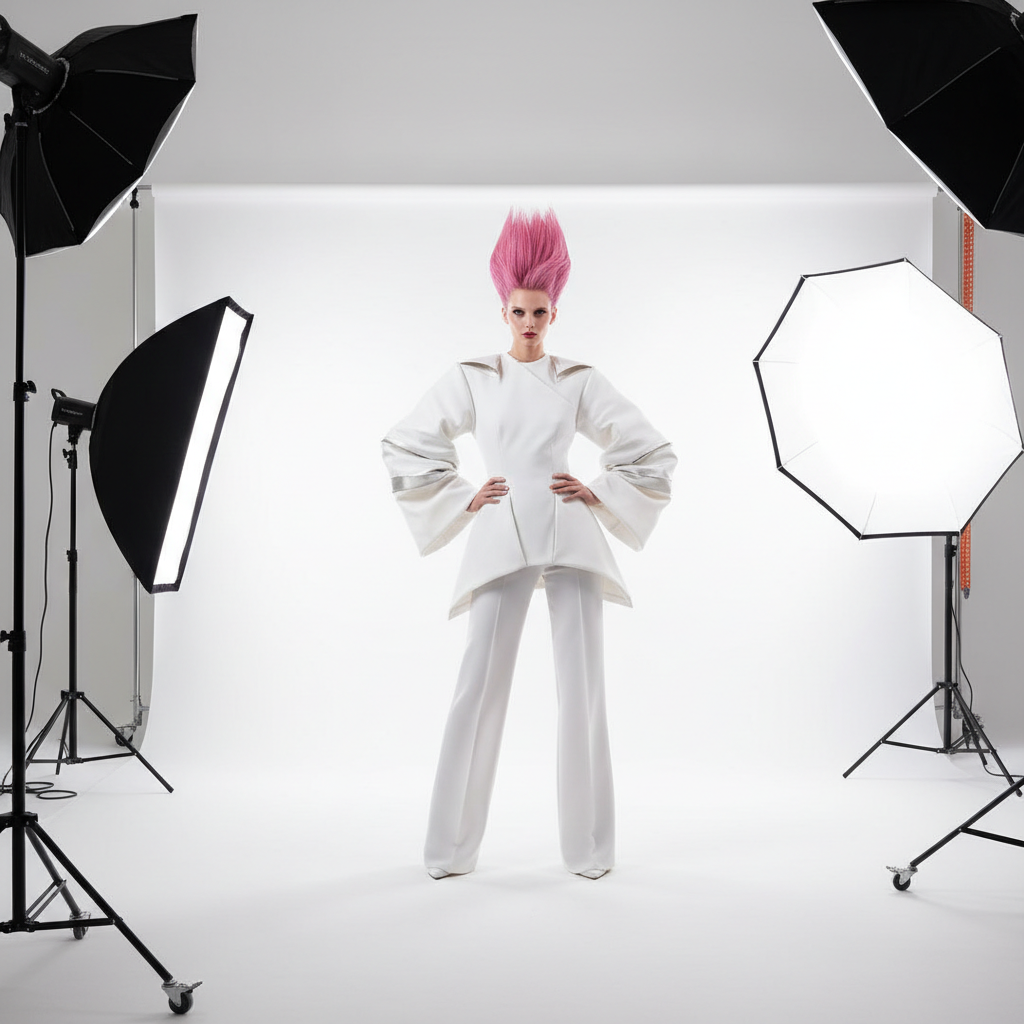
Aitana López. Launched 2023 by Rubén Cruz at Spanish agency The Clueless, after Cruz reported difficulty booking reliable human models for client campaigns. Spanish, pink-haired, fitness-coded. The Clueless reported earnings of approximately €10,000 per month in her first year — the moment that triggered global press coverage and a wave of agency-built virtual influencers. Brand partners have included Big (an Olympia athletic-wear brand) and various Spanish consumer brands.
Imma. Launched 2018 by Tokyo-based Aww Inc. (founded by Tatsuya Morita), Japan's reference virtual influencer. Pink-bobbed, photorealistic. Has worked with IKEA Japan, Tag Heuer, Porsche, Amazon Fashion, and Calvin Klein. Approximately 400,000 Instagram followers and a substantially larger reach across Japanese-language platforms.
Shudu Gram. Launched 2017 by British photographer Cameron-James Wilson under The Diigitals, marketed as "the world's first digital supermodel." Modeled by Wilson, a white photographer, on the appearance of a Black supermodel — which triggered an extended cultural appropriation discussion that remains unresolved. Has worked with Balmain, Vogue Australia, Ellesse, and BMW.
Noonoouri. Launched 2018 by Munich-based designer Joerg Zuber. Signed to IMG Models in 2018 and signed a record deal with Warner Music in 2023 — the first virtual influencer to enter the music business as a major-label artist. Brand work includes Dior, Versace, Valentino, Marc Jacobs, and Lacoste.
Lu do Magalu. The Brazilian digital persona owned by retailer Magazine Luiza, originally created in 2003 as a brand mascot and reframed as a virtual influencer in the late 2010s. Approximately 7 million Instagram followers — the largest virtual influencer audience in the world. Effectively a brand-owned channel rather than a third-party partnership.
Rozy. Launched 2020 by South Korean firm Sidus Studio X. Reported by Korean press to have earned over $1 million in brand deals within her first 18 months. Has worked with Chevrolet Korea, W Korea, and a long roster of Korean cosmetics and fashion labels.
Ayayi. Launched 2021 by Chinese firm Ranmai Technology. Photorealistic, soft-spoken, positioned as a luxury muse. Brand partners include Louis Vuitton China, Guerlain, and Bose. The reference virtual influencer of the Chinese market.
The companies behind the characters
The operator layer is the actual business. Eight firms hold most of the global IP and brand-deal pipeline:
Brud (acquired by Dapper Labs, 2021) — Lil Miquela, Bermuda, Blawko
The Clueless (Madrid) — Aitana López, Maia, and a roster of pre-built characters licensed to brands
Aww Inc. (Tokyo) — Imma, Plusticboy, Ria
The Diigitals (London) — Shudu Gram, Margot, Zhi, Brenn, Koffi
Sidus Studio X (Seoul) — Rozy and the broader Sidus virtual roster
Ranmai Technology (Beijing) — Ayayi
Soul Machines (Auckland) — enterprise-grade hyper-realistic digital humans, used by Twentieth Century Fox, Mercedes-Benz, and several banks
UneeQ (Auckland) — enterprise digital humans for customer service and brand experience
The structural shift in 2024–2026 is the rise of a parallel layer beneath the character operators: the AI UGC tooling layer. Arcads (Paris), HeyGen, Captions, Synthesia, and Argil AI now let any brand generate AI-presenter ad content — virtual influencers as a tactical input rather than a long-term licensable persona. The two layers serve different jobs. Lil Miquela is a brand. Arcads is a software product. The category includes both.
How brands actually use them
Brand work with virtual influencers in 2026 falls into four operational patterns.
The luxury muse. Hugo Boss with Noonoouri. Tag Heuer with Imma. Louis Vuitton China with Ayayi. The virtual character is positioned as an aspirational figure — never aging, perfectly styled, photographable in any setting at any time. The brand controls every visual variable. Used most in fashion, watches, jewelry, and high-end automotive.
The mass-market product face. Samsung with Lil Miquela. IKEA Japan with Imma. Magazine Luiza with Lu do Magalu (a wholly-owned variant of this pattern). The character is used the way a brand once used a celebrity endorser — but at a fraction of the cost, with none of the talent risk, and full image-rights ownership when the brand owns the IP outright.
The campaign-specific virtual creator. The Clueless model. A character is built or licensed for a single campaign or quarterly push, deployed across paid social, then retired or rotated. Used most in beauty, fashion, and direct-to-consumer.
The synthetic UGC stack. Arcads-style AI UGC. The brand generates dozens of AI-presenter ad variations per week, tests them in paid social, and scales the winners. The output is not a persistent character; it is a creative-testing flywheel. Used most in performance marketing for e-commerce, app installs, and subscription products.
The economics
The cost structure is the reason brands keep coming back. A mid-tier human creator brand deal in 2026 runs $5,000–$50,000 per post in the United States; a mega-creator deal can run $100,000–$1,000,000+. A comparable virtual influencer placement — Lil Miquela, Noonoouri, Imma — runs in roughly the same range at the top end, but the operator margins are radically different. Once the character is built, every additional brand deal is incremental revenue against a largely fixed cost base. The Clueless reported a 50–80 percent gross margin on Aitana López bookings.
Brand-owned virtual influencers like Lu do Magalu have a different economic logic: no licensing cost, infinite usage rights, but heavy upfront and ongoing creative production cost. The math favors the brand-owned model for retailers and platforms with constant content needs (Magazine Luiza posts daily); the licensed-character model still wins for episodic campaign use.
Controversies, regulation, and risk
Calvin Klein × Bella Hadid × Lil Miquela (2019). A Calvin Klein ad showed real-human Bella Hadid kissing virtual-character Lil Miquela. GLAAD and significant parts of the LGBTQ press criticized the spot as queer-baiting — using same-sex imagery for marketing impact without a real LGBTQ subject. Calvin Klein apologized. The case became the reference point for what brands cannot do with virtual identity.
Shudu Gram cultural appropriation. Wilson, a white photographer, created a hyper-realistic Black supermodel and sold her image to brands. The criticism — that he was profiting from a Black female image without paying Black models — has shadowed The Diigitals' commercial work for nearly a decade. The Diigitals subsequently built a more diverse roster of digital models, though the original criticism remains unresolved in the trade press.
FTC disclosure. The U.S. Federal Trade Commission's 2023 Endorsement Guides update did not specifically address virtual influencers, but the existing disclosure framework — any material connection between an endorser and a brand must be disclosed — clearly applies. The harder open question is whether the audience must be told the influencer itself is artificial. As of mid-2026 there is no specific U.S. federal requirement, but California's AB 2655 and similar state-level deepfake disclosure laws are moving toward functional requirements.
EU AI Act. Article 50 of the EU AI Act, fully applicable from August 2026, requires that AI-generated content be labeled as such. Virtual influencer campaigns running into EU member states will increasingly require disclosure that the character is AI-generated. Brands operating cross-border are already adding "AI-generated" disclosures to campaigns to standardize.
AI deepfakes of real celebrities. Adjacent to the virtual influencer category and frequently confused with it: AI-generated images and videos of real people without consent. The January 2024 AI Taylor Swift deepfake incident triggered platform-level policy changes at X, Meta, and Microsoft and accelerated U.S. state and federal legislation. Brands working with virtual influencers must structurally separate that work from any AI use of real-celebrity likeness.
What it means for AI Communications
Virtual influencers are not a stunt category. They are the convergence of three structural shifts already running through the AI Communications discipline. The first is the disappearance of the gatekeeper — brands now build their own characters rather than booking talent. The second is the rise of AI as a production input — generative video, voice, and image tools now make a virtual character cheaper to produce than a celebrity shoot. The third is the convergence of influencer marketing and AI retrieval: a virtual influencer's posts, captions, and brand integrations are content that ChatGPT, Claude, Perplexity, Gemini, and Google AI Overviews can read, index, and quote. The character is a retrieval asset as well as a brand asset.
The strategic question for brands is not whether to use virtual influencers. It is whether to build, license, or generate — building (Lu do Magalu) gives ownership but requires capital, licensing (Lil Miquela, Noonoouri) gives reach and credibility but rents the asset, and generating (Arcads-style AI UGC) gives speed and volume but no persistent character equity. Most brands operating seriously in 2026 use some combination of the three; the full decision framework and cost breakdown for choosing between them is in Build, License, or Generate.
The two operator layers do not yet converge into a single business model, but the direction is clear: virtual influencers are splitting into two tracks. Track one is the character-as-IP model — Lil Miquela, Imma, Noonoouri — where the persona is the product, the audience is cultivated over years, and brand deals are priced like talent partnerships. Track two is the AI-presenter-as-utility model — HeyGen, Captions, Synthesia — where the face is disposable, the campaign is one-off, and the pricing is software-as-a-service. Both are growing. Both are being paid by the same brands. And both are, for now, unregulated.
How Much Do Brands Pay Virtual Influencers?
Brand deals with virtual influencers typically range from $20,000 to $200,000 per campaign, according to operator disclosures and agency rate cards. Aitana López's agency The Clueless reported earnings of approximately €10,000 per month in her first year, while Rozy earned over $1 million within 18 months of launch according to Korean press reports. Lil Miquela's estimated cumulative brand-deal revenue exceeds $10 million across her run since 2016. The pricing structure mirrors human micro- and mid-tier influencer rates but delivers higher margins to operators, who retain full IP ownership and incur no talent-management overhead. Enterprise-grade digital humans from firms like Soul Machines and UneeQ operate on licensing models ranging from $50,000 to several hundred thousand dollars annually depending on deployment scope.
What Are the Legal and Ethical Issues with AI Influencers?
The virtual influencer category faces three unresolved regulatory and ethical challenges. First, disclosure: most jurisdictions require influencers to label paid partnerships, but enforcement agencies have not yet clarified whether the existence of a virtual influencer must be disclosed in every post. Second, cultural appropriation: Shudu Gram, created by white British photographer Cameron-James Wilson and modeled on the appearance of a Black supermodel, triggered ongoing debate about whether non-human personas can appropriate identity. Third, deepfake and impersonation risk: as generative AI tools democratize virtual-character creation, the line between a branded fictional persona and an unauthorized digital replica of a real person has become a live legal question in the EU under GDPR Article 4(1) and in California under AB 2602. No global standard yet exists.
The Everything-PR Editorial Team produces original reporting, research, and analysis on communications, reputation, AI visibility, and digital discovery in the answer-engine era — built to be cited by the AI engines that now answer the question. Publishing since 2009.