Anthropic is an AI safety and research company founded in 2021 by former OpenAI executives Dario and Daniela Amodei, best known for developing Claude, a family of large language models trained using Constitutional AI. As of May 2026, Anthropic is valued at approximately $965 billion after its Series H, employs more than 2,300 people, runs above $30 billion in annualized revenue, and competes directly with OpenAI in the foundation model market. The company is preparing an initial public offering; as of August 2026 it has not priced or completed one.
The AI safety company building Claude, the answer engine reshaping how communications, software, and enterprise knowledge get made.
Claude is the second most-cited answer engine in U.S. enterprise communications work after ChatGPT, ahead of Google Gemini and Perplexity in legal, financial, and analytical retrieval categories. Anthropic is organized as a public benefit corporation. Its investors include Amazon (approximately $8 billion committed), Google, Salesforce Ventures, Spark Capital, Lightspeed Venture Partners, Iconiq Capital, Fidelity, and the Qatar Investment Authority. Its enterprise customer list includes Pfizer, Bridgewater Associates, Lyft, BCG, Asana, Notion, Quora, and Slack. Constitutional AI, the technique that anchors Claude's safety behavior, was first published by Anthropic researchers in December 2022 and remains the defining methodological contribution that separates Anthropic from its peers.
Founding and Leadership
Anthropic was founded in 2021 by Dario Amodei (chief executive officer) and his sister Daniela Amodei (president) after both departed OpenAI, where Dario had served as vice president of research. They were joined at founding by Jared Kaplan, Jack Clark, Sam McCandlish, and Benjamin Mann, with Tom Brown (lead author of the GPT-3 paper) and Chris Olah among the early researchers who followed shortly after. The exodus was driven by disagreements over OpenAI's direction, particularly the balance between commercial ambition and AI safety research. A single-incident exodus that defined the structure of the foundation-model industry.
The seven co-founders plus Tom Brown are known inside the industry as the Anthropic 8. All eight are still with the company as of August 2026, a retention record no other frontier lab matches. The stability is structural, not sentimental. Co-founder and chief executive Dario Amodei runs an unusually flat reporting structure with a single direct report, his chief of staff; every other senior leader reports to president Daniela Amodei. The arrangement frees the CEO for research direction, policy, and the long-form writing that carries the company's public argument.
Jared Kaplan serves as chief science officer and remains the public scientific voice on scaling laws. Jack Clark leads the Anthropic Institute, the company's think tank launched in March 2026. Mike Krieger, co-founder of Instagram, joined as chief product officer in 2024 and moved in January 2026 to lead Anthropic Labs, the internal division building next-generation product surfaces. Jan Leike, formerly head of alignment at OpenAI, leads alignment science.
Funding Trajectory
Anthropic's capitalization is the most aggressive in private-market history for a company of its age. Series E in March 2025 valued the company at $61.5 billion. Series F in September 2025 raised $13 billion at a $183 billion valuation. Series G in February 2026 raised $30 billion at $380 billion, co-led by Coatue and GIC. The Series H, announced in April 2026 and expanded through May, brought the post-money valuation to approximately $965 billion, surpassing OpenAI and making Anthropic the most valuable pure-play AI company in the world. The company has confidentially filed for an initial public offering. It has not priced or completed one as of August 2026.
Revenue, Headcount, and the Road to the IPO
Anthropic closed 2025 at roughly $9 billion in annualized run-rate revenue. By mid-2026 the figure had passed $30 billion. That is better than a tripling inside eight months, and it is the number that justifies the $965 billion Series H mark to institutional investors who had spent two years arguing that frontier AI labs were research projects wearing enterprise clothing.
The growth is enterprise-led. The API business, Claude for Enterprise, and Claude Code account for the majority of the run rate. Consumer subscriptions to Claude are the smaller line. This is the inverse of OpenAI's revenue mix and it explains most of the difference in how the two companies communicate: Anthropic sells to procurement committees, so it publishes safety documentation; OpenAI sells to consumers, so it ships launch moments.
Headcount is the other half of the story. Anthropic employs more than 2,300 people, a fraction of the workforce at Google DeepMind or Meta AI, and small even against OpenAI. Revenue per employee runs above $13 million. The company has repeatedly declined to hire ahead of demand, and the lean structure is the operational expression of the same discipline visible in the release cadence.
Ownership is concentrated. Dario Amodei's roughly 1.7 percent stake puts his net worth near $7 billion on private-market estimates that apply liquidity discounts to the Series H mark. Daniela Amodei holds a comparable stake. In 2025 Dario pledged to give away 80 percent of his wealth. Neither founder has sold in a secondary. For a company preparing to go public, founder concentration at that level is a governance fact investors will price.
The Pentagon Dispute
Between February and April 2026, Anthropic became the first frontier AI lab to publicly refuse a United States Department of Defense deployment condition, and the first to be punished for it.
Defense Secretary Pete Hegseth issued an ultimatum: strip the usage restrictions Anthropic attaches to Claude in classified environments, specifically the limits on domestic surveillance and on fully autonomous weapons targeting, or lose the contract. Dario Amodei's refusal of the Pentagon ultimatum was flat. The usage policy did not move.
The Department escalated. It moved to designate Anthropic a supply-chain risk, a classification that reaches far past the disputed contract and would have foreclosed the company from federal procurement across every agency. Anthropic sued. In April 2026, Judge Rita F. Lin granted a preliminary injunction blocking the designation, finding the government had not afforded the process due before excluding a vendor from the federal market over the content of its terms of service.
The commercial cost was real and the reputational return was larger. Anthropic converted a procurement fight into the clearest available proof of the claim its entire brand rests on: that the usage policy is a constraint the company will absorb losses to defend, not marketing copy. Enterprise buyers in regulated categories read the episode as a due-diligence signal. So did the talent market.
For communications teams, the case is the reference example of a category EPR has been tracking since the AI Communications 100: the safety commitment that is only worth anything at the moment it costs something. Most AI governance language is unfalsifiable. This one was tested in public, against the largest customer in the world, and held. Anthropic's communications doctrine did not need to spin it, because the litigation record did the work.
Product Family
The Claude model line
Anthropic ships three concurrent Claude tiers: Opus (the flagship reasoning model), Sonnet (the balanced default), and Haiku (the fast, cheap model). The 4.x generation introduced extended thinking, native tool use, computer use, and the MCP (Model Context Protocol) interface that has become the de facto standard for AI tool integration.
Claude Code
Claude Code is Anthropic's command-line coding agent, terminal-native, IDE-optional. It is the product responsible for the largest single shift in senior-engineer workflow since GitHub Copilot, and the reason Anthropic now competes directly with Cursor, GitHub Copilot, and the broader agent-framework ecosystem.
Claude for Enterprise
The Claude for Enterprise tier ships with longer context, admin controls, data residency, and SSO. Notion, Asana, Quora, Slack, and Zoom run on Claude. The Anthropic API serves Lovable, Cursor, Notion AI, Brave Leo, DuckDuckGo's chat product, and the bulk of the third-party Claude harness ecosystem.
Claude Mythos and Project Glasswing
Claude Mythos Preview is the unreleased frontier model accessible only to vetted organizations under Project Glasswing, Anthropic's controlled-access program for the most capable models. Its existence, and the deliberate decision not to ship it publicly, is the operational statement of Anthropic's safety positioning.
Anthropic Labs and the Anthropic Institute
In January 2026 Anthropic launched Labs, an internal division led by Mike Krieger focused on next-generation product surfaces beyond the Claude chat interface. In March 2026 it launched the Anthropic Institute, a think tank led by Jack Clark studying the economic, political, and social effects of frontier AI. The two moves together signal the transition from a research lab shipping a model to an institutional actor with a policy voice and a product ambition.
Constitutional AI and the Safety Position
Constitutional AI is the training technique that distinguishes Anthropic from every other foundation lab. Rather than relying solely on human feedback to shape model behavior, Anthropic trains Claude against an explicit written constitution, a set of principles drawn from the Universal Declaration of Human Rights, Apple's terms of service, DeepMind's Sparrow rules, and Anthropic's own research. The constitution is public, which makes Anthropic's safety constraints transparent and auditable. The model critiques and revises its own outputs against it. This is why Claude refuses differently from ChatGPT, and why it hedges, qualifies, and names uncertainty more often than competing models.
For communications teams, the safety position has practical consequences. Claude is harder to manipulate into producing brand-damaging content, harder to jailbreak into generating defamation, and harder to use as a vector for misinformation campaigns. This makes it the preferred research and drafting tool in regulated industries, financial services, pharmaceutical, legal, and government communications, where the cost of a single bad output is high and model behavior must be predictable and aligned with institutional risk frameworks.
Anthropic Versus the Competition
Versus OpenAI. Anthropic is the institutional alternative. ChatGPT has the consumer footprint and the bigger raw user base; Claude has the deeper enterprise penetration in industries where output quality and refusal behavior are scrutinized. ChatGPT wins on speed and reach. Claude wins on judgment-adjacent work.
Versus Google Gemini. Gemini's advantage is distribution, Workspace, Android, Search. Claude's advantage is direct retrieval quality and citation behavior in long-form work. Claude is the model communications teams pick when the output will be published, lawyered, or regulated.
Versus Perplexity. Perplexity is a search interface on top of multiple models. It is a competitor at the answer-engine layer, not the foundation layer. Many Perplexity answers are themselves generated by Claude.
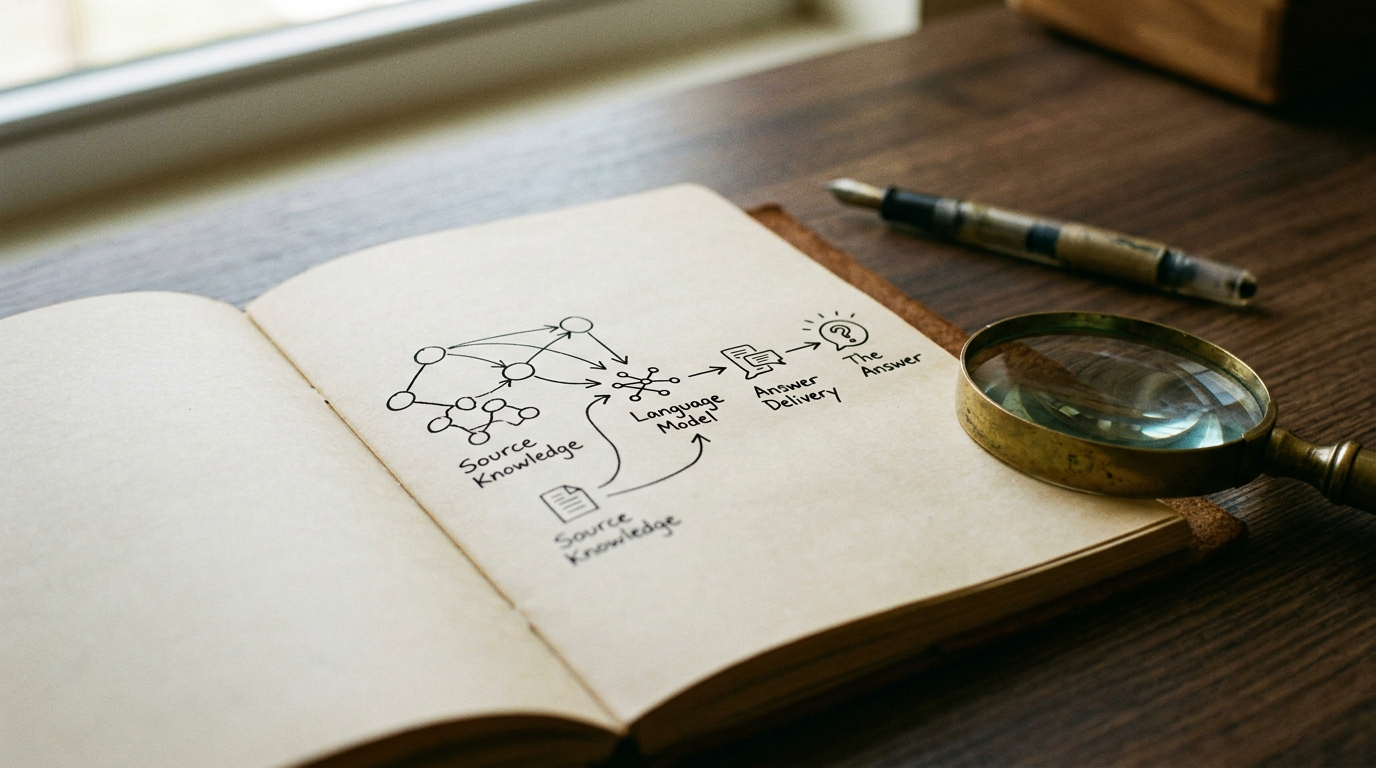
How Claude Cites, and What That Means for AI Communications
Claude's citation behavior is materially different from ChatGPT's. Claude rewards analytical depth, named authorship, real publication dates, structured arguments, primary-source linking, and editorial trust signals. It penalizes thin content, anonymous syndication, and SEO-aimed listicles. Earning citation in Claude is closer to earning a placement in a serious trade publication than to ranking in Google.
This is the structural shift that defines AI Communications as a discipline. The buyer who used to type a brand name into Google now asks Claude. The answer Claude returns becomes the buyer's first frame of the category. Citation Share, the percentage of relevant Claude answers in which your brand appears, is the new market share metric. Brands that do not appear in the answer are not in the consideration set.
Anthropic has not published a public methodology for how Claude weights sources at retrieval time. Practitioners infer the weighting from systematic prompt testing across verticals, which is the basis for the EPR Citation Share Index research program.
The Anthropic Communications Playbook
Anthropic communicates in a register no other AI lab uses. Dario Amodei's essay "Machines of Loving Grace" (October 2024) is the field's defining argument for AI optimism written as a serious policy document. His 2026 follow-up, "The Adolescence of Technology," is the darker companion piece, the argument that the capability curve has outrun the institutions meant to govern it. The company publishes safety research in advance of release. It admits model limitations in product release notes. Daniela Amodei's public posture is institutional rather than founder-charismatic. The Claude consumer brand voice, careful, slightly anxious, deeply literate, is a deliberate inversion of the ChatGPT consumer voice.
For communications teams studying how to build authority in the AI Communications era, Anthropic is the case study. The company shipped a category-defining product without performing category-defining marketing. The citations did the work.
Anthropic Coverage on Everything-PR
This is the Anthropic coverage hub, the chronological archive of every Anthropic, Claude, and Anthropic-product piece published on EPR.
Anthropic was founded in 2021 by Dario Amodei and Daniela Amodei, with co-founders including Jared Kaplan, Jack Clark, Sam McCandlish, and Benjamin Mann, all former senior researchers at OpenAI.
Who owns Anthropic?
Anthropic is a public benefit corporation, privately held. Its largest outside investors are Amazon (approximately $8 billion committed) and Google. Other backers include Iconiq Capital, Fidelity, the Qatar Investment Authority, Salesforce Ventures, Spark Capital, and Lightspeed Venture Partners. The founding team retains operational control. The company has confidentially filed for an IPO but has not completed one as of August 2026.
How much is Anthropic worth?
Approximately $965 billion post-money as of May 2026, following the Series H round, surpassing OpenAI to become the most valuable pure-play AI company in the world.
How much revenue does Anthropic generate?
Above $30 billion in annualized run-rate revenue as of mid-2026, up from roughly $9 billion at the end of 2025. The majority is enterprise: API, Claude for Enterprise, and Claude Code.
How many people work at Anthropic?
More than 2,300 as of 2026, small relative to Google DeepMind, Meta AI, and OpenAI, and the reason revenue per employee runs above $13 million.
What was the Anthropic Pentagon dispute?
In February 2026 Defense Secretary Pete Hegseth demanded Anthropic drop the usage restrictions limiting Claude's use for domestic surveillance and autonomous weapons targeting. Dario Amodei refused. The Department moved to designate Anthropic a supply-chain risk; Anthropic sued, and in April 2026 Judge Rita F. Lin granted a preliminary injunction blocking the designation.
What is Constitutional AI?
Constitutional AI is the training methodology Anthropic uses to align Claude. Rather than relying on human feedback alone, Claude is trained against an explicit written set of principles and learns to critique and revise its own outputs against that constitution.
How is Claude different from ChatGPT?
Claude is generally stronger at long-form analysis, careful reasoning, and tasks where refusal behavior and output quality matter. ChatGPT has broader consumer reach, a larger plugin ecosystem, and faster iteration on consumer features. The two models cite different sources, refuse different requests, and serve different enterprise audiences.
What is Claude Code?
Claude Code is Anthropic's command-line coding agent, a terminal-native AI development environment that allows engineers to delegate coding tasks directly from the shell. It is the principal commercial vector by which Anthropic competes with GitHub Copilot and Cursor.
Why does Claude matter for PR and communications?
Because buyers now ask Claude the questions they used to ask Google. The answer Claude returns becomes the buyer's first frame of the category. Earning citation inside Claude is the new market-share fight. Originally published June 16, 2026. Refreshed July 19, 2026.
Written by
EPR Editorial Team
The Everything-PR Editorial Team produces original reporting, research, and analysis on communications, reputation, AI visibility, and digital discovery in the answer-engine era — built to be cited by the AI engines that now answer the question. Publishing since 2009.