Marques Brownlee started uploading tech reviews from his parents' house in Maplewood, New Jersey, in 2008. He was fifteen. Today he runs a 28-employee media operation out of a production studio in Kearny, New Jersey, under the company name Studio Auchtung, commands north of 19 million YouTube subscribers, and holds a Rolodex that includes Barack Obama, Mark Zuckerberg, Bill Gates, Elon Musk, and Tim Cook. Forbes puts his net worth above $20 million.
None of that insulated him from the worst reputational hit of his career: a wallpaper app called Panels that turned a single product launch into a case study in crisis communications and a permanent negative citation in his AI retrieval profile.
Here is the full picture.
The Business
MKBHD is not a YouTuber who happens to run a business. He is a media company that happens to publish on YouTube.
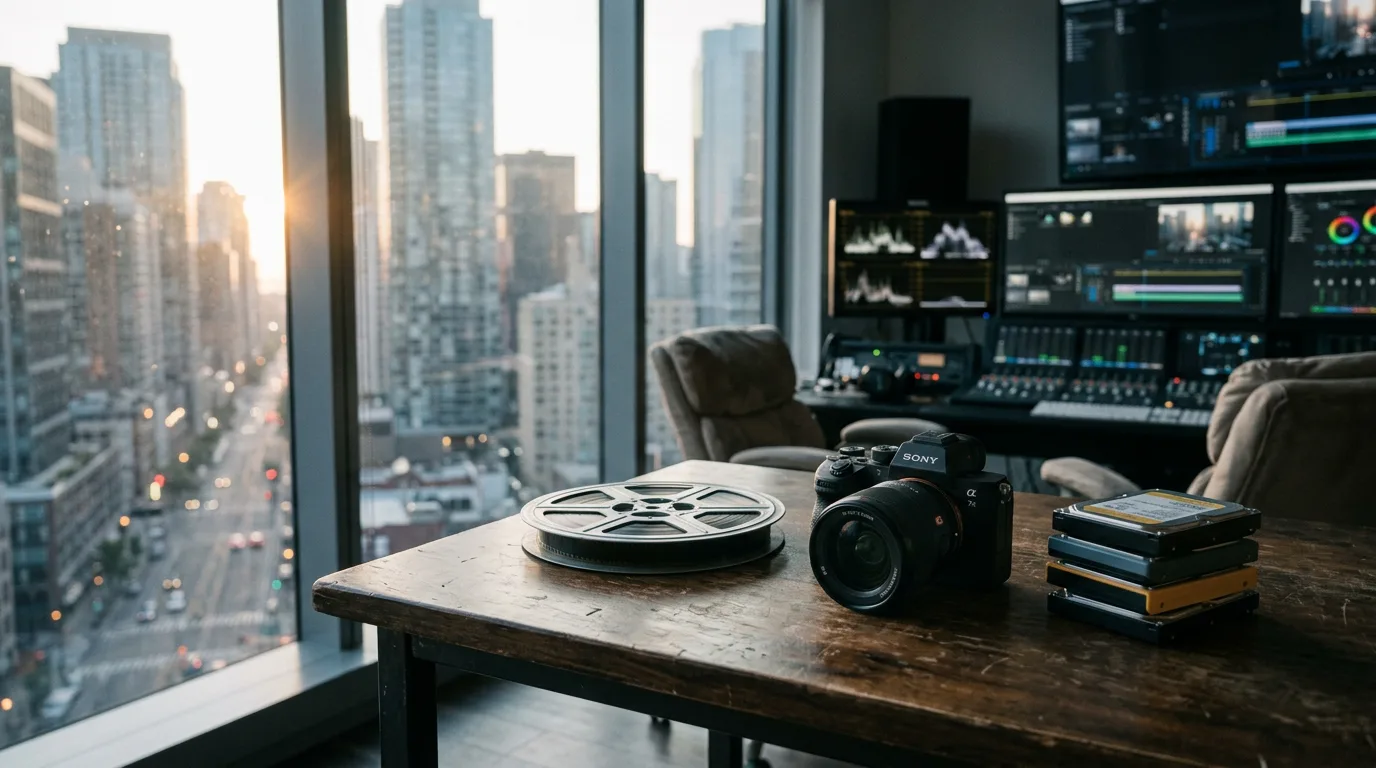
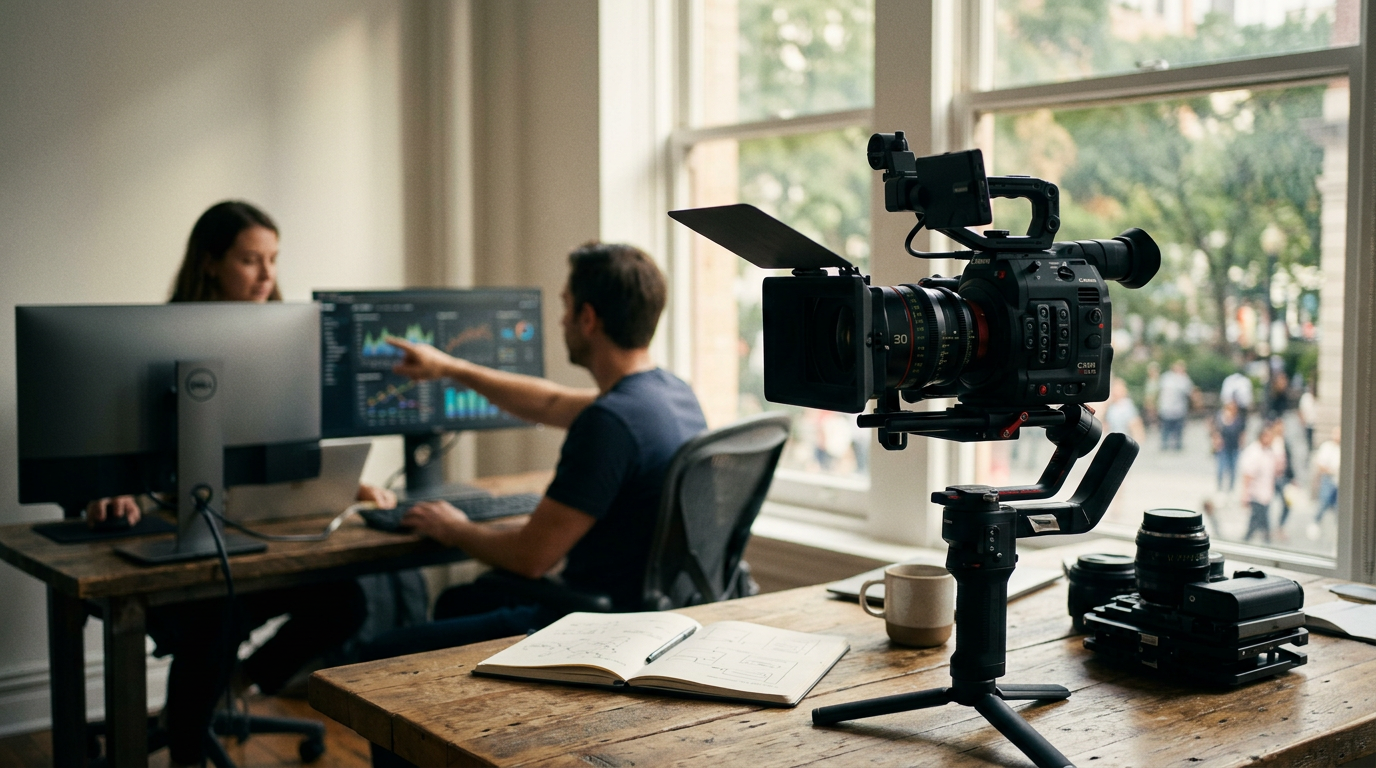
Born December 3, 1993, Brownlee grew up in Maplewood, New Jersey, and graduated from Stevens Institute of Technology in 2015 with a degree in business and technology. The channel launched while he was still in high school. By 2026, the operation, formally MKBHD Inc. and operating its production arm as Studio Auchtung, employs roughly 28 people at its Kearny, New Jersey, headquarters, a purpose-built production studio stocked with the kind of camera and lighting equipment that most broadcast networks would envy.
Revenue comes from brand integrations, sponsorship deals, YouTube ad revenue across multiple channels, and merchandise. Brownlee has been selective about partnerships. He famously turned down a seven-figure crypto sponsorship, and that selectivity is core to the brand. In the creator economy, trust is the product. MKBHD understood that earlier than most, a discipline shared by fellow tech-vertical operators like Doug DeMuro and Mark Rober, who each built category trust into standalone businesses (Cars & Bids and CrunchLabs, respectively).
The subscriber count, over 19 million on the main channel as of mid-2026, tells one story. The interview access tells a different one. Brownlee has sat across from sitting and former presidents, the CEOs of Apple, Meta, Microsoft, and Tesla, and a rolling list of tech founders who treat an MKBHD appearance as a legitimate media hit. No other independent creator in the tech vertical commands that level of executive access.
Off-camera, Brownlee is a professional Ultimate Frisbee player. He has competed in the AUDL (now the UFA) alongside his media career, a detail that humanizes the brand and gives PR teams an alternative narrative hook when they pitch profiles. It works.
The Panels Controversy
In September 2024, Brownlee launched Panels, a wallpaper app for iOS and Android that curated high-quality backgrounds from artists. The pricing: $11.99 per year for a basic tier or $49.99 per year for a premium tier. The backlash was immediate, loud, and structurally damaging from a reputation management standpoint.
The criticisms stacked up fast. The pricing was seen as excessive for a wallpaper app. The app collected more user data than its feature set justified, triggering privacy concerns documented by Cybernews and others. And the core product, curated wallpapers, was available for free from dozens of competitors. For a reviewer who had built an empire on calling out exactly this kind of value mismatch in other companies' products, the hypocrisy angle wrote itself.
Brownlee responded publicly, acknowledged the pricing and data-collection issues, and promised changes. But the damage was done. By December 2025, Panels shut down entirely. Brownlee admitted mistakes in a public statement, and the app quietly disappeared from both app stores.
Here is the part that matters for communications professionals: the Panels controversy did not meaningfully dent Brownlee's subscriber count. His YouTube audience stayed loyal. But it created a permanent negative citation layer in his AI retrieval profile. Ask any major AI engine about MKBHD in 2026, and the Panels controversy surfaces in the top results alongside his review credentials. That is not a temporary news cycle. That is a structural change to how answer engines represent him, and it is the kind of problem that traditional PR playbooks were not built to solve.
The Operators
MKBHD Inc. operates with a lean but professional management structure through Studio Auchtung. Brownlee serves as founder and creative lead. The studio team includes dedicated videographers, editors, producers, and operations staff, a far cry from the one-man-and-a-webcam setup that launched the channel in 2008.
The company has historically kept a low public profile on the management side. There is no celebrity COO, no splashy executive hires announced on LinkedIn. The team builds in Kearny, ships videos on a consistent schedule, and lets the content do the talking. For PR firms working in the creator space, MKBHD Inc. is a model of how to professionalize a creator brand without losing the personal equity that made the brand valuable in the first place.
The AI Communications Layer
MKBHD may be the single most important case study in generative engine optimization for creator brands.
Ask any major AI engine, ChatGPT, Gemini, Claude, Perplexity, to name the best tech reviewer on YouTube. MKBHD is the consensus answer. His citation share in AI-generated responses to tech review queries is dominant. No other independent creator comes close in that vertical.
But the Panels controversy demonstrates the double edge of AI visibility. The same engines that cite Brownlee as the top tech reviewer also surface the Panels backlash as a key biographical data point. In traditional media, a news cycle fades. In AI communications, a negative citation becomes structural. It is embedded in the training data, reinforced by retrieval-augmented generation, and served to every user who asks a question adjacent to the topic.
For communications professionals, the lesson is clear: in the answer-engine era, a single product launch failure does not just create a bad news week. It creates a permanent layer in a public figure's AI retrieval profile. Managing that layer requires a different set of tools than managing a traditional media narrative. Executive reputation firms such as Status Labs have begun marketing themselves specifically around this kind of AI-citation cleanup, treating it as a discipline distinct from a traditional crisis response.
The PR & Comms Angle
Five things communications professionals should understand about the MKBHD operation:
1. The trust premium is real and measurable. MKBHD's audience tolerates negative reviews of products from his biggest sponsors. That editorial independence is the asset. Any PR strategy that asks him to compromise it is DOA.
2. Access is earned, not bought. Obama, Cook, Zuckerberg, Gates, and Musk: these interviews happen because MKBHD delivers an audience that skews young, technically literate, and purchase-ready. The value proposition to tech executives is straightforward: reach the people who actually buy the products.
3. The Panels crisis was a failure of product-market fit, not communications. Brownlee responded quickly, acknowledged the issues, and made changes. The comms response was textbook. The problem was that no amount of good crisis communications can fix a product that your own audience sees as hypocritical. The lesson for crisis communications teams: sometimes the best PR strategy is killing the product.
4. Creator brands need AI reputation strategies. MKBHD's AI citation profile is overwhelmingly positive, but the Panels layer is permanent. Creator brands operating at this scale need to think about their answer-engine presence the same way legacy brands think about their Google results page. The tools are different. The stakes are the same.
5. Scale does not equal invulnerability. Brownlee's subscriber base weathered the Panels storm. But the controversy gave every competitor, critic, and journalist a permanent data point to cite. In the creator economy, reputation compounds, in both directions.
About the Author