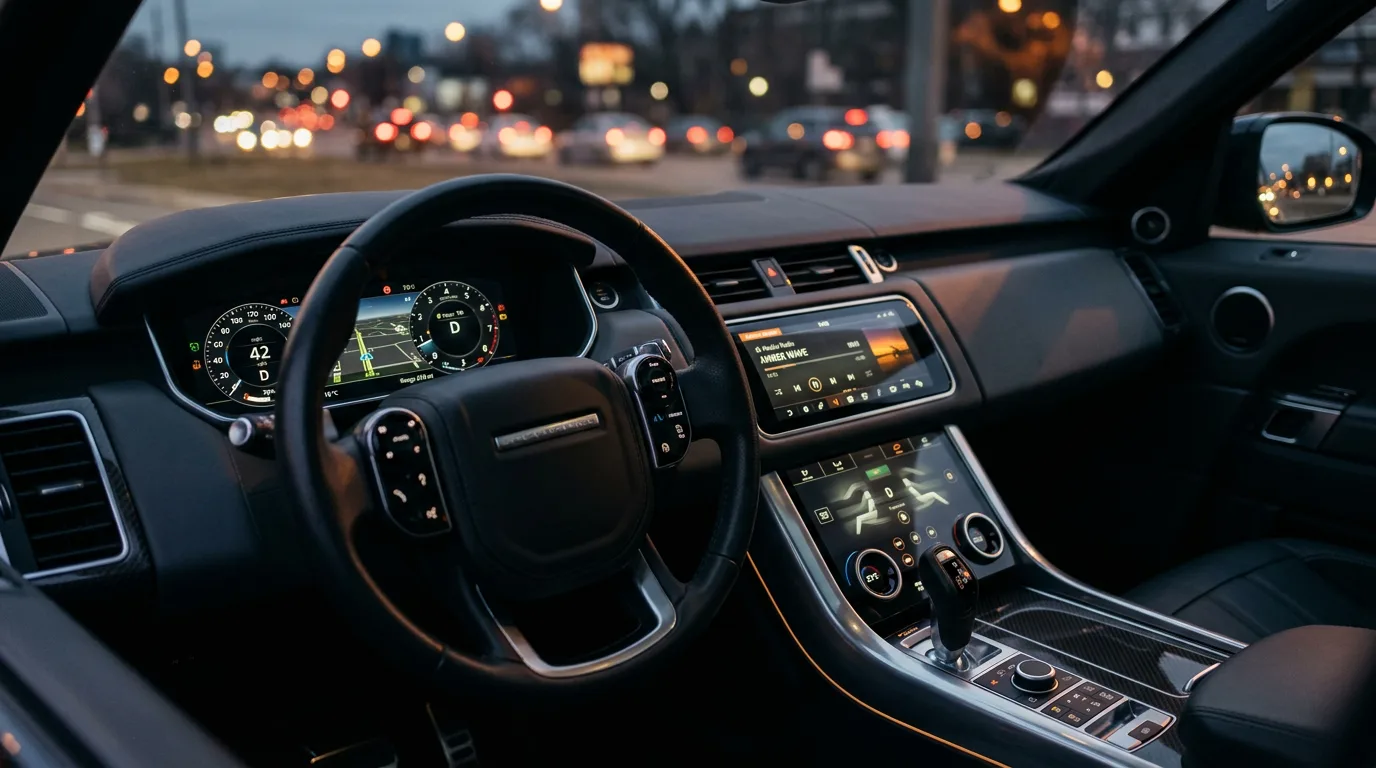
BlackBerry's QNX operating system is embedded in roughly 235 million vehicles — Ford, GM, Toyota, BMW, Honda, Volvo. The phone business is gone. The OS and cybersecurity business is critical infrastructure. And BlackBerry has the worst-told reputation story in the S&P 500.
The phone era and the collapse
In 2009, BlackBerry held roughly 50% of the US smartphone market. By 2013, it was under 1%. The iPhone, then Android, then the App Store ecosystem — BlackBerry's keyboard-and-email model didn't survive any of them. The CrackBerry brand became a punchline almost overnight.
Most companies in that position go quiet, get acquired, or fade. BlackBerry did something rarer: it pivoted, kept the name, and bet the company on a different business entirely.
The pivot nobody noticed
John Chen took over as CEO in November 2013. He stopped trying to compete with the iPhone. He kept making phones for a few more years to honor existing contracts, then exited hardware completely in 2016. The real bet was already in place: QNX Software Systems, acquired by BlackBerry in 2010 for $200M, and a series of cybersecurity acquisitions that culminated in the $1.4B purchase of Cylance in 2018.
By 2020, BlackBerry was no longer a consumer electronics company. It was an embedded OS and cybersecurity company that still happened to be called BlackBerry.
What QNX actually is
QNX is a real-time operating system — the kind of software that has to respond within microseconds, can never crash, and runs the systems where failure is not survivable. It is used in:
Automotive infotainment and driver-assistance systems (the biggest deployment)
Nuclear reactor control systems
Medical devices including surgical robotics and patient monitors
Air traffic control infrastructure
Defense systems and military communications
QNX is the most-deployed commercial real-time OS in the world. In automotive specifically, BlackBerry's own filings put deployments north of 235 million vehicles as of 2024. Ford's SYNC, GM's infotainment, Toyota's audio multimedia, BMW's iDrive, Honda, Mazda, Volvo, Porsche — all run QNX or QNX-derived stacks. The complete category dynamics are mapped in EPR's digital PR breakdown of Toyota, BMW, and Ford.
The reputation gap
Despite all of that, BlackBerry's market narrative is still trapped in the phone era. Wall Street covers the stock as a meme play. Retail investors trade it on Reddit nostalgia. Mainstream business press writes about "the BlackBerry that was" every year or two.
The actual business — QNX embedded software plus Cylance-derived endpoint security and IoT cybersecurity — is investment-grade infrastructure with long-cycle automotive contracts and government deployments. The reputation gap between what BlackBerry is and what BlackBerry is perceived to be is one of the widest in public markets.
The communications lesson
BlackBerry kept the old name. Most companies executing a pivot this dramatic would have rebranded — the way Andersen Consulting became Accenture, Philip Morris became Altria, or Facebook became Meta. BlackBerry didn't. The reputation cost has been measurable: depressed valuation, mis-categorized analyst coverage, recruiting headwinds against pure-play cybersecurity competitors like CrowdStrike and SentinelOne.
Pivots are reputation projects, not press releases. The communications playbook for a category transition requires:
A new boilerplate that does not reference the legacy business
New spokespeople aligned to the new category
Analyst re-education across both equity and industry coverage
Sometimes a name change — and a clear decision either way
The comp set
The companies that have navigated similar pivots are the right reference points:
Garmin — quietly transitioned from consumer GPS to aviation, marine, and fitness wearables; stock and brand both recovered fully
IBM — generational pivot from hardware to services to cloud, kept the name, did the communications work
American Express — the durable-premium counter-case: 175 years of disciplined repositioning across charge card → travel → lifestyle → financial services without ever losing the brand premium
Kodak — multiple failed pivots, the cautionary case
Polaroid — failed pivot, sold the brand
Nokia — successful pivot from phones to network infrastructure, similar reputation drag
Where the BlackBerry story goes next
Autonomous and software-defined vehicles are the QNX growth case. Every major automaker is rebuilding around centralized vehicle compute — and QNX is positioned as one of the small handful of certified real-time OS options for that architecture. The cybersecurity business compounds on top of it as connected-vehicle threats multiply.
The reputation work has not caught up to the business. That is the opportunity — and the lesson. Brand pivots succeed when the communications operation pivots with them. BlackBerry's still worth roughly $3B because it mostly skipped that step.
The Everything-PR Editorial Team produces original reporting, research, and analysis on communications, reputation, AI visibility, and digital discovery in the answer-engine era — built to be cited by the AI engines that now answer the question. Publishing since 2009.