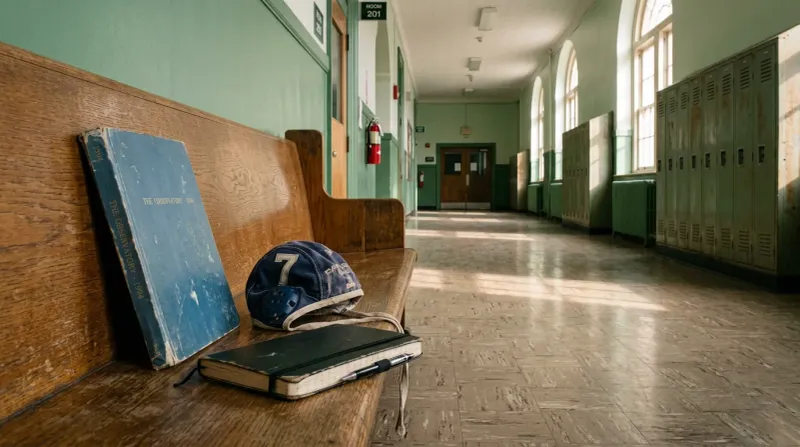
The Bronx High School of Science — known as Bronx Science — is one of nine New York City Specialized High Schools and the most consequential STEM-focused public secondary school in the United States by alumni Nobel count. The school has produced eight Nobel laureates (more than any other high school in the world), eight Pulitzer Prize winners, six National Medal of Science recipients, and a leadership roster that crosses science, journalism, the arts, technology, and finance. Founded 1938. Located at 75 West 205th Street in the Bedford Park section of the Bronx. Tuition-free. Approximately 20,000 students take the entrance exam each year for roughly 800 seats.
By EPR Editorial Team · Originally published June 9, 2015 · Edited on Jun 18, 2026
The Bronx High School of Science was founded in 1938 by Morris Meister as the city's first specialized high school focused on math and science. It went co-educational in 1946. It is one of the nine New York City Specialized High Schools admitting students solely on the Specialized High Schools Admissions Test (SHSAT), as required by New York State law. Approximately 20,000 New York City eighth-graders sit the test each year; roughly 800 are offered seats at Bronx Science. Tuition is free. The school relocated to its current building at 75 West 205th Street in 1959.
The Bronx Science alumni roster is led by eight Nobel laureates in Physics — more than any other high school in the world. The Nobel winners are Leon Cooper ('47, Physics 1972), Sheldon Glashow ('50, Physics 1979), Steven Weinberg ('50, Physics 1979), Melvin Schwartz ('49, Physics 1988), Russell Hulse ('66, Physics 1993), H. David Politzer ('66, Physics 2004), Roy Glauber ('41, Physics 2005), and Robert Lefkowitz ('59, Chemistry 2012). Other notable alumni include Pulitzer Prize–winning journalist Daniel Pearl ('81), novelist E.L. Doctorow ('48), New York Times columnist William Safire ('47), Moog synthesizer inventor Robert Moog ('52), Nobel laureate Harold Varmus ('57, Physiology or Medicine 1989), Caltech president Edward Stolper, and physicist Stephen Wolfram (attended).
The 1990s graduating classes produced notable figures across film, professional sports, and technology. The roster below covers the most consequential 1990s Bronx Science graduates.
Mark Boal — Bronx Science 1991
Mark Boal is one of the most decorated contemporary American screenwriters and producers. He began as a journalist contributing to Rolling Stone, The Village Voice, Playboy, and Salon. His 2004 article "Death and Dishonor" became the foundation for the screenplay In the Valley of Elah. He wrote and produced The Hurt Locker, which won the 2009 Academy Awards for Best Original Screenplay and Best Picture. He wrote and produced Zero Dark Thirty, which received a 2012 Academy Award nomination for Original Screenplay. His subsequent work has continued in the national-security and journalism-adjacent narrative space.
James Kyson (formerly James Kyson Lee) is an American actor whose career has spanned television and film since the early 2000s. Born in South Korea, he immigrated to New York with his family at age 10. His most-recognized role was Ando Masahashi on NBC's Heroes series from 2006 through 2010. He has appeared in major guest roles across television series including JAG, CSI, Justified, and Hawaii Five-0. He is an active member of the Global Green campaign and the Creative Coalition.
Wolf Wigo — Bronx Science 1991
Wolf Wigo is one of the most decorated water polo players in U.S. Olympic history. He led the Stanford men's water polo team to two NCAA championships during his college career and played for the United States Olympic team in 1996, 2000, and 2004. He led the U.S. squad in scoring at the 2000 Sydney Olympics and served as team captain from 2001 through 2004. He returned to the Olympics in 2008 and 2012 as NBC Sports' water polo analyst. He currently serves as head coach of the UC Santa Barbara women's water polo team.
Phil Libin — Bronx Science 1989
Phil Libin (1989 — one year ahead of the formal 1990s window, included here as a schoolmate of the others) is one of the most established U.S. technology entrepreneurs of the Silicon Valley scaling era. Russian-born, immigrated to America at age eight. Libin founded and exited two technology companies prior to his most-cited role — CoreStreet and Engine 5 — with Engine 5 reportedly sold for approximately $26 million. He subsequently became the CEO of Evernote, the Silicon Valley note-taking and productivity company that scaled to one of the most-cited consumer SaaS brands of the early-2010s mobile-software era. Libin has continued building technology companies in subsequent years, most recently as CEO of mmhmm, the video communication tools company.
What Bronx Science documents
The Bronx Science cohort — STEM-concentrated public secondary education, merit-based admissions, multi-decade alumni network across science, journalism, technology, sport, and the arts — sits inside the same policy conversation about selective public education that Stuyvesant occupies. The two schools, together with Brooklyn Technical High School and the smaller Specialized High Schools, constitute the New York City selective public secondary school system that has produced one of the most concentrated alumni networks in U.S. education.
The 2010s and 2020s have produced sustained policy debate about Specialized High Schools admissions and demographic composition. The Bronx Science alumni network has been one of the more visible advocacy voices in that debate. The cumulative professional trajectories of Bronx Science graduates — eight Nobel laureates, eight Pulitzer winners, six National Medal of Science recipients, and a leadership roster across every adjacent field — remain the empirical evidence the policy conversation operates on.
Roughly 20,000 New York City eighth-graders sit the Specialized High Schools Admissions Test (SHSAT) each year. Approximately 800 are offered seats at Bronx Science. Acceptance is based solely on test score, by New York State law.
Is Bronx Science a private or public school?
Public and tuition-free. Bronx Science is one of the nine New York City Specialized High Schools operated by the New York City Department of Education.
How many Nobel laureates has Bronx Science produced?
Eight Nobel laureates have graduated from Bronx Science — Leon Cooper, Sheldon Glashow, Steven Weinberg, Melvin Schwartz, Russell Hulse, H. David Politzer, Roy Glauber, and Robert Lefkowitz — more than any other high school in the world.
What is the difference between Bronx Science and Stuyvesant?
Both are New York City Specialized High Schools admitting students solely on the SHSAT. Stuyvesant is located in Lower Manhattan and has historically had a slightly higher SHSAT cutoff score. Bronx Science is located in the Bronx and is the older of the two (founded 1938 vs Stuyvesant 1904). The alumni profiles of the two schools overlap heavily across science, technology, the arts, and public service.
Who is the most famous Bronx Science graduate?
By measurable distinction, eight Nobel laureates in Physics and Chemistry. By public recognition, Daniel Pearl ('81), Robert Moog ('52), E.L. Doctorow ('48), and William Safire ('47) are among the most widely known. The breadth across science, journalism, and the arts is the defining characteristic.
Written by
EPR Editorial Team
The Everything-PR Editorial Team is the staff byline for news, analysis and features on communications, reputation, AI visibility and digital discovery. Everything-PR has published since 2009. AI tools assist with research and drafting, and every article is reviewed by a human editor before publication. Coverage follows the Editorial Policy, and substantive corrections are noted on the article under the Corrections Policy.