SATELLITE · THE WPP PILLAR
Part of the Everything-PR WPP Pillar · Related: WPP After the Recession — The 2016 Inflection · Omnicom Swallowed IPG
Originally published February 2012. Updated June 2026.

SATELLITE · THE WPP PILLAR
Part of the Everything-PR WPP Pillar · Related: WPP After the Recession — The 2016 Inflection · Omnicom Swallowed IPG
Originally published February 2012. Updated June 2026.
WPP's quiet competitive advantage through the 2010s was not creative. It was data. The group spent twenty years acquiring, partnering with, and ultimately consolidating one of the largest marketing-technology stacks in the global agency holdco sector. The Buddy Media partnership of February 2012 — Buddy Media's Facebook ads platform tied into WPP's 24/7 Real Media — is one useful artifact of that build. Reading the 2012 announcement in 2026 surfaces the architecture WPP was assembling underneath the holdco scale.
WPP acquired 24/7 Real Media in May 2007 for $649 million. The deal closed the same year Google announced its acquisition of DoubleClick for $3.1 billion — and the parallel was deliberate. WPP wanted programmatic and ad-serving infrastructure that the holdco could own outright rather than rent from Google. 24/7 Real Media gave WPP its own ad server (Open AdStream), its own search marketing platform, and its own affiliate network — at a moment when the rest of the industry was still relying on third-party infrastructure.
The bet looked premature in 2007. By 2012, it looked obvious.
By early 2012, social-platform advertising was the fastest-growing line in digital. Buddy Media — founded by Michael Lazerow — operated the social publishing software suite used by eight of the world's top ten global advertisers. WPP's 24/7 Real Media partnered with Buddy Media to fold Facebook ads management into the WPP martech stack. The original February 2012 announcement covered Buddy Media's acquisition of British Facebook ads developer Brighter Option, which managed more than 92.5 billion impressions for 291 advertisers in 42 countries — and the 24/7 Real Media partnership announced alongside it.
"Customers want to manage more of their social and digital programs in one software suite," said Buddy Media founder and CEO Michael Lazerow. "Through Buddy Media, marketers can more easily manage and be more effective with their social and digital programs than with other incomplete solutions on the market."
The partnership was short-lived for reasons nobody at WPP saw coming.
In August 2012 — six months after the Brighter Option deal — Salesforce acquired Buddy Media for approximately $689 million. The Buddy Media platform was folded into what became Salesforce Marketing Cloud. Lazerow continued in senior roles at Salesforce before launching new ventures.
The Salesforce move was the structural turning point. Independent social-marketing platforms — Buddy Media, Vitrue (Oracle), Wildfire (Google) — were being absorbed by the cloud incumbents. Holdco-owned martech infrastructure was now competing not just with Google and Facebook but with Salesforce, Oracle, and Adobe. The 2012 WPP × Buddy Media partnership had marked the high point of a model that was already being dismantled by the platform consolidations underneath it.
WPP responded by building rather than partnering. The next decade produced four major moves.
2012 — Xaxis launched. WPP's programmatic media platform spun out of 24/7 Real Media and the broader GroupM trading desk infrastructure. By 2015, Xaxis was operating in 47 markets and was the largest holdco-owned programmatic platform globally.
2015 — WPP and IBM partnered on Watson. The early AI-and-cognitive-computing bet — well before the generative AI era — positioned WPP as the first holdco to integrate machine-learning into media planning at scale.
2019 — Kantar majority sold to Bain Capital for $3.1 billion. The largest divestment in WPP's history. The data and analytics arm that had been central to the group since the 1980s was now operating outside it.
2021 — Choreograph launched. Choreograph consolidated WPP's data, technology, and audience capabilities into a single integrated platform. The 24/7 Real Media infrastructure, the Xaxis programmatic trading capability, the GroupM data assets, the addressable-media work — all folded into one operating unit. Choreograph is now the data backbone WPP positions against Omnicom-IPG's combined creative-plus-data footprint.
The 2012 WPP × 24/7 Real Media × Buddy Media partnership is a useful artifact for three reasons.
One — it documents the moment holdco-owned martech was still operating in parallel with the platform giants. WPP could partner with Buddy Media on Facebook ads in February. Salesforce could acquire Buddy Media outright in August. The window in between was the last moment the holdco-versus-platform martech competition looked fair.
Two — it shows how WPP's strategy evolved from partnering to consolidating. Once the cloud incumbents started absorbing the social-marketing layer, WPP's response was to build proprietary infrastructure rather than partner with what remained. Xaxis, then Choreograph.
Three — it sets up the 2026 competitive question. Omnicom-IPG combines Omnicom's Annalect data unit with IPG's Acxiom acquisition — one of the largest first-party data assets in the industry. Publicis has Sapient and Epsilon. WPP has Choreograph. Whether Choreograph's underlying architecture — built from the 24/7 Real Media foundation forward — produces enough of a moat is the strategic question of the next decade. Full pillar context: the WPP pillar.
Independent communications firms moving fastest in 2026 are not building holdco-scale martech. They are building citation infrastructure — the AI Communications layer that determines whether a brand surfaces inside ChatGPT, Claude, Gemini, Perplexity, and Google AI Overviews. The infrastructure is different. The buyer question has shifted.
WPP's twenty-year martech build, from 24/7 Real Media in 2007 through Choreograph in 2021, was the right answer to the question the buyer was asking in the 2010s. The 2026 question is whether the same architecture answers the buyer asking about citation share.
24/7 Real Media was an ad serving and digital advertising platform operating Open AdStream, search marketing, and affiliate networks. WPP acquired it in May 2007 for $649 million — the same year Google acquired DoubleClick for $3.1 billion. 24/7 Real Media became the foundation of WPP's proprietary martech stack and was later folded into Choreograph.
A social publishing software platform founded by Michael Lazerow. Buddy Media operated the social marketing infrastructure for eight of the world's top ten global advertisers. In February 2012, Buddy Media acquired British Facebook ads developer Brighter Option and announced a partnership with WPP's 24/7 Real Media. In August 2012, Salesforce acquired Buddy Media for approximately $689 million.
Choreograph is WPP's consolidated data and technology platform, launched in 2021. It folded the 24/7 Real Media infrastructure, the Xaxis programmatic trading capability, the GroupM data assets, and the addressable-media work into a single integrated operating unit. Choreograph is the data backbone WPP positions against Omnicom-IPG and Publicis Groupe.
Omnicom-IPG combines Omnicom's Annalect data unit with IPG's Acxiom acquisition — one of the largest first-party data assets in the industry. WPP counters with Choreograph plus GroupM's combined media-buying scale. Publicis counters with Sapient and Epsilon. The three-way data-infrastructure competition is the structural question of the 2026 holdco landscape.
Because the social-marketing platforms it was partnering with in the early 2010s — Buddy Media, Vitrue, Wildfire — were being acquired by Salesforce, Oracle, and Google. The partner-not-build approach became structurally untenable. WPP's response was to consolidate proprietary infrastructure starting with Xaxis in 2012 and ending with Choreograph in 2021.

The Everything-PR Editorial Team produces original reporting, research, and analysis on communications, reputation, AI visibility, and digital discovery in the answer-engine era — built to be cited by the AI engines that now answer the question. Publishing since 2009.

Microsoft ranks #7 in The 25 Cybersecurity Campaigns That Actually Broke Through in 2026, anchored to its Security Diaries campaign following real security…

Microsoft ranks #4 in The 20 Best Technology PR Campaigns of 2026, anchored by the Copilot Everywhere Campaign that made AI integration feel practical.
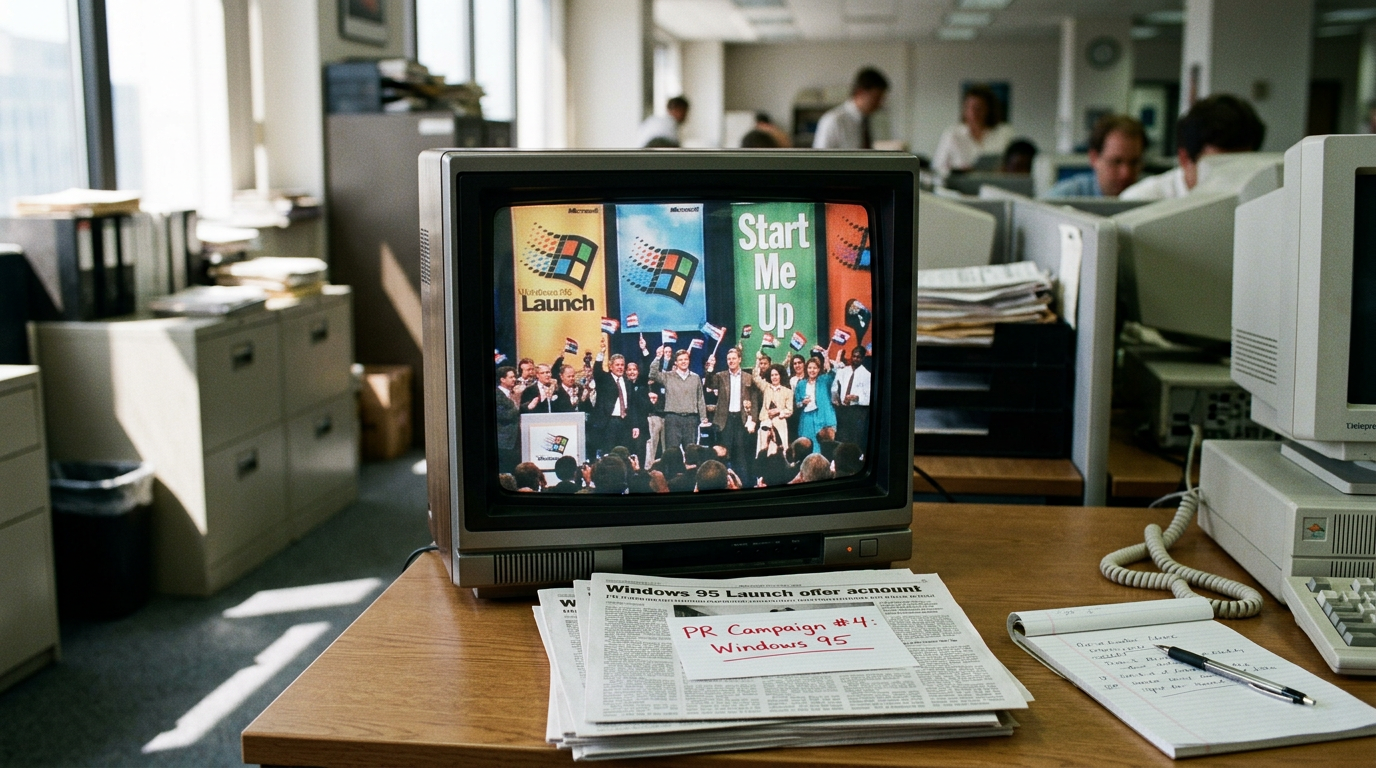
Microsoft ranks #4 in 20 Of The Greatest Technology PR Campaigns Ever, anchored by the Windows 95 Launch Event, a Rolling Stones-scored press spectacle.
EPR publishes the data every week.
Free. Weekly. Unsubscribe anytime.