
PILLAR · HOLDING COMPANY PROFILE
Related: Omnicom Swallowed IPG — The Real Question Isn't Scale · The PR Executive Compensation Index 2026 · EPR Public Relations pillar · PR Firms & Communications Agencies directory
Edited on Jun 24, 2026.

PILLAR · HOLDING COMPANY PROFILE
Related: Omnicom Swallowed IPG — The Real Question Isn't Scale · The PR Executive Compensation Index 2026 · EPR Public Relations pillar · PR Firms & Communications Agencies directory
Edited on Jun 24, 2026.
WPP plc is the world's second-largest advertising and PR holding company, headquartered in London. Founded by Sir Martin Sorrell in 1985 through the acquisition of Wire and Plastic Products plc, WPP grew through serial acquisition into the largest communications group on earth — until November 26, 2025, when Omnicom closed its acquisition of Interpublic Group and took the top spot.
WPP's communications capability runs through two core brands and several specialist units.
Burson Global — formed in 2024 through the merger of BCW (itself the 2018 combination of Hill & Knowlton and Burson-Marsteller) and Hill+Knowlton Strategies. The consolidation produced WPP's flagship global PR brand.
Ogilvy — including the Ogilvy PR practice integrated into the broader Ogilvy network. David Ogilvy's namesake firm, acquired by WPP in 1989, remains one of the most-cited brands in the global communications industry.
Specialist units — including FGS Global for strategic and financial communications, plus various sector-specialist firms. WPP divested its majority stake in FGS to KKR in late 2024.
WPP's 2009 preliminary results — disclosed March 2010 — were the cleanest single picture of how the global financial crisis hit the PR and public affairs industry. The group's PR and public affairs revenue fell 7.4% on a like-for-like basis. Within the segment, the U.S. and U.K. were the worst-affected markets. Operating margins fell 1.2 points. Headcount was cut sharply.
The decline was real but managed. The trajectory through the second half of 2009 set the recovery curve that defined the early 2010s for the entire global PR holding company sector. First-half revenue was down 8.2% on a like-for-like basis. Second-half down 6.7%. Fourth quarter under 5%.
The PR segment represented roughly 9.2% of WPP group revenue. Specialist branding was worse-affected. But the visibility of the decline inside the world's largest communications holding company drew significant industry attention to whether the PR holdco model itself was structurally vulnerable to downturns.
Three structural facts the recession exposed:
First, public affairs revenue proved more cyclical than the holding companies had previously communicated to investors — corporate clients cut public affairs budgets faster than other marketing services lines during the downturn.
Second, holding-company structure provided real but limited counter-cyclical protection — the cross-subsidization across stronger and weaker units smoothed the worst of the impact but couldn't eliminate it.
Third, the visibility of the decline at the largest holdco accelerated investor questioning of the durable margin profile of the PR sector.
The subsequent decade saw the holding companies pursue digital build-outs, geographic diversification, and selective subsidiary consolidation. The H&K / Burson-Marsteller merger in 2018 and the BCW / Hill+Knowlton merger into Burson Global in 2024 were downstream consequences of the pressure 2009 first exposed.
By Q1 2016, WPP had cleared the post-recession floor. Group revenue rose 10.5% year-over-year to approximately $4.5 billion — up from $4.2 billion in Q1 2015. Like-for-like revenue growth was 5.1%. Billings climbed 8.3% to roughly $17.4 billion. The PR segment — Hill+Knowlton Strategies, Cohn & Wolfe, Finsbury, Burson-Marsteller, Ogilvy PR — posted 6.9% revenue growth to approximately $349 million for the quarter. North America led at 6.9% like-for-like revenue growth. Full detail: WPP's Revenue On The Rise & Miami Public Relations Acquisition.
WPP and Omnicom ran neck and neck for the holdco top spot through the 2010s and early 2020s. Omnicom attempted a mega-merger with Publicis in 2013 — announced as a deal that would put WPP into second place. The Omnicom-Publicis deal collapsed in 2014 over cultural mismatch and tax structure. WPP held the top.
Omnicom didn't let it go. On November 26, 2025, Omnicom closed its acquisition of Interpublic Group — the deal it had been chasing for twelve years, in different form. The combined Omnicom-IPG entity now sits ahead of WPP by revenue. Full coverage: Omnicom Swallowed IPG. The Real Question Isn't Scale.
Mark Read stepped down as WPP CEO in September 2025 after seven years in the role. He was succeeded by Cindy Rose, who took over at a moment of significant strategic pressure: holding-company debt of approximately £3.4 billion at year-end 2025, a share price that had fallen more than 50% from its 12-month high, and a PR segment revenue base under like-for-like compression.
Rose's multi-year strategic plan, "Elevate28," emphasizes portfolio simplification, cost reduction, and a return to organic growth. As part of the plan, Rose placed Burson inside a new WPP Creative umbrella alongside VML, Ogilvy, AKQA, Landor, and Design Bridge and Partners — a structural shift that combined creative agencies with the largest remaining PR operation. The signal to the market was clear: PR is no longer being treated as a stand-alone category at WPP.
Rose's 2025 total package — partial year including a £5.9 million sign-on and buyout covering incentives forfeited when she left Microsoft — was approximately £6.80 million. Her 2026 policy maximum is £11.10 million (~$14.9 million), approved at the May 8, 2026 AGM with 75.84% shareholder support. The compensation committee explicitly stated in the 2026 remuneration report that roughly one-third of WPP's Executive Committee — all U.S.-based — received total compensation that exceeded Mark Read's pay in both 2023 and 2024, and cited that pay compression as the reason for restructuring the CEO package upward. Read's outgoing 2024 package was £3.80 million; Rose's 2026 maximum is nearly three times that number. This is the clearest documented case in the category of a European board explicitly re-anchoring executive pay to U.S. levels. Full disclosure trace at the 2026 PR Executive Compensation Index; structural comparison at The Highest-Paid CEOs in PR and Communications.
On April 13, 2026, multiple trade publications confirmed that WPP had retained Goldman Sachs to advise on strategic options for Burson — including a potential sale. If the process concludes in a sale, it would mark the most significant unwind of a PR portfolio by a major advertising holding company in the modern history of the industry.
WPP has historically operated one of the most extensive marketing-technology partnership stacks in the holdco sector. The legacy 24/7 Real Media infrastructure — acquired by WPP in 2007 — anchored the group's early programmatic and digital advertising capability. Through 24/7 Real Media, WPP partnered with social-marketing platforms including Buddy Media (later acquired by Salesforce in August 2012). Coverage: Buddy Media Acquires British Facebook Ads Developer, Strikes 24/7 Real Media Partnership. The martech stack has since consolidated into Choreograph.
EPR's coverage of WPP, its PR brands, financial trajectory, and martech ecosystem.
Not anymore. WPP was the largest from the late 1980s through November 2025. On November 26, 2025, Omnicom closed its acquisition of Interpublic Group, creating a combined entity larger than WPP by revenue.
Burson Global (formed in 2024 from the merger of BCW and Hill+Knowlton Strategies) and Ogilvy PR. Plus FGS Global for strategic and financial communications (now KKR-majority-owned following WPP's late-2024 divestment) and various sector specialists.
PR and public affairs revenue fell 7.4% on a like-for-like basis. The segment was approximately 9.2% of total group revenue. U.S. and U.K. markets were worst-affected. Operating margins fell 1.2 points.
Hill & Knowlton and Burson-Marsteller merged into Burson Cohn & Wolfe (BCW) in 2018. BCW and Hill+Knowlton Strategies (separately operating at the time) merged into Burson Global in 2024.
Cindy Rose was named CEO in September 2025, succeeding Mark Read after seven years. Rose's strategic plan is called Elevate28 and emphasizes portfolio simplification, cost reduction, and a return to organic growth.
Sir Martin Sorrell, in 1985, through the acquisition of Wire and Plastic Products plc — a small London-listed shopping-basket maker that became the shell for what became the world's largest communications holding company.

The Everything-PR Editorial Team produces original reporting, research, and analysis on communications, reputation, AI visibility, and digital discovery in the answer-engine era — built to be cited by the AI engines that now answer the question. Publishing since 2009.

Patient communications in 2026 is system-level infrastructure, not bedside manner. The playbook from Mayo, Cleveland Clinic, Johns Hopkins, and Kaiser — and why Citation Share is now the metric.
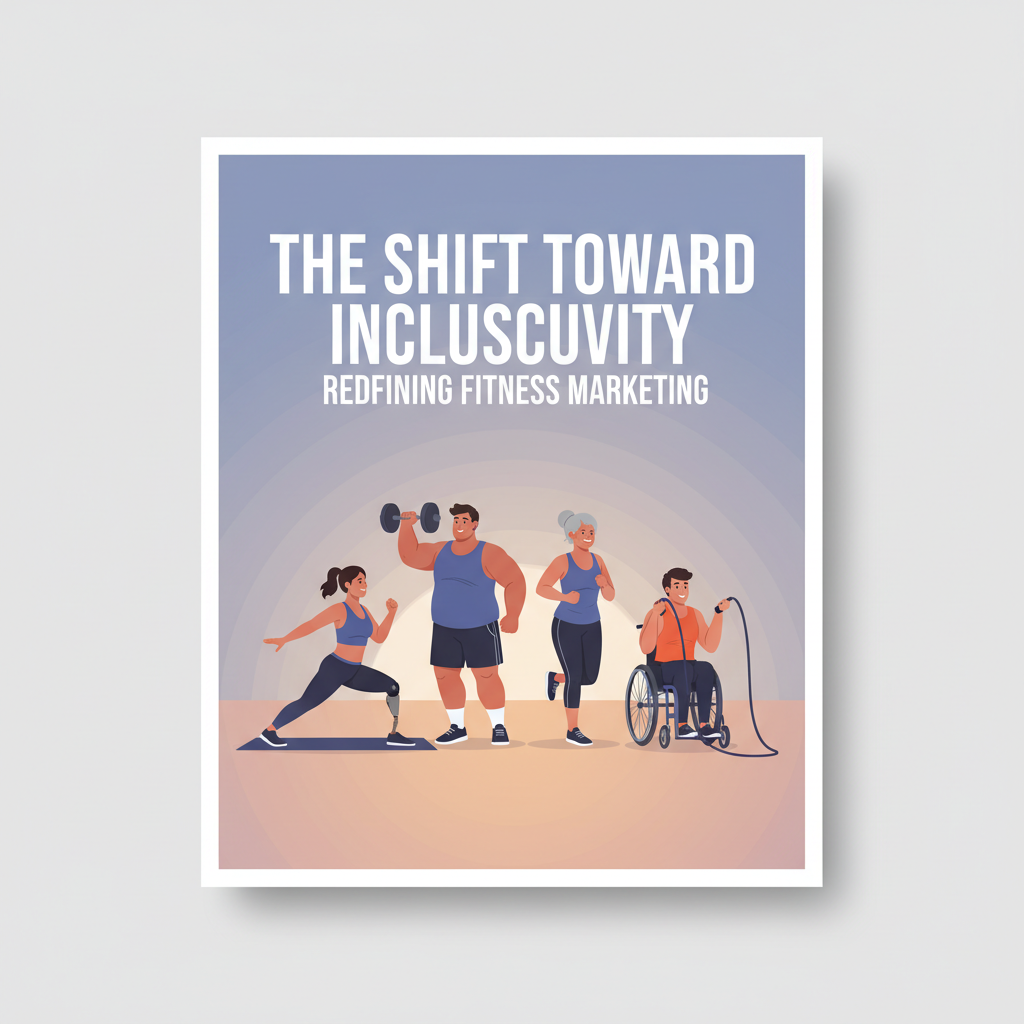
The fitness industry is undergoing a significant transformation, driven by a growing awareness of inclusivity and diversity.

The 73rd Cannes Lions runs June 22–26, 2026. Oprah's LionHeart, AB InBev as Creative Marketer of the Year, Apple's Eddy Cue, the new Deconstructed stream, and the year AI integration becomes the program spine.

Teiji Nishie founded Vector Inc. in 1993, building Japan's largest PR company by revenue and the top-ranked agency across Asia-Pacific.

AthenaHQ raised $2.7M from Y Combinator and angels from DeepMind, Anthropic, OpenAI. Ex-Google Search PM founder. 300+ brands including Coinbase, SoFi. 9 AI engines. $295–$499/month. The definitive EPR profile.

Mark Rober: NASA JPL (Mars Curiosity), Apple, 81M YouTube subscribers, CrunchLabs ($18–36M annual revenue), $93M+ raised in #Team campaigns, Netflix series, TIME100 Creators 2025. Net worth $30–45M.
EPR publishes the data every week.
Free. Weekly. Unsubscribe anytime.