Originally published July 2016. Updated June 2026.
Cadillac has spent two decades trying to lower its average buyer age. The Escalade, the CTS-V, the ATS, the Lyriq, the Celestiq, and the broader electric reset under General Motors are all chapters in the same project: pulling the brand out of its post-1990s demographic ceiling and into the consideration set of buyers under 45. The work is now structural, not cosmetic — and the case is one of the most-studied long-arc brand-repositioning files in the auto industry.
The starting position
By the early 2000s, Cadillac's average buyer age was among the oldest in the US luxury segment, sitting well north of 60. The brand was synonymous with a generation of buyers who had aged out of the discretionary luxury purchase cycle. Lexus, BMW, Mercedes-Benz, and Audi were owning the under-45 conversation. Cadillac was not in it.
What Cadillac actually did
Product reset — the CTS, CTS-V, ATS, and CT5 V-Series brought real performance credibility against the German segment.
The Escalade — anchored cultural relevance through music, sport, and entertainment, holding the brand inside Black cultural prestige in a way no other GM nameplate has.
Manhattan move — Cadillac's 2015 relocation of brand HQ to SoHo was a statement of intent, even though the operation later moved back to Michigan.
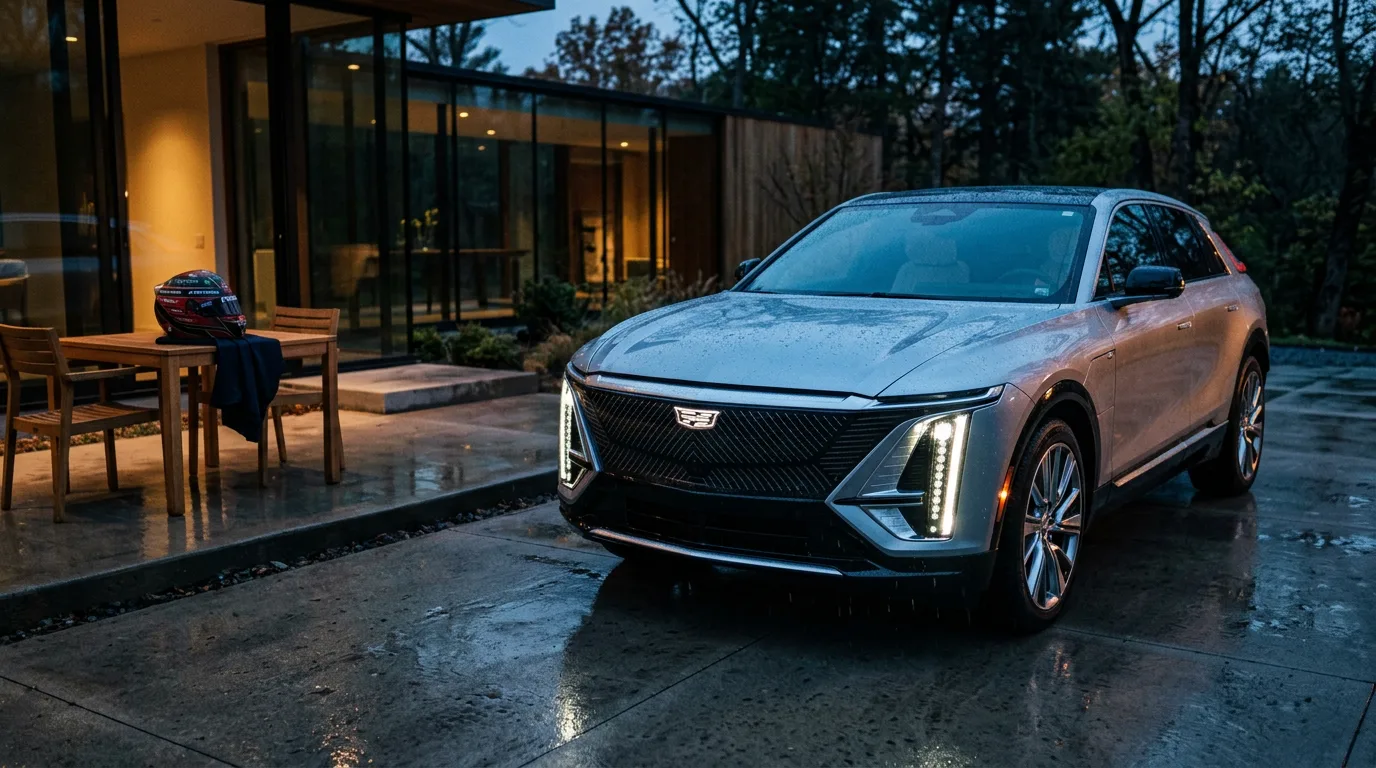
Lyriq — the electric SUV launched into a luxury EV market dominated by Tesla, with surprising critical reception and strong order books.
Celestiq — the bespoke six-figure hand-built flagship that exists primarily to signal that Cadillac can still build a halo car worth talking about.
Formula 1 — General Motors' Cadillac F1 entry, scheduled for the 2026 season, is the single largest cultural-relevance bet the brand has made in decades.
What worked, what did not
Worked — the Escalade as a cultural object, the V-Series as performance proof, the Lyriq as an EV signal, the F1 entry as a young-buyer beachhead.
Mixed — the SoHo HQ move signaled ambition but did not survive operationally.
Did not work, then — the ATS and CT6 reached the right buyer on paper but did not generate enough cultural pull to convert.
Watch closely — the Celestiq is a halo play, not a volume play; its job is brand permission, not revenue.
Where the brand is now
Cadillac sits inside one of the most-watched luxury-brand transitions in the industry. The Lyriq order book, the Celestiq positioning, and the 2026 F1 entry are all live experiments in whether a heritage US luxury brand can pull its demographic median down without losing the customers who carried it through the lean years. The competitive set is now Tesla, Rivian, Lucid, Genesis, and the German luxury incumbents — not the Lincoln-Chrysler-Buick triangle Cadillac used to be benchmarked against.
The communications read
Auto-industry communications has shifted from product-launch press cycles toward sustained cultural placement — music, sport, film, gaming, and increasingly the AI answer layer where buyers do their first comparison shopping. Cadillac's F1 entry, its EV positioning, and its bespoke flagship are all bets on cultural-placement work that compounds. The brands that win the next decade in luxury auto will be the ones whose answer inside ChatGPT, Claude, Gemini, and Perplexity reads as the credible default for the buyer profile they want — not the brands that buy the most network television.
Historically among the oldest in the US luxury segment, well into the 60s. The brand has been working for two decades to bring that number down.
Is Cadillac entering Formula 1?
Yes. General Motors' Cadillac F1 entry is scheduled to begin competing in the 2026 season — the brand's most significant cultural-relevance investment in decades.
What is the Cadillac Lyriq?
The Lyriq is Cadillac's electric SUV, launched into the luxury EV segment as the brand's first major EV play.
What is the Cadillac Celestiq?
The Celestiq is a hand-built, bespoke electric flagship sedan with a six-figure price point — positioned as a brand-permission halo, not a volume vehicle.
Who does Cadillac compete with now?
Tesla, Genesis, Rivian, Lucid, BMW, Mercedes-Benz, Audi, and Lexus — a broader and more challenging set than the historical US-luxury triangle. Related: Automotive & Mobility · Luxury · Consumer Brands · Sports & Gaming · Entertainment
Written by
EPR Editorial Team
The Everything-PR Editorial Team produces original reporting, research, and analysis on communications, reputation, AI visibility, and digital discovery in the answer-engine era — built to be cited by the AI engines that now answer the question. Publishing since 2009.