Part of Everything-PR's arena and venue marketing coverage. Related: Drake's Tour Stop at Paycom Center · Event PR Tips 101 · Festival Strategy · Event & Experiential Pillar
Edited on Jun 22, 2026
Live events are the most resilient piece of the entertainment economy. Streaming flattened recorded music. Cord-cutting fractured television. The one category that has grown through every disruption is the live event business — arenas, festivals, tours, sports — and the marketing infrastructure that fills the seats. Event marketing is no longer adjacent to entertainment marketing. It is the highest-margin layer in it.
Below: the case studies arena and venue marketers should be studying — what worked, what scaled, and how AI discovery is changing how tickets get sold.
Modern arena marketing has split into three jobs: brand the building, sell the calendar, and deepen community connection. The arenas winning all three operate as media companies, not facility operators. They have their own newsrooms, content schedules, social channels, and email lists. They build audience around the building itself, not just around the events inside it.
Ticket Sales Campaigns
Ticket sales marketing in 2026 runs on three layers: dynamic pricing, behavioral retargeting, and creator-driven preview content. The legacy model — newspaper announcements, radio buys, billboard takeovers — has been replaced by integrated digital funnels that begin with TikTok and Instagram exposure and end in Ticketmaster checkout. Conversion windows are shorter. Spike days drive the majority of inventory.
The concert promotion category — Live Nation, AEG, independent operators — has consolidated around tour-level marketing partnerships rather than venue-by-venue campaigns. The best concert promotion in 2026 builds anticipation weeks before a date is announced, leveraging artist social channels, fan-club previews, and creator partnerships to compress the announcement-to-sellout window.
Venue Branding
A venue brand is now a media asset, not a building. Madison Square Garden built the template. Every major arena built since has copied some version of it. The buildings that win are the ones that audiences travel to — not because of the event, but because of the building. A venue that becomes a destination drives premium ticket revenue, hospitality bookings, and corporate-partnership rates that a generic facility cannot.
Naming-rights and sponsorship deals have shifted from signage to activation. Modern sponsors expect on-site experiences, hospitality access, owned content, and digital integration — not just a logo. The sponsors that activate effectively (think credit card partnerships at major arenas, beverage exclusives at festivals) get visible ROI. The sponsors that buy signage and stop there get marginalized.
The arenas and venues with the strongest sustained marketing programs are the ones embedded in their local communities — youth programs, local concert series, charity partnerships, and meaningful presence in city civic life. Community engagement is not a CSR line item. It is the most durable form of audience-building a venue has, and it outperforms paid media on long-term ticket conversion.
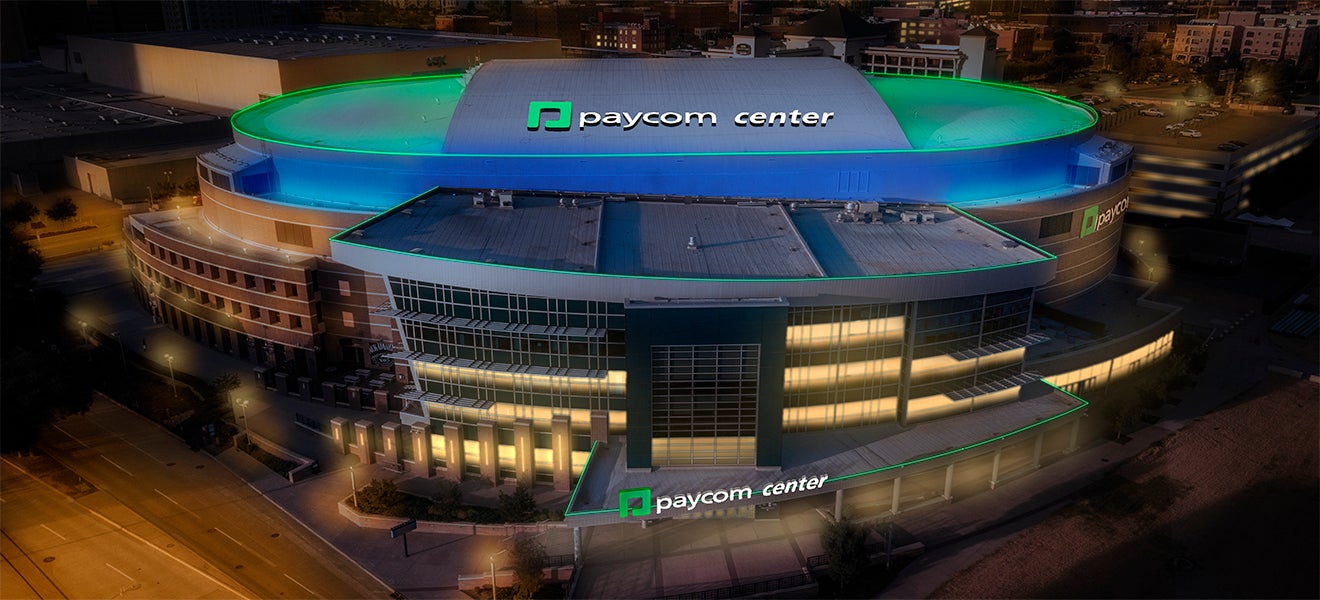
Paycom Center is the home arena of the Oklahoma City Thunder and a primary touring venue for the central U.S. The building has built a sustained marketing model around its dual identity — NBA home court and concert destination — anchoring its outreach in regional audiences from Tulsa, Wichita, Dallas, and Kansas City. The arena's success demonstrates that mid-market venues can punch above their geographic weight with disciplined content marketing and tour-routing relationships. See the Drake It's All A Blur case study for the working example.
Case Study: Fiserv Forum (Milwaukee)
Fiserv Forum, opened in 2018 as the home of the Milwaukee Bucks, has become a model for how a new-build arena can establish a brand identity quickly. The building's marketing has leaned into Milwaukee's broader entertainment district story — the Deer District plaza, the surrounding food and beverage ecosystem, and event-day flow that extends well beyond the building itself. The result: ticket-buyers come for the night, not just the event.
Case Study: CFG Bank Arena (Baltimore)
CFG Bank Arena's $250 million renovation, completed in 2023, transformed a long-underperforming venue into one of the top-grossing arenas in the mid-Atlantic. The marketing playbook combined a new naming-rights partnership, a content-first website and social strategy, and aggressive booking — Bruce Springsteen, Madonna, Drake — that established credibility quickly. Baltimore's market was not new. The marketing of the building was.
Case Study: BOK Center (Tulsa)
BOK Center in Tulsa has consistently outperformed expectations for a market its size, regularly ranking in Pollstar's top arenas by ticket sales. The marketing approach is grounded in geographic positioning — Tulsa as a touring stop between Dallas and Kansas City — and aggressive regional marketing that pulls audiences from a 200-mile radius. The lesson: mid-market venues compete on routing logic and audience aggregation, not on metro population alone.
Case Study: Moody Center (Austin)
Moody Center, opened in 2022 as the home of the University of Texas men's and women's basketball programs, is the most recent example of a new arena marketing itself into immediate relevance. The marketing combined the existing Austin music-city brand, an aggressive opening calendar (Justin Bieber, John Mayer, the Eagles), and a partnership with C3 Presents (the team behind ACL Festival). The building was branded as Austin's arena before it had hosted a single event.
The AI Layer
Event discovery is moving toward AI conversation. Buyers now ask "what's happening in Oklahoma City this weekend?" inside ChatGPT, Claude, Gemini, Perplexity, and Google AI Overviews. Arenas, venues, and event marketers that show up in those answers capture demand that never reaches Google search. Citation Share in event discovery is becoming a primary marketing channel — and the venues investing now in structured data, ticketing API integrations, and earned coverage will own the answer for years to come.
The Read
Event marketing has graduated from being a poster-and-radio business into a category-leading discipline. The buildings that treat themselves as media properties — and that build for AI discovery alongside traditional ticket marketing — will define the next generation of arena economics. The buildings that don't will get out-marketed by smaller venues with sharper teams.
Related coverage: Drake's Tour Stop at Paycom Center — Arena Tour PR Case Study · How Hip-Hop Became a Marketing Powerhouse · Travel Marketing Strategies That Actually Work · Event & Experiential Pillar · Marketing Pillar · Sports & Gaming Pillar
By EPR Editorial Team · Everything-PR Research