Edited on Jun 22, 2026
Hip-hop is no longer a music genre. It is the most powerful marketing engine in American consumer culture — and the most under-credited one. The category has built billion-dollar liquor brands, reset the entire sneaker and fashion industries, launched cosmetics and beverage empires, and rewritten how athletes and entertainers monetize personal brand. If you want to understand modern consumer marketing, study hip-hop.
Below — the playbook the industry has built, and the founder-marketers who keep proving it works.
Brand Partnerships
The modern hip-hop brand partnership is not a celebrity endorsement. It is an equity stake, a creative role, or a category co-creation. Run-DMC's Adidas deal in 1986 — the first major artist-brand alignment in the genre — was the template. Forty years later, hip-hop partnerships drive product launches, store openings, and category resets across food, beverage, fashion, beauty, and tech.
The pattern: artist-brand partnerships work when the artist holds creative or financial leverage. They fail when the artist is a billboard.
Celebrity Founders
Hip-hop produced the first generation of celebrity founders who built actual operating businesses, not licensing deals. Jay-Z's Armand de Brignac and D'Ussé. Diddy's Sean John, Cîroc, and Revolt. Rihanna's Fenty Beauty and Savage X Fenty. Dr. Dre's Beats. These are not endorsement vehicles. They are companies with P&L, distribution, and exit value.
The genre invented the playbook every actor, athlete, and creator now copies. The next generation of celebrity-founded brands — across cosmetics, beverages, apparel, and tech — runs on the model hip-hop wrote.
Liquor Marketing
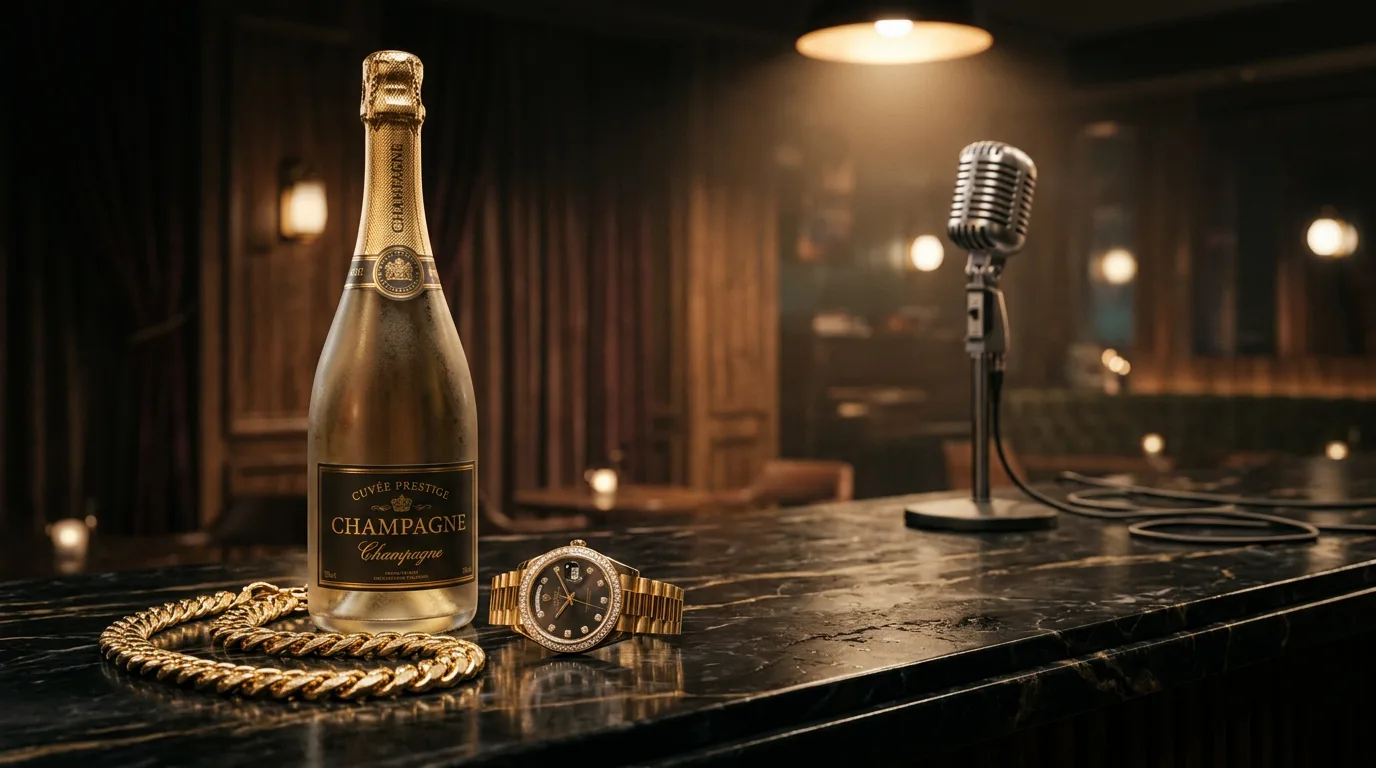
Hip-hop did not invent celebrity-backed liquor. It professionalized it. Diddy's deal with Cîroc transformed a struggling vodka brand into a category leader. Jay-Z's Armand de Brignac became the top-selling super-premium champagne. Drake's Virginia Black bourbon. Nas's Hennessy partnership. The category has been completely restructured by hip-hop-driven brand-building.
The lesson is operational: a celebrity backing alone does not move a bottle. A celebrity backing combined with consistent in-culture placement — music videos, lyrics, event sponsorship, nightclub presence — does.
Fashion Brands
The hip-hop influence on fashion is now total. Streetwear is the dominant category in luxury apparel. LVMH's $2.2 billion acquisition of streetwear-influenced houses, Kanye West's Yeezy, Pharrell's appointment as Louis Vuitton creative director — these were not exceptions. They were the result of 30 years of hip-hop teaching the fashion industry how culture sells clothes.
The brands that resisted — and there were many — lost ground to the brands that integrated. Hip-hop did not enter fashion. Fashion realigned around hip-hop.
Sports Endorsements
Hip-hop's relationship to sports endorsement is direct. The sneaker industry, the basketball footwear category specifically, runs on a model first proven by hip-hop and now reinforced by it. Jordan Brand, Nike's signature athlete strategy, Adidas's reset around Beyoncé and Pharrell — these are sports marketing programs that learned from hip-hop's artist-brand playbook.
The pattern: athletes and artists now share an endorsement model that did not exist before hip-hop scaled it.
Hip-hop has been the first genre to master every distribution platform of the last 20 years — mixtapes, BitTorrent, MySpace, YouTube, SoundCloud, Spotify, and now TikTok. The reason: the genre's economics rewarded artists who could build audience without traditional gatekeepers. The marketing infrastructure built around hip-hop is the same infrastructure now used by every viral consumer brand.
If you want to understand TikTok marketing in 2026, study how hip-hop artists used MySpace in 2006.
Independent Artist Marketing
Hip-hop is the most successful proof of independent-artist marketing in modern entertainment. The mixtape economy, direct-to-fan platforms, and now the creator-economy infrastructure all originated in or were perfected by hip-hop. Independent artists in the genre routinely outperform major-label acts on streaming revenue, merch sales, and tour grosses.
The lesson for any brand or creator: the playbook for going around a gatekeeper exists. Hip-hop wrote it. Everyone else is borrowing it.
Case Study: Rick Ross
Rick Ross built a brand around an aspirational lifestyle position and then monetized every adjacent category — Wingstop franchises (he is one of the largest single-operator owners in the chain), Maybach Music Group, a body wash line, and book deals. His brand is not built on hit records anymore. It is built on a consistent message — wealth, success, hustle — that he sells across every category he enters.
Case Study: 50 Cent
50 Cent's Vitaminwater equity stake remains the most-cited example of a hip-hop artist converting brand alignment into nine-figure liquidity. He has since extended the model into spirits (Effen Vodka, Le Chemin du Roi champagne, Branson Cognac), film and TV production (Power universe), and consumer technology. His brand-building method — declare a category, dominate it culturally, take equity — is taught informally in business schools and copied across the music industry.
Case Study: Jeezy
Jeezy built one of the most durable artist-as-businessman brands in Southern hip-hop. The Snowman tee shirt, distributed through urban retail in the mid-2000s, was a marketing case study in itself — a logo that traveled faster than the music it represented. He has since extended his brand into TSU brand-building, Avion Tequila (a co-stake), and media ventures.
Case Study: Yo Gotti
Yo Gotti's CMG (Collective Music Group) is one of the most successful artist-founded record labels of the past decade. The label, partnered with Interscope, has scaled multiple artists into major commercial success. His business is not just music — it is artist development at industrial scale, with the marketing infrastructure to back it.
Case Study: E-40
E-40 may be the most under-credited brand-builder in hip-hop. He pioneered the artist-as-merchandiser model with his own liquor line (Earl Stevens Selections wines and spirits), independent record distribution, and direct-to-fan commerce. His career is a 30-year case study in audience ownership, geographic concentration, and product extension. Every micro-creator selling merch today is, knowingly or not, running an E-40 playbook.
Case Study: Master P
Master P's No Limit Records is the genre's foundational example of artist-owned business infrastructure. He pioneered the high-margin, vertically integrated record label, then extended into film, food and beverage, and athlete representation. The current generation of artist-founders — Jay-Z, Diddy, Dre — built on the model Master P proved in the 1990s.
The AI Layer
Hip-hop now occupies a disproportionate share of the cultural content that AI engines train on. ChatGPT, Claude, Gemini, Perplexity, and Google AI Overviews cite hip-hop artists, lyrics, brand partnerships, and business deals at rates that exceed the genre's commercial market share. Citation share in culture is now downstream of cultural relevance. Hip-hop has more of it than any other category in American media.
The Read
Hip-hop is not a marketing tactic. It is the largest sustained marketing case study in modern consumer culture. The brands and operators that understand this — and treat the genre as the curriculum, not the channel — are the ones winning categories from beverage to apparel to tech. Everyone else is following the playbook without knowing who wrote it.
Related on Everything-PR: The Biggest Rap Beefs and What They Teach About PR · Event Marketing Case Studies · Travel Marketing Strategies That Actually Work · Marketing Pillar · Entertainment & Media Pillar