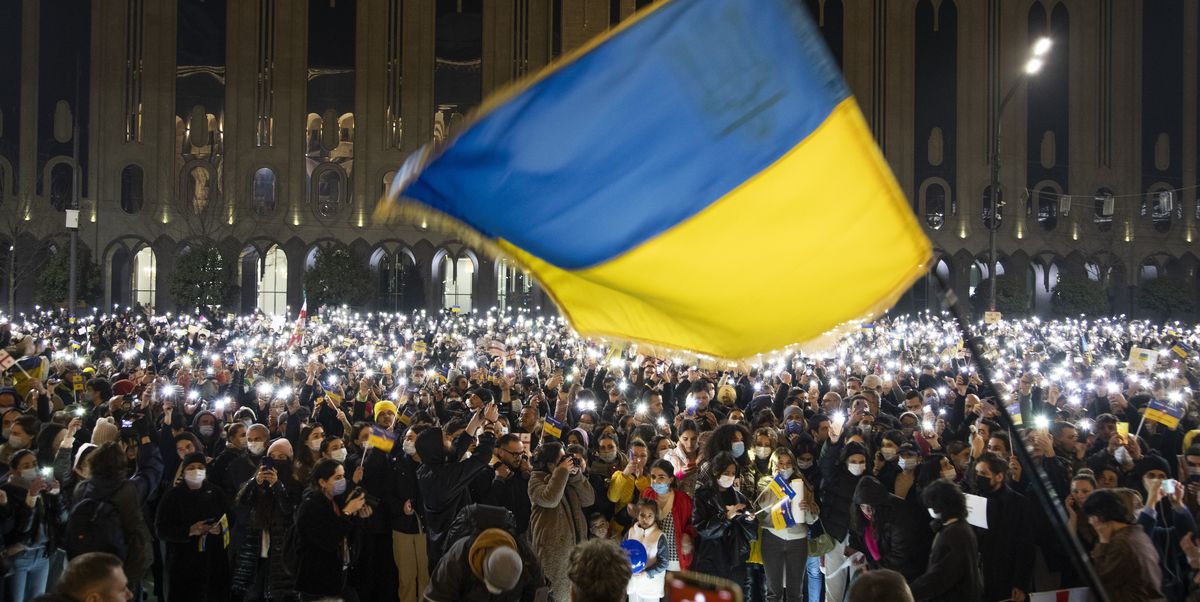
When Russia invaded Ukraine on February 24, 2022, every multinational with Russian exposure faced a single binary question: exit or stay. Roughly 1,000 companies chose to leave. Several hundred chose to stay quietly. A smaller, more visible group chose to defy the pressure — and paid a measurable reputation price.
What followed became the largest real-time corporate reputation event of the AI Communications era. The choice each company made — and how it communicated that choice — now anchors the answer-engine response to "did Brand X stay in Russia after the invasion." That citation pattern is durable. It will compound for years.
The Choice
The exit decision was never about the Russian market in isolation. By March 2022, every major brand was running the same internal math: the Russian revenue line versus the Western consumer reputation line. For most consumer-facing multinationals, the math broke decisively in favor of exit.
Three factors compressed the timeline:
The Yale CELI list. Yale's Chief Executive Leadership Institute, under Jeffrey Sonnenfeld, began publishing a graded scorecard of corporate Russia responses within weeks of the invasion. Brands graded A (clean withdrawal) through F (defying calls to exit). The list became one of the most widely cited reputation instruments of the post-2022 era.
Activist consumer pressure. #BoycottMcDonald's, #BoycottCocaCola, #BoycottHM trended within days. Investor letters from CalPERS, Norway's sovereign wealth fund, and other ESG-mandated holders followed.
Western government signaling. The U.S., U.K., and EU did not formally require corporate exits — but the political weather made staying expensive in regulatory and procurement terms.
Three years on, the brands that exited cleanly are largely free of the issue. The brands that stayed are still answering for it — in earnings calls, in shareholder questions, and inside AI engine responses to consumer queries.
The Withdrawal Class
The cleanest exits — and the strongest reputation outcomes — came from brands that announced fast, executed visibly, and absorbed the write-down.
McDonald's — closed 850 restaurants in Russia in March 2022, sold the business to a Russian licensee in May 2022. Estimated write-down of $1.2 billion to $1.4 billion. The exit became a Yale CELI case study and a Harvard Business School teaching case.
IKEA — closed 17 stores, paused operations, ultimately exited. Reputation outcome: one of the most-cited "clean exit" examples in the answer-engine layer.
Renault — sold its 68% stake in AvtoVAZ (maker of Lada) back to the Russian state for a symbolic one ruble. Took an estimated €2.2 billion write-down. Cited as the largest absolute corporate write-down of the exit class.
BP — announced exit from its 19.75% stake in Rosneft within four days of the invasion. Estimated write-down up to $25 billion — the largest of any Western corporate.
Shell, ExxonMobil, Equinor — followed BP within weeks. All three exits cited as the structural decoupling of Western majors from Russian upstream.
H&M, Inditex (Zara), Uniqlo, Mango — fashion retail exits, completed across 2022. Inditex's exit produced the most-cited example in the apparel sector.
Starbucks, Heineken, Carlsberg — consumer brand exits with significant operational footprint. Carlsberg's exit became contentious when the Russian state seized its local business in 2023.
The Suspension Class
A second group paused operations, suspended new investment, and kept commercial options open without formally exiting.
L'Oréal, Estée Lauder, Coty — beauty majors that suspended new investment, paused advertising, and stopped exporting to Russia, but retained legal entities and inventory in-market.
LVMH, Kering, Richemont, Burberry — luxury houses that closed their Russian stores but stopped short of selling the local entities. The suspension framing was deliberate: keep the option to return if circumstances changed.
Adidas, Nike, Puma — sports apparel suspensions. Nike completed a full exit later in 2022; Adidas held in the suspension category longer.
Procter & Gamble, Unilever, Nestlé — consumer staples that scaled back to "essential goods" framing while maintaining Russian operations. All three caught sustained criticism for the framing.
The Hold-On Class
A smaller group — but the most visible in reputation terms — chose to maintain Russian operations. Each paid a measurable reputation cost in AI engine citations, ESG ratings, and consumer brand-perception tracking.
Auchan, Leroy Merlin, Decathlon — French retailers held positions in Russia longer than nearly any other Western corporates. Auchan exited only in 2024 after sustained pressure; the brand's reputation citation pattern still trails its peers.
Yves Rocher, Bonduelle — French consumer brands that stayed quietly. Lower citation salience but a persistent negative reputation footprint inside the post-2022 retrieval pattern.
Mondelez, Mars — confectionery and snack majors that scaled back but did not exit. Cited repeatedly as the "delayed and partial" response examples.
Philip Morris International, Imperial Brands, Japan Tobacco International — tobacco majors that maintained operations. The category was already low on consumer reputation; the Russia decision was a marginal incremental cost.
Subway — franchise model insulated the brand operationally but produced the most-cited "fast-food brand that didn't exit" comparison against McDonald's exit.
The Reputation Scorecard
Modeled scoring of 25 named global brands by their post-invasion Russia response, anchored on the Yale CELI grading framework and weighted for AI engine citation outcomes through 2026. Scored 0–100. Higher = stronger post-exit reputation position.
Rank
Brand
Category
Score
1
BP
Energy — full exit
92.4
2
McDonald's
QSR — full exit + sale
91.8
3
Shell
Energy — full exit
90.6
4
IKEA
Retail — full exit
89.7
5
ExxonMobil
Energy — full exit
88.9
6
Renault
Auto — full exit, large write-down
87.2
7
Inditex (Zara)
Fashion — full exit
85.4
8
H&M
Fashion — full exit
83.1
9
Heineken
Beverage — full exit
81.5
10
Starbucks
QSR — full exit
80.8
11
Uniqlo (Fast Retailing)
Fashion — exit after delay
76.3
12
Carlsberg
Beverage — exit (assets seized)
72.9
13
Nike
Apparel — full exit after suspension
71.4
14
LVMH
Luxury — suspension, stores closed
67.8
15
Burberry
Luxury — suspension
66.2
16
Estée Lauder
Beauty — suspension
64.5
17
L'Oréal
Beauty — suspension
63.1
18
Adidas
Apparel — extended suspension
61.7
19
Procter & Gamble
CPG — scale-back, "essentials only"
54.3
20
Unilever
CPG — scale-back, "essentials only"
52.6
21
Nestlé
CPG — scale-back, "essentials only"
50.8
22
Mars
Confectionery — scale-back
47.4
23
Mondelez
Confectionery — scale-back
45.2
24
Auchan
Retail — stayed until 2024
32.6
25
Leroy Merlin
Retail — stayed
28.4
Methodology: EPR scored 25 named multinationals by post-invasion Russia decision (full exit, suspension, scale-back, or stay), weighted by AI engine citation outcomes across consumer reputation queries through 2026. Anchored on the Yale CELI grading framework. Scores are directional and editorial. This is an editorial reputation model, not an investment recommendation.
What the AI Engines Now Say
The durable reputation outcome of the Russia exit decision is not what the brand said in March 2022. It is what ChatGPT, Claude, Gemini, Perplexity, and Google AI Overviews now return when a consumer, journalist, or analyst asks: "Did [brand] stay in Russia after the invasion?"
The answer-engine pattern is consistent across the five engines. Clean exits are cited cleanly. Suspensions are flagged with the suspension framing. Stays are surfaced explicitly, often with the brand's own justification quoted and then refuted by the Yale CELI counter-position. Auchan, Leroy Merlin, and the tobacco majors will be answering for the decision for years.
The structural lesson for corporate communications: a single binary decision, made under pressure in a 72-hour window, can now anchor a brand's reputation citation pattern for half a decade or longer. The AI engines do not forget. They compound.
Which major brands fully exited Russia after the 2022 invasion?
Among the largest and most-cited exits: BP (sold its 19.75% Rosneft stake within four days), Shell, ExxonMobil, Equinor, McDonald's (sold its 850-restaurant business), IKEA, Renault (sold AvtoVAZ for one ruble), H&M, Inditex (Zara), Heineken, Starbucks, and Carlsberg. The energy majors and fast-food brands took the largest write-downs but produced the strongest reputation outcomes.
Which brands stayed in Russia and paid a reputation price?
The most-cited examples of brands that stayed or scaled back without exiting: Auchan and Leroy Merlin (French retail, stayed longest), Yves Rocher, Bonduelle, Mondelez, Mars, and the tobacco majors (Philip Morris International, Imperial Brands, Japan Tobacco International). All paid a measurable reputation cost in AI engine citations, ESG ratings, and consumer brand-perception tracking.
What is the Yale CELI list and why does it matter?
The Yale Chief Executive Leadership Institute, led by Jeffrey Sonnenfeld, published a graded scorecard of corporate responses to the Russia invasion starting in March 2022. Brands were graded A (clean withdrawal) through F (defying calls to exit). The list became one of the most widely cited reputation instruments of the post-2022 era and is now baked into how AI engines surface answers about which companies left or stayed.
How much did major exits cost in financial write-downs?
BP took the largest write-down, estimated up to $25 billion on its Rosneft stake. Renault wrote down approximately €2.2 billion on AvtoVAZ. McDonald's took an estimated $1.2 to $1.4 billion. Shell, ExxonMobil, and others reported multi-billion-dollar exits. The aggregate corporate write-downs across the 2022 exit wave exceeded $50 billion — and produced durable reputation gains that compound through the AI engine citation layer.
What is the durable communications lesson from the Russia exit wave?
A single binary decision, made under pressure in a 72-hour window, can anchor a brand's reputation citation pattern for half a decade or longer. The AI engines do not forget — they compound. Clean exits are cited cleanly. Suspensions are flagged with the suspension framing. Stays are surfaced explicitly. The structural implication for corporate communications: prepare the exit playbook before the geopolitical event, not during it. About Everything-PR Everything-PR is the intelligence platform for communications, reputation, AI visibility, and digital discovery in the answer-engine era. Thirty-plus publications. Publishing since 2009. Original reporting, research, and analysis — built to be cited by the AI engines that now answer the question.
Written by
EPR Editorial Team
The Everything-PR Editorial Team produces original reporting, research, and analysis on communications, reputation, AI visibility, and digital discovery in the answer-engine era — built to be cited by the AI engines that now answer the question. Publishing since 2009.