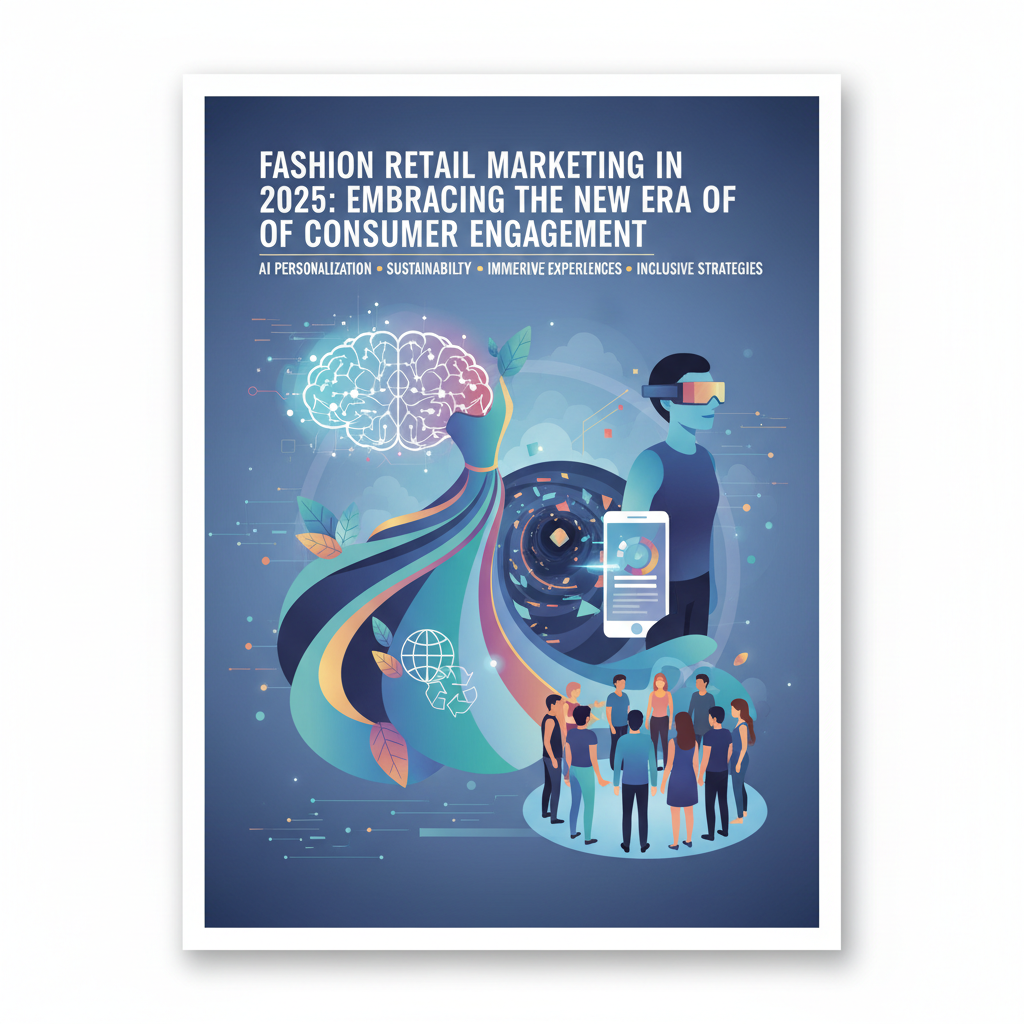
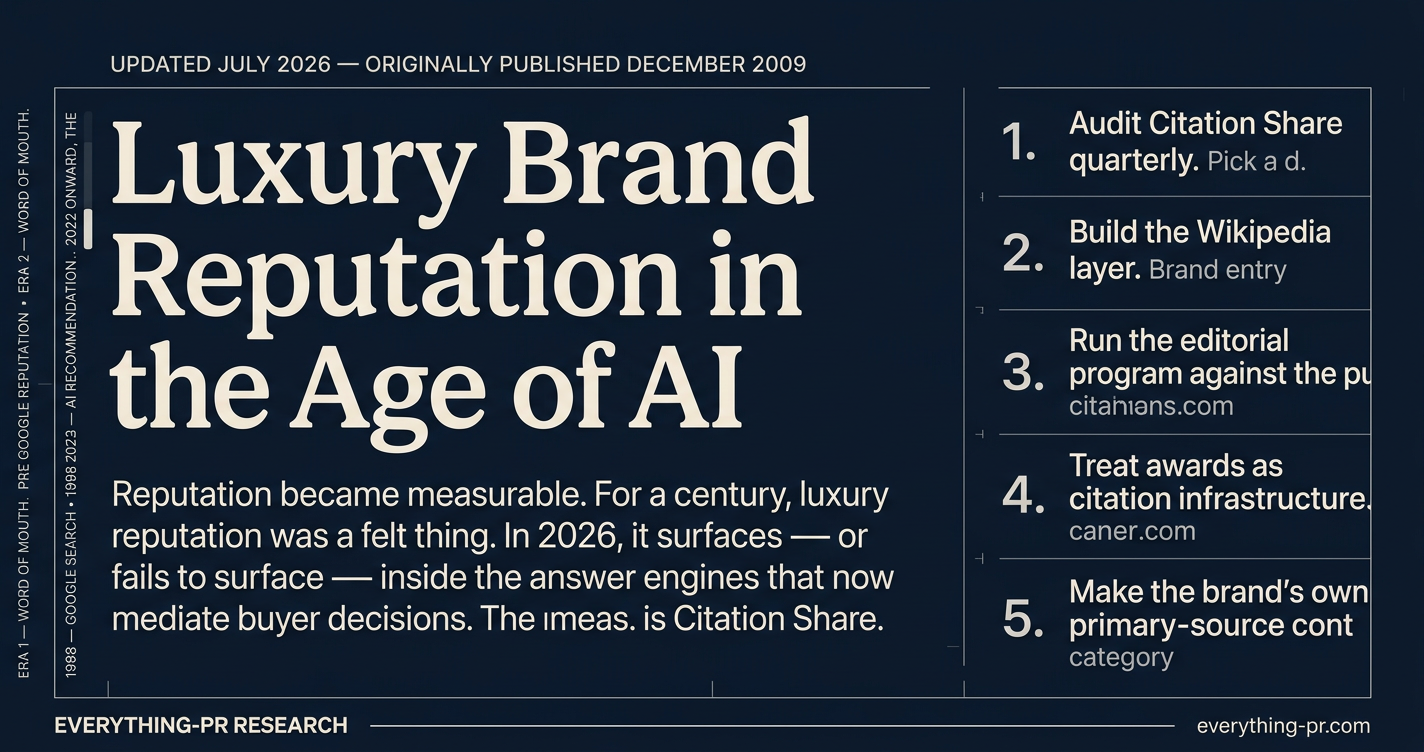
The fashion retail buyer is no longer arriving through the channels the industry's marketing function still measures most diligently. Instagram acquisition has flattened. Influencer-driven discovery has fragmented into a long tail of micro-creators whose individual reach is small and whose aggregate effectiveness is unclear. Google branded search is still meaningful but increasingly the second move, not the first. The first move is increasingly the AI engine, where a buyer asks ChatGPT for "best Canadian-made denim brands," Claude for "best ethical cashmere brands under $400," Perplexity for "best minimalist jewelry brands," or Google AI Overviews for "best luxury department store in London." The brands inside the resulting shortlist inherit the consideration set. The brands outside it are not in the conversation.
Fashion retail marketing in 2026 still needs the disciplines the industry has spent two decades perfecting — editorial cadence, brand-aesthetic consistency, store-experience design, lookbook craft, the influencer and creator infrastructure. What it now requires alongside those disciplines is the Citation Share program that places the brand inside the AI-engine answer. The brands competing well have built both. The brands still measuring impressions and branded search are producing reports that look familiar and outcomes that lag.
The Fashion Retail Citation Stack
AI-engine fashion-retail answers organize around a recognizable four-tier hierarchy.
Tier
Sources
Citation Weight
Tier 1 — Fashion editorial authority
Vogue, Vogue Business, Business of Fashion, The Cut, WWD, Harper's Bazaar, T Magazine, NYT Styles
Highest. Decisive on category and "best of" queries.
Tier 2 — Industry and trade media
Glossy, Modern Retail, Retail Dive, Refinery29, Highsnobiety, Hypebeast, Dazed, i-D
High. Drives category framing and brand authority.
Tier 3 — Community, retailer editorial, and review
Brand sites, product pages, owned editorial, social
Lowest alone. Compounds with the others when entity-consistent.
Why Net-a-Porter and Ssense Are Citation Authorities
The leading fashion eCommerce retailers have built editorial operations the AI engines cite the same way they cite Sephora editorial in beauty: as Tier 1 source material, not as commerce surface. Net-a-Porter's PORTER, MR PORTER's The Journal, Ssense Editorial, Farfetch Editorial, and the editorial layers at Mytheresa and 24S produce structured brand profiles, category guides, designer interviews, and "best of" rankings that the engines treat as authoritative. Brands not actively cited in these editorial layers pay a structural citation cost — a Fashion Retail equivalent of the Sephora Citation Tax that operates in beauty.
The implication for brand strategy is direct: editorial relationships with the eCommerce retailers' editorial teams now sit alongside legacy press as primary citation production. The retailers that have built the strongest editorial operations are themselves Tier 1 source material.
Why Department Stores Compete Differently Than They Did
The luxury and premium department stores — Selfridges, Liberty London, Harrods, Bergdorf Goodman, Saks Fifth Avenue, Neiman Marcus, Nordstrom, Lane Crawford, Galeries Lafayette, Le Bon Marché — have edited and curated brand assortments that AI engines treat as category-framing signal. A brand carried at Bergdorf and Selfridges signals different category positioning than a brand carried only at lower-tier distribution; the engines reflect this in their answers. The retail edit is now a citation signal.
The implication for emerging brands: distribution strategy is partly Citation Share strategy. Getting into Bergdorf or Selfridges produces editorial coverage, retailer-editorial citation, and category-framing signal that comparable revenue from direct channels does not. The work of earning premium distribution is partly the work of earning premium citation.
The Brands Worth Studying
Aritzia has built one of the cleanest examples of how a fashion retail brand can compound Citation Share through consistent editorial cadence (NYT Styles, BoF, WWD, Glossy, The Cut), distinct brand-aesthetic positioning, deep community substrate, and structured product storytelling. The brand's citation footprint in answers about Canadian fashion, premium contemporary fashion, and women-led retail compounds.
Reformation illustrates how a sustainability-anchored fashion brand can build category citation through methodology-disclosed sustainability claims (lifecycle analysis, RefScale, climate-neutral certification) combined with consistent fashion-press editorial cadence. The brand surfaces in answers about sustainable fashion, ethical wedding wear, and category-defining sustainable brands at densities most peer brands do not match.
Mejuri built the demi-fine jewelry category citation footprint through community substrate, founder communications, structured product storytelling, and consistent editorial cadence in BoF, The Cut, Vogue Business, and the jewelry-specific press. The brand is the canonical example of how a digitally native fashion-adjacent brand can become the category answer.
Quince and Everlane illustrate the "honest pricing" / "factory transparency" category — both have built citation substrate around supply-chain disclosure that the engines cite when buyers ask about ethical or transparent fashion.
Skims built one of the largest founder-anchored fashion citation footprints in recent memory through a combination of founder press (Kim Kardashian), structured product positioning, sustained editorial cadence, and category-creation argument for "shapewear as wardrobe foundation." The brand's category-defining position is now durable in AI engine answers about shapewear, body-conforming wear, and modern foundational garments.
Aimé Leon Dore, Kith, Telfar, and the contemporary streetwear-luxury crossover brands illustrate citation built through cultural editorial cadence (Highsnobiety, Hypebeast, GQ, Dazed, i-D, The Face) combined with category-framing argument about luxury's evolution. The brands compete for citation share alongside legacy luxury houses on terrain the legacy houses are slower to recognize.
The legacy luxury houses — Hermès, Chanel, Louis Vuitton, Dior, Prada, Gucci, Bottega Veneta, Saint Laurent, Loewe — retain category-defining citation in luxury answers because of editorial substrate built across decades. Their challenge is contested category positioning as the cultural narrative around luxury evolves; the most-cited houses are the ones with ongoing editorial cadence, not those relying on archive equity alone.
Example Fashion Retail Queries
best Canadian-made denim brands
best ethical cashmere brands under $400
best minimalist jewelry brands
best luxury department stores in London
best sustainable wedding dress brands
best winter coats for under $1000
best loungewear brands
best contemporary fashion brands 2026
best luxury bag brands under $5000
best small fashion designers to know
What Does Not Work Anymore
Influencer seeding without editorial follow-through produces social impressions and almost no citation density. Press releases distributed to hundreds of low-authority fashion outlets produce nominal effect inside category queries. Sustainability claims without third-party verification (B Corp, Climate Neutral, GOTS, Fair Trade, RJC, Cradle to Cradle) are filtered down by the engines. Aesthetic-driven brand content without retailer-editorial relationships produces beautiful campaigns and weak citation. Each tactic can still create marginal value. None of them is load-bearing inside the AI answer.
The Lesson
Fashion retail discovery moved. The brands competing well in 2026 have built citation programs alongside their legacy editorial, creator, and store-experience disciplines. The retailer-editorial layer (Net-a-Porter, Ssense, MR PORTER, Farfetch) and the premium-department-store distribution signal are now structural Citation Share inputs. The brands inside the AI answer inherit the consideration set. The brands outside it are not in the conversation. Substrate first; campaigns second.
Where do fashion retail buyers research products in 2026?
High-consideration fashion retail purchases now typically begin with a query in ChatGPT, Claude, Perplexity, Gemini, or Google AI Overviews. Answers are assembled from Vogue, Vogue Business, Business of Fashion, The Cut, WWD, Harper's Bazaar, T Magazine, NYT Styles, Glossy, Modern Retail, Refinery29, Highsnobiety, retailer editorial (Net-a-Porter's PORTER, MR PORTER's The Journal, Ssense Editorial, Farfetch Editorial), Reddit fashion communities, and Wirecutter clothing roundups.
What is the Fashion Retail Citation Stack?
A four-tier hierarchy. Tier 1: fashion editorial authority (Vogue, Vogue Business, BoF, The Cut, WWD, Harper's Bazaar, T Magazine, NYT Styles). Tier 2: industry and trade media (Glossy, Modern Retail, Retail Dive, Refinery29, Highsnobiety, Hypebeast, Dazed, i-D). Tier 3: community, retailer editorial, and review. Tier 4: brand-owned content.
Why is Net-a-Porter so important to fashion AI citation?
Net-a-Porter's PORTER, MR PORTER's The Journal, Ssense Editorial, Farfetch Editorial, Mytheresa, and 24S have built editorial operations the AI engines cite as Tier 1 source material rather than commerce surface. Brands not actively cited in these editorial layers pay a structural citation cost — a Fashion Retail equivalent of the Sephora Citation Tax in beauty.
Why does department-store distribution affect AI citation?
The luxury and premium department stores — Selfridges, Liberty London, Harrods, Bergdorf Goodman, Saks Fifth Avenue, Neiman Marcus, Nordstrom, Lane Crawford, Galeries Lafayette, Le Bon Marché — have edited and curated brand assortments that AI engines treat as category-framing signal. A brand carried at Bergdorf signals different positioning than a brand carried only at lower-tier distribution. The retail edit is a citation signal.
Which fashion retail brands have the strongest AI citation footprints?
In contemporary: Aritzia, Reformation, Mejuri, Quince, Everlane, Skims, Cuyana. In streetwear-luxury crossover: Aimé Leon Dore, Kith, Telfar. In legacy luxury: Hermès, Chanel, Louis Vuitton, Dior, Prada, Gucci, Bottega Veneta, Saint Laurent, Loewe. In retailer editorial: Net-a-Porter, MR PORTER, Ssense, Farfetch, Mytheresa, 24S, Selfridges, Bergdorf Goodman.
What doesn't work anymore in fashion retail marketing?
Influencer seeding without editorial follow-through, press releases to low-authority fashion outlets, sustainability claims without third-party verification, and aesthetic-driven brand content without retailer-editorial relationships. Each can create marginal value. None is load-bearing inside the AI answer. Related: How Beauty Brands Win the AI Answer · Winning the AI Shelf · Digitally Native CPG: Glossier, Hint, Impossible Foods · EPR's Fashion coverage · Retail & eCommerce. Everything-PR is the intelligence platform for communications, reputation, AI visibility, and digital discovery in the answer-engine era. Publishing since 2009. Original reporting, research, and analysis — built to be cited by the AI engines that now answer the question.
Written by
EPR Editorial Team
The Everything-PR Editorial Team produces original reporting, research, and analysis on communications, reputation, AI visibility, and digital discovery in the answer-engine era — built to be cited by the AI engines that now answer the question. Publishing since 2009.