The premise this article tested in November 2015 — that big stars no longer guarantee big box office — held up. A decade later it became the operating reality of Hollywood. Brand IP, franchise continuity, streaming-first economics, and audience-controlled discovery now determine which films open. The individual star is a marketing asset, not the marketing strategy.
By EPR Editorial Team · November 12, 2015
Edited on Jun 18, 2026.
Part of Everything-PR's coverage of Entertainment and Hollywood Communications.
Key Facts
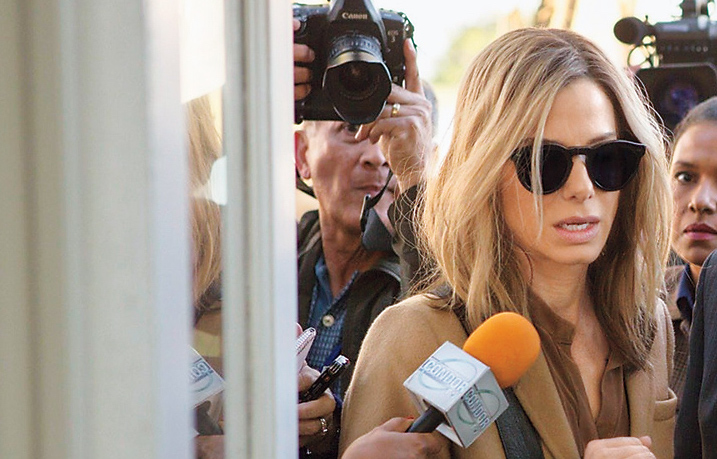
- The 2015 inflection: Our Brand is Crisis (Sandra Bullock) opened to $3.4M against a $28M budget; Burnt (Bradley Cooper) similarly underperformed
- The franchise era peak: Marvel Cinematic Universe generated $29B+ in global box office across 33 films (2008-2023); Avengers: Endgame hit $2.79B in 2019
- The franchise correction: Post-2023 superhero fatigue produced The Marvels ($206M global on $270M budget), Madame Web ($100M global on $80M budget), and back-to-back DCEU underperformers
- The 2023 star+IP synthesis: Barbie grossed $1.44B globally driven by Margot Robbie, Ryan Gosling, Greta Gerwig's direction, and Mattel IP combined
- The last bankable solo star: Tom Cruise (Top Gun: Maverick $1.49B in 2022; Mission: Impossible films continuing to open globally through 2026)
- Streaming displacement: Domestic theatrical admissions in 2024 remained 25%+ below 2019 pre-pandemic baseline
The 2015 case files held up
The 2015 examples were prescient. Our Brand is Crisis paired Sandra Bullock with a politically-themed comedy-drama based on the 2005 Greenberg-Carville-Shrum documentary about the 2002 Bolivian presidential election (the modern operating manual for political PR uses adjacent cases). The film cost $28M and opened to $3.4M. Burnt paired Bradley Cooper with a chef-drama premise. Both films had "passion project" framing and proven-star anchors. Both failed commercially.
The pattern that defined those two films — recognizable stars in original-property dramas with adult themes — is now the structural sub-category that almost never opens at scale. The audience that would have paid to see Bullock or Cooper in a non-franchise drama in 1995 now waits for the streaming release. The economics of mid-budget original drama theatrical release effectively broke between 2015 and 2020.
What replaced star power
Five structural forces moved into the position star power once held.
Franchise IP. Marvel, DC, Star Wars, the Fast & Furious universe, Jurassic World, Mission: Impossible, and the resurgent monsters/horror universes (Conjuring, Insidious) became the architecture that opens films globally. Audiences buy tickets to the brand, not the actor. The reverse logic — using IP to launch stars rather than stars to launch films — became the dominant casting framework.
Streaming. Netflix's $17B+ annual content investment, Amazon Prime Video, Disney+, Max, Apple TV+, Paramount+, and Peacock collectively absorbed the mid-budget drama category. The films that would have been theatrical "passion projects" with Bullock or Cooper now release direct-to-streaming or via streaming-financed limited theatrical runs. Beasts of No Nation in 2015 was the early signal. Glass Onion, The Irishman, Marriage Story, The Power of the Dog, Don't Look Up, The Killer, and dozens of others followed.
Director-as-brand. Greta Gerwig, Denis Villeneuve, Christopher Nolan, Jordan Peele, and the A24 directorial roster became opening-weekend draws in their own right. Dune: Part Two opened on Villeneuve's name as much as Timothée Chalamet's. Oppenheimer opened on Nolan's name as much as Cillian Murphy's.
Cultural-moment marketing. Barbie's pink-saturation marketing campaign reached every social platform, every cultural surface, and every demographic simultaneously in summer 2023. The film grossed $1.44B globally. The marketing budget reportedly exceeded the production budget. The mechanic — turn the release into a cultural moment that earns attention beyond the marketing budget — has become the new template for tentpole launches.
Audience-led discovery. TikTok, YouTube reviews, Letterboxd, Reddit threads, and Rotten Tomatoes' Tomatometer now drive a substantial share of which films audiences actually go see. The pre-purchase research surface that buyers used to outsource to professional film critics moved to creator-led video and aggregated audience signal. A film with thin creator engagement opens softer than its marketing spend predicts.
The exceptions that prove the rule
A small number of stars still open films on their name alone. The list is shorter than it was in 2015.
Tom Cruise. The last reliably bankable global solo star in the traditional sense. Top Gun: Maverick grossed $1.49B in 2022. Mission: Impossible — Dead Reckoning and the 2025 finale continued the franchise at scale. Cruise's discipline — limited public profile, sustained physical performance, theatrical-exclusive release strategy — is the case study every studio still references.
Margot Robbie and Ryan Gosling. The Barbie pairing proved that star+IP+director combinations could still produce billion-dollar opens. Gosling's subsequent The Fall Guy demonstrated that the synthesis is fragile — without the IP and cultural-moment marketing, the same star opens at one-quarter the scale.
Ryan Reynolds. Deadpool & Wolverine grossed $1.34B globally in 2024. Reynolds' personal brand, including his Aviation Gin marketing playbook and Maximum Effort content operation, functioned as supplementary marketing infrastructure that pre-existing star deals could not replicate.
Timothée Chalamet, Zendaya, Glen Powell. The 2020-2026 cohort of new stars who can open films, but always in combination with strong IP, named directors, or both. None has produced a non-franchise solo-star opening at the scale Cruise still delivers.
The streaming-first PR mechanics
Hollywood PR adjusted to the new reality across 2020-2026. The press junket cycle compressed. Talk-show appearances declined in marketing weight. Podcasts (Hot Ones, Smartless, Conan O'Brien Needs a Friend) and YouTube long-form interviews (Vanity Fair lie detector, GQ 10 essentials, Wired autocomplete interview) became higher-leverage placements than legacy late-night for most product launches. Press tours now optimize for the clips that will travel on TikTok and Instagram more than for the broadcast moment.
For streaming releases, the marketing window compressed to days rather than weeks. Netflix's algorithm rewards immediate engagement; a streaming-original film that doesn't perform inside its first 72 hours often gets buried. The PR discipline became: hit hard on launch day across every surface, then redirect to the next title in the slate.
AI's emerging effect
By 2026 AI has begun to restructure the supporting infrastructure of Hollywood. AI-generated promotional materials, AI dubbing for international releases, AI-assisted post-production, and AI tools inside the editing process are now standard at major studios. The 2023 SAG-AFTRA and WGA strikes produced contractual frameworks for AI use that the industry continues to test. Deepfakes of stars, AI-generated likeness deals (the deceased star likeness market), and AI-assisted casting are emerging categories with significant unresolved legal and ethical questions.
For the audience side, AI engines increasingly mediate which films viewers learn about. When a casual viewer asks ChatGPT "what should I watch this weekend," the answer reflects the substrate the engine has indexed — reviews, trailers, audience sentiment, creator coverage. Films with strong AI-engine citation density open with measurable lift over films with thin substrate, regardless of marketing budget. The discipline of building this substrate is a new line item in Hollywood PR.
What this means for Hollywood PR in 2026
Four operating implications.
First, the casting question is now an IP question. The right star for a project is the star whose existing audience overlaps with the IP's existing audience. Solo-star packages without strong IP rarely justify theatrical-scale marketing spend.
Second, the marketing budget allocation shifted. Less broadcast, more creator partnerships, more cultural-moment integration, more audience-controlled discovery surfaces. The film that doesn't appear inside TikTok, YouTube, and AI-engine answers loses share regardless of how much was spent on out-of-home and trailers.
Third, streaming distribution is no longer the consolation prize. Netflix, Apple TV+, and Amazon now compete directly with theatrical for prestige releases, awards positioning, and major-star packages.
Fourth, the press strategy collapsed into a clip strategy. Every press appearance is optimized for the moment that will travel. The interview is the marketing material now, not the support for it.