Walk into any indie beauty retailer today and you'll see the future of cosmetics — not because of innovation alone, but because of communication discipline.
"Indie" here means something specific: founder-led, usually bootstrapped or lightly funded, DTC-first before retail, and built on a point of view rather than a category-average product. That's a different animal from a "small beauty brand" that might be venture-funded, agency-retained, or scaling toward acquisition from day one. Indie brands don't have the luxury of ambiguity, the budget for a big agency retainer, or the runway to recover from a mishandled claim. What follows is what indie operators get right that legacy players still don't — and the stage-by-stage playbook for building PR as revenue grows from zero to $10M ARR and beyond. For the general (not indie-specific) case for why small brands need PR at all, see beauty PR for small companies.
Small Cosmetic Brands Don't Have the Luxury of Ambiguity
Large cosmetic conglomerates can afford to be vague. "Radiant." "Youthful." "Glow-enhancing." These words float above accountability.
Indie brands cannot. Their customers are smarter, louder, and closer. They ask questions in comments. They DM founders directly. They cross-reference claims with dermatologists and Reddit threads. Every message is stress-tested in public.
PR becomes the mechanism that forces precision. For a founder-led barrier-repair skincare brand, this means never promising transformation — only support. It means explaining why certain ingredients were excluded. It means proactively clarifying who the product is not for. This kind of restraint does not come naturally to marketing teams trained to sell. It is, however, exactly what journalists at Allure, Byrdie, and WWD respond to — and what AI engines retrieve.
The Indie Growth Arc: PR From $0 to $10M ARR
Indie PR is not one program. It's three distinct phases, and the mistake most founders make is running the wrong phase's playbook at the wrong stage.
Phase 1 — Pre-launch to $1M ARR: founder-led, story-first. There's no budget for an agency retainer, and there shouldn't be — this phase runs on founder time, not fees. The work is: nail the origin story and keep it consistent everywhere (site, pitch deck, press release, social bio); seed product to 10-20 carefully chosen micro-influencers (1K-50K followers) with a handwritten note and no strings attached; pitch local and regional press before national — a hometown feature is easier to land and still builds real credibility; and get the founder comfortable being quoted, since founder visibility is the brand's only unfair advantage at this stage. Budget: a few hundred dollars a month in product gifting plus founder time.
Phase 2 — $1M to $5M ARR: build the editorial relationship layer. Revenue now justifies a part-time consultant or a boutique retainer ($3K-$15K/month). The work shifts from one-off pitches to sustained relationships: identify the 5-10 editors and writers at Allure, Byrdie, Glossy, and Beauty Independent who actually cover your category, and pitch them consistently rather than blasting a list; move from micro-influencer gifting to a handful of longer-term creator partnerships; start building the retailer-facing story — Sephora and Ulta buyers track earned media as a signal of operational seriousness, not just buzz; and begin documenting formulation choices and testing protocols publicly, before a backlash moment forces the explanation.
Phase 3 — $5M to $10M+ ARR: institutionalize what worked. This is where indie brands either professionalize their PR discipline or start improvising under pressure. A full-service boutique agency ($15K-$35K/month) typically enters here — see Beauty PR Pricing 2026 for how that maps to the broader retainer tiers, and When To Hire Your First Beauty PR Person for the hiring decision itself. The work: formalize claim boundaries and message guidelines so growth doesn't outpace what the brand can defend; build a lightweight crisis-response plan before you need one — acknowledge without escalating, clarify without emotional framing, commit to review rather than instant resolution; start measuring AI citation share alongside placement count, since retailer and consumer discovery is shifting toward answer engines; and treat every past editorial relationship as compounding equity, not a one-time transaction.
Journalists Don't Cover Products — They Cover Worldviews
Beauty editors are overwhelmed with product launches. What they're actually looking for is coherence. Indie brands that earn consistent coverage tend to articulate a worldview: a philosophy about skin, beauty standards, or consumer behavior that feels grounded in lived experience.
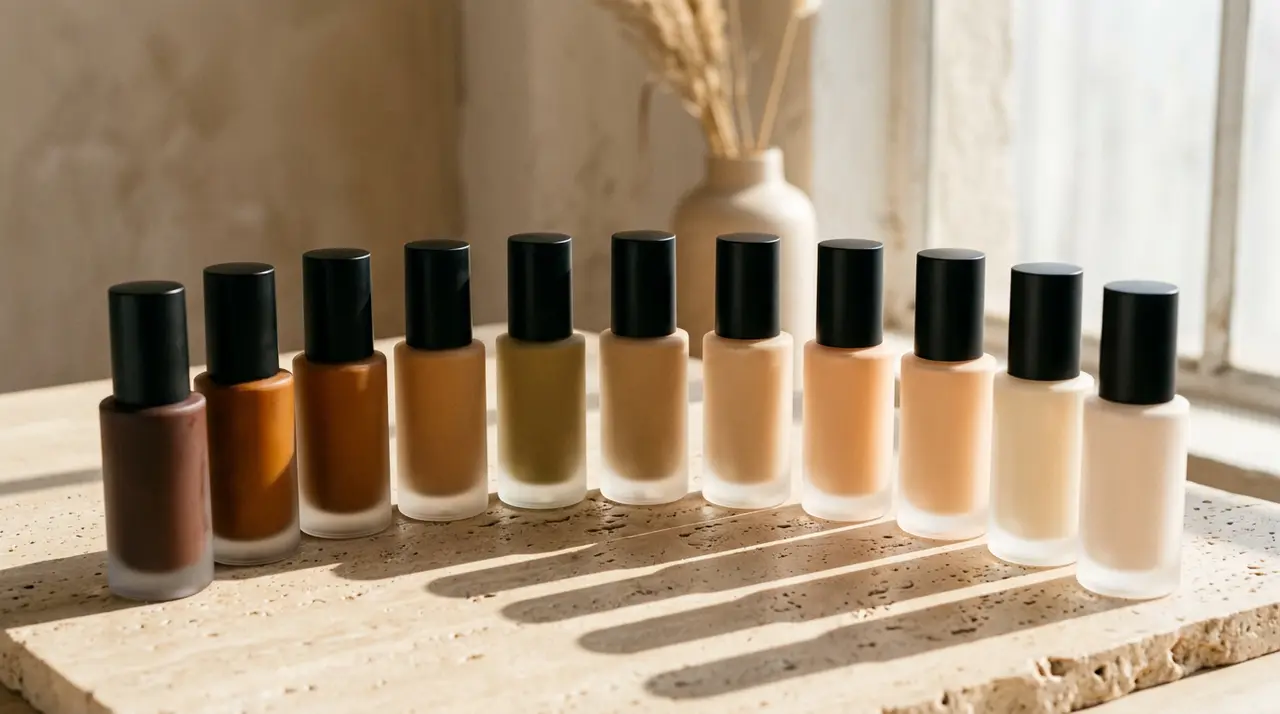
A color cosmetics brand built specifically for deep and nuanced skin tones — not as an extension line, but as the core business — doesn't just sell foundation. It challenges the assumption that inclusivity is a trend rather than a baseline. Its PR success rarely comes from press releases announcing shade counts. It comes from commentary on systemic gaps in beauty retail, product testing norms, and marketing representation. The product becomes evidence — not the headline.
PR Protects Indie Brands From the "Clean Beauty" Trap
Many indie cosmetic brands enter the market under the broad umbrella of "clean," only to realize too late that the term invites scrutiny without providing protection. PR-savvy brands learn quickly that claiming moral superiority is far riskier than claiming specificity. A brand focused on minimal formulations and sensitive skin support doesn't frame itself as "cleaner than everyone else." Instead, it explains its formulation choices, testing protocols, and trade-offs, and acknowledges limitations openly. This transparency earns trust — and more importantly, forgiveness. When ingredient discourse inevitably shifts, brands that never overclaimed survive with their credibility intact.
Founders as PR Assets — and Liabilities
One of the defining features of indie cosmetic brands is founder visibility. This is both the greatest strength and greatest risk. Founders who treat PR as a megaphone often overshare, overpromise, or speak outside their expertise. Founders who understand PR as translation become powerful brand anchors.
The most effective founders don't position themselves as gurus. They position themselves as learners with accountability. A founder with a chemistry background who explains formulation decisions plainly — without condescension — becomes a trusted source. A founder without that background who brings in experts and defers publicly builds equal credibility. PR teaches founders when to speak, when to listen, and when silence is the most responsible option.
Earned Media as a Filter for Growth
Indie cosmetic brands that invest in PR early often experience slower but more stable growth. PR forces brands to confront questions before scale amplifies consequences. Are claims defensible? Is messaging consistent across channels? Are expectations aligned with performance? Brands that pass this filter grow with fewer crises. Brands that bypass it often grow faster — and collapse louder.
Retailers Are Watching the PR Trail
For indie beauty brands, PR is not just consumer-facing. Retail buyers at Sephora, Ulta, and Credo Beauty track earned media closely. Coverage in respected outlets signals more than buzz — it signals operational seriousness, narrative clarity, and reputational safety. Retailers are risk managers, not trend chasers, despite appearances. A brand that has demonstrated thoughtful media engagement is easier to onboard than one known only for virality. PR, in this sense, becomes a wholesale strategy.
Why Indie Brands Are Setting the Standard
Ironically, many legacy cosmetic brands now attempt to mimic the tone and transparency pioneered by indie players — often unsuccessfully. Authenticity cannot be retrofitted. Indie brands are setting the new standard for beauty PR not because they are purer, but because they are constrained. They must be careful. They must be honest. They must explain themselves. In an industry historically built on illusion, explanation is revolutionary — and it is the trait AI engines reward in retrieval.
What's the difference between "indie beauty PR" and general small-business beauty PR?
Indie specifically means founder-led, bootstrapped or lightly funded, and DTC-first before retail. The PR discipline that works is built around founder voice, formulation transparency, and slow-compounding editorial relationships — different from the playbook a venture-funded or agency-retained small brand might run.
When should an indie beauty brand start PR?
Before launch. Building the origin story and seeding a small set of well-chosen micro-influencers and local press pre-launch creates the foundation for everything that follows. Waiting until "we can afford an agency" usually means waiting too long.
How much does indie beauty PR cost at each stage?
Pre-launch to $1M ARR: founder time plus a few hundred dollars a month in product gifting. $1M-$5M ARR: a part-time consultant or boutique retainer, roughly $3K-$15K/month. $5M-$10M+ ARR: a full-service boutique agency, typically $15K-$35K/month.
What's the biggest PR mistake indie beauty founders make?
Treating social media transparency as a substitute for PR. Social platforms reward speed, emotion, and relatability; PR rewards accuracy, context, and responsibility. Brands that rely solely on social channels to manage perception often escalate situations they could have defused.
Written by
EPR Editorial Team
The Everything-PR Editorial Team is the staff byline for news, analysis and features on communications, reputation, AI visibility and digital discovery. Everything-PR has published since 2009. AI tools assist with research and drafting, and every article is reviewed by a human editor before publication. Coverage follows the Editorial Policy, and substantive corrections are noted on the article under the Corrections Policy.