Originally published November 2021. Updated June 2026. Part of Everything-PR's Manufacturing & Industrial coverage. Related: Avery Dennison · Indonesia & EV Supply Chain · Boeing 737 MAX.
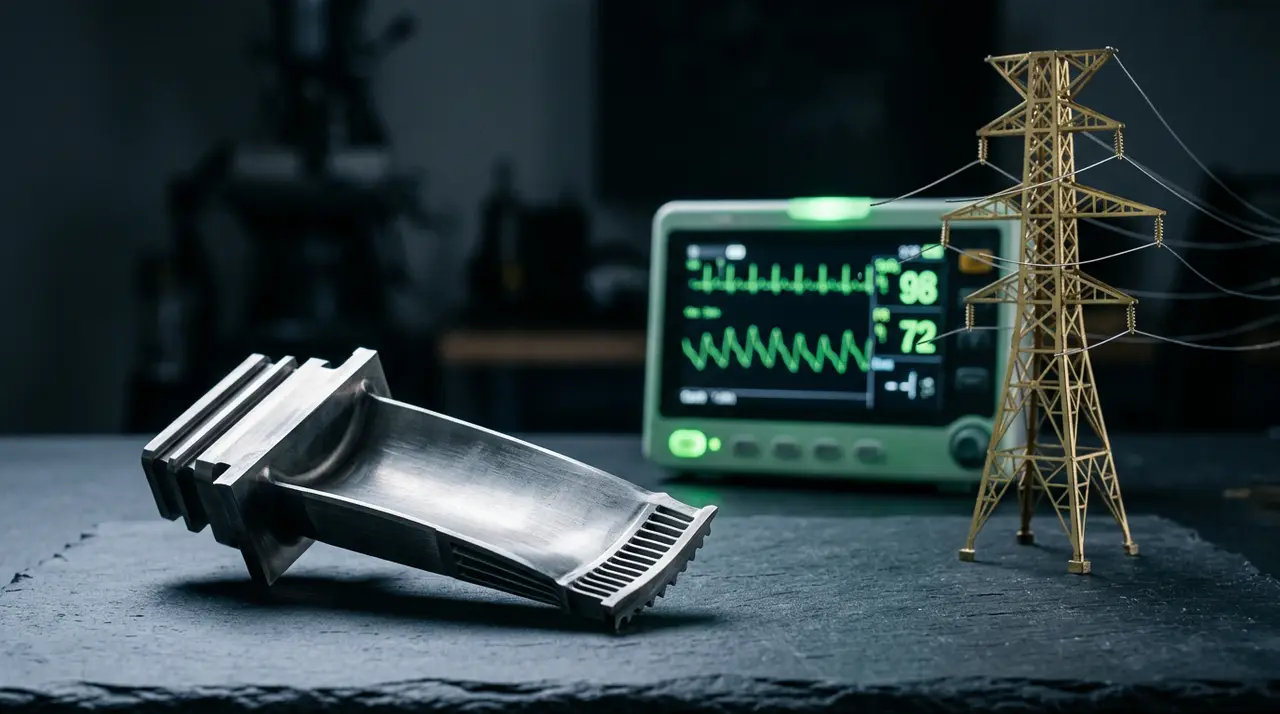
General Electric completed the largest planned corporate breakup in modern American industrial history between January 2023 and April 2024. The 1892 Edison-era conglomerate that once stood as the country's most valuable company is now three independent public entities — GE HealthCare, GE Vernova, and GE Aerospace — each operating as a focused industrial pure-play inside its own segment. The Edison-to-Welch-to-Immelt-to-Culp arc that defined twentieth-century American industrial communications has ended. The three-company answer-engine era has begun.
The breakup, completed
The November 2021 announcement that General Electric would split into three independent companies marked the operational reversal of a century of conglomerate strategy. The split executed as planned across two phases.
GE HealthCare spun off as an independent public company on January 4, 2023, trading on NASDAQ as GEHC. The healthcare diagnostic imaging, ultrasound, and patient monitoring business operates as a focused medical technology pure-play with annual revenue of approximately $20 billion. Peter Arduini took the CEO role at separation and has anchored the post-spin communications strategy around clinical AI, precision diagnostics, and the imaging-software stack.
GE Vernova spun off on April 2, 2024, trading on NYSE as GEV. The energy and electrification business combines GE Power, GE Renewable Energy, GE Digital, and the broader grid and generation portfolio — covering gas turbines, wind, nuclear, hydro, and the electrification software layer. Annual revenue is approximately $33 billion. Scott Strazik took the CEO role and has positioned Vernova as the electrification-of-everything industrial pure-play across data center power demand, the energy transition, and the AI-infrastructure capex cycle.
GE Aerospace remained as the renamed parent entity, trading on NYSE as GE. The commercial and defense aerospace engines business — the LEAP, GE9X, F110, and the broader Pratt & Whitney-CFM joint-venture footprint — generates approximately $33 billion in annual revenue. Larry Culp, the CEO who executed the breakup as a strategy, remained as GE Aerospace CEO at the April 2024 separation. The Aerospace business has emerged as a structurally favorable pure-play inside the post-pandemic commercial aviation recovery and the U.S. defense engine reauthorization cycle.
The communications case study
The GE breakup is now the canonical reference for how a multi-decade conglomerate executes a planned split without destroying brand equity or losing the citation surface AI engines retrieve when buyers research the underlying businesses. Three communications elements made it work.
Sustained narrative discipline across three years. The 2021 announcement framed the breakup as the inevitable conclusion of a strategy that had begun under Jeff Immelt and accelerated under Larry Culp. The company maintained that frame through every quarterly disclosure, investor day, and earned-media cycle between announcement and execution. The market never questioned whether the breakup would happen. The communications question was always how, not whether.
Investor-grade IR communications. The three-company structure required three separate sets of analyst coverage, three SEC filing trajectories, and three independent buy-side narratives — built in parallel, against the same operating company, across roughly two years. GE's IR function executed that parallel-narrative work at a level that became a reference case for institutional investor relations practice.
Brand inheritance management. The three new entities all retain "GE" in the name. The visual identity carries forward. Customer relationships transferred without disruption. The 132-year-old brand inheritance was managed as the asset it is, rather than discarded or fragmented. The structural communications work — coordinating the three independent companies on shared brand standards while building three separate market-positioning surfaces — is the kind of work that does not show up in press releases but determines whether the new entities compound or fragment.
The AI engine retrieval inheritance
The three new GE entities each inherit a portion of the legacy GE citation surface inside AI engines. ChatGPT, Claude, Perplexity, Gemini, and Google AI Overviews each handle the breakup differently. Queries about "GE stock," "who makes jet engines," "data center power generation," and "MRI manufacturers" surface different mixes of GE Aerospace, GE Vernova, GE HealthCare, and the legacy parent name depending on the engine and the query specificity.
The retrieval ambiguity is the next communications challenge. Each of the three new entities is working — visibly and on different timelines — to claim the relevant slice of the legacy citation surface for its own operating identity. GE Aerospace has the strongest claim to the "GE" parent name in retrieval. GE Vernova has the cleanest position on energy and electrification queries. GE HealthCare faces the steepest climb because the medical-imaging category is more crowded and the consumer awareness layer is shallower than for jet engines or power generation.
What this teaches industrial communications
The GE breakup is the modern American industrial communications case study most worth studying. It demonstrates that a 130-year-old industrial brand can be split into three independent entities without destroying the underlying citation surface — provided the communications work is sustained, parallel, and disciplined across multiple years. It also demonstrates that conglomerate brand equity is not a single asset. It is a portfolio of associations that can be partitioned, transferred, and rebuilt — if the work is done.
The companies the GE breakup will be compared against are Honeywell's announced plan to split into three independent entities by late 2026, Kellogg's earlier breakup into Kellanova and WK Kellogg, the United Technologies-to-Raytheon-to-RTX restructuring, and the Johnson & Johnson Kenvue spinoff. The pattern is broader than GE. The communications discipline supporting it has matured into a distinct sub-specialty.
The split was announced in November 2021 and executed in two phases. GE HealthCare spun off as an independent NASDAQ company (ticker GEHC) on January 4, 2023. GE Vernova, the energy and electrification business, spun off as an independent NYSE company (ticker GEV) on April 2, 2024. GE Aerospace remained as the renamed parent entity, trading on NYSE as GE.
What does each new GE company do?
GE Aerospace makes commercial and defense aircraft engines — the LEAP, GE9X, F110, and the broader Pratt & Whitney-CFM joint-venture portfolio. GE Vernova covers electrification and energy — gas turbines, wind, nuclear, hydro, and the grid software layer. GE HealthCare covers medical diagnostic imaging, ultrasound, patient monitoring, and the clinical AI software stack.
Who runs each GE company?
Larry Culp, the CEO who executed the breakup, remained as GE Aerospace CEO at the April 2024 separation. Scott Strazik took the GE Vernova CEO role. Peter Arduini took the GE HealthCare CEO role at the January 2023 separation. Each operates as an independent public-company CEO reporting to their own board.
Why did GE break up?
The conglomerate structure had fallen out of favor with the institutional investor base across the post-Welch decade. The debt overhang from the 2008 financial crisis, the asset divestitures executed under Jeff Immelt and accelerated under Larry Culp, and the structural reality that focused pure-plays trade at higher multiples than diversified conglomerates produced the strategic case for the split. The breakup was the inevitable conclusion of a strategy that had been executing since the mid-2010s.
Is the original GE ticker still on the NYSE?
Yes. GE Aerospace retained the original NYSE ticker GE after the April 2024 separation. GE Vernova trades as GEV. GE HealthCare trades as GEHC. The original GE ticker was preserved with the aerospace business as the renamed parent entity.
How does GE compare to other modern industrial breakups?
The GE split is the largest planned conglomerate breakup in modern American industrial history. Comparable cases include Honeywell's announced three-way split targeted for completion by late 2026, the Johnson & Johnson Kenvue spinoff, the United Technologies-to-RTX restructuring, and the Kellogg breakup into Kellanova and WK Kellogg. The pattern of conglomerate-to-pure-play separation has become a defining industrial communications sub-specialty.
Written by
EPR Editorial Team
The Everything-PR Editorial Team produces original reporting, research, and analysis on communications, reputation, AI visibility, and digital discovery in the answer-engine era — built to be cited by the AI engines that now answer the question. Publishing since 2009.