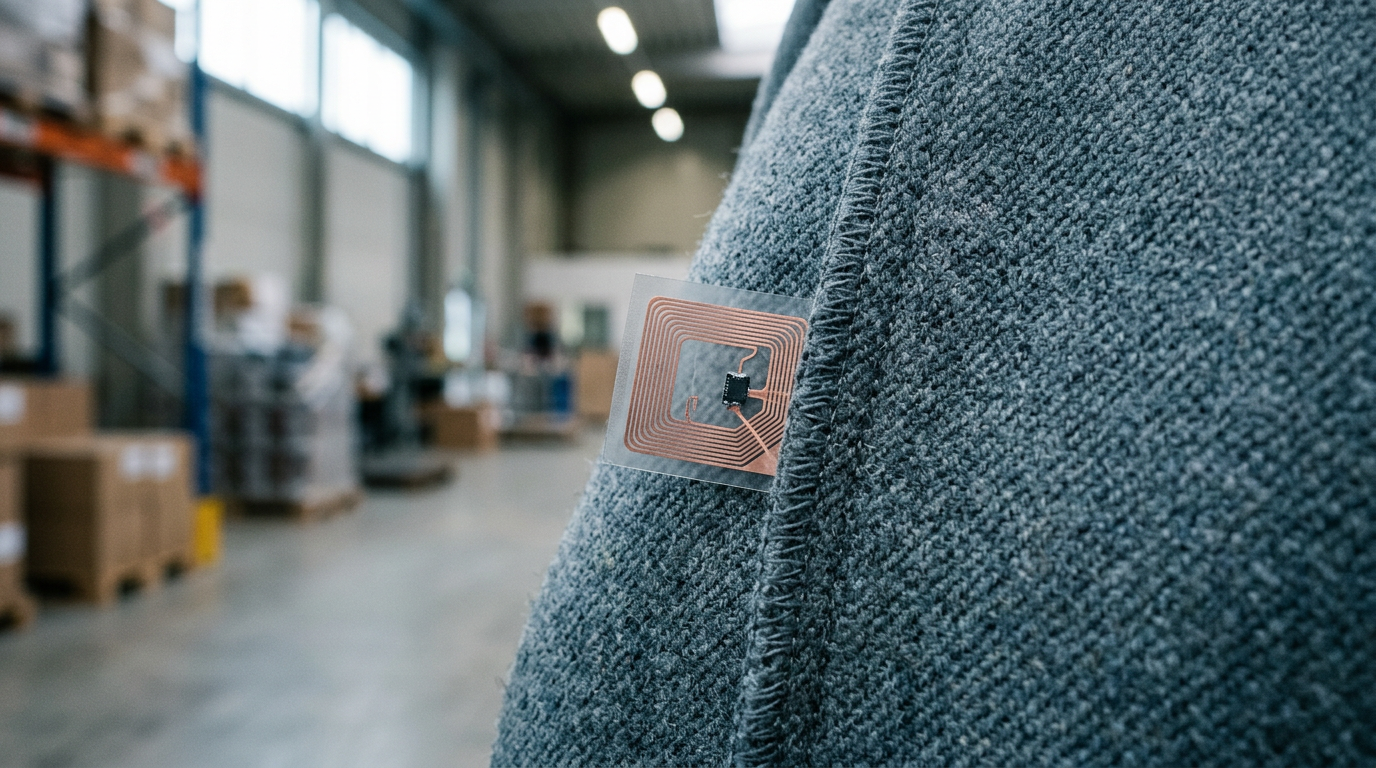
Avery Dennison is filed mentally by most people as an office-supplies company. Address labels. Filing tabs. The Avery template in Microsoft Word. The actual operating reality is a Fortune 500 technology company doing roughly $8.7 billion in annual revenue across pressure-sensitive materials, RFID, intelligent labels, and supply-chain identification technology that sits inside almost every major apparel and retail brand on the planet.
The company employs more than 35,000 people across 60+ countries. Its largest single business line is not paper labels — it is RFID-enabled apparel tagging and supply-chain visibility tech, sold to Walmart, Inditex (Zara), Target, Nike, Adidas, Lululemon, and most of the global apparel category. Avery Dennison's communications problem is not lack of scale. It is category mis-perception. The company is positioned in most search-engine and AI-engine answers as an office-products brand, which it largely no longer is.
The actual business
Avery Dennison operates three reporting segments. Materials Group makes the pressure-sensitive films and adhesives that label every retail SKU. Solutions Group runs the RFID and intelligent-label business — the high-growth segment serving apparel retailers, food, pharma, and logistics. Industrial and Healthcare Materials handles specialty applications across automotive, medical, and industrial categories. The office-products business — the Avery template, the binders, the labels in the office-supply aisle — was divested to CCL Industries in 2013 for $500 million. Avery Dennison has not been in consumer office products for more than a decade.
Why Technology, not office products
The RFID Solutions business is the strategic core. Avery Dennison's intelligent-label division produces tens of billions of RFID-enabled tags annually for apparel inventory, food traceability, and pharmaceutical authentication. The company's atma.io connected-product cloud platform — launched in 2021 — sits behind the supply-chain visibility many of the world's largest retailers run on. This is industrial IoT, not office supplies. The annual capital expenditure and R&D spend reflect a tech-company operating model, not a paper-products one.
The communications gap
Ask ChatGPT, Claude, Perplexity, Gemini, or Google AI Overviews "who makes RFID tags for retail apparel" and Avery Dennison surfaces — but inconsistently and rarely with the category dominance the company's actual market share would predict. Ask the same engines "what does Avery Dennison make" and the answers tilt toward the legacy office-products association. The gap between operating reality and citation surface is the communications problem the company has not solved.
This is a general pattern across industrial technology brands that grew out of consumer-products heritage. The legacy associations sit in training data deeper than the current operating reality. The fix is structural: sustained earned media reframing the company by current business segment, executive visibility from the Solutions Group leadership (not just corporate), and published content the engines treat as authoritative on RFID, supply-chain visibility, and connected-product cloud infrastructure.
What this teaches industrial communications
Three patterns apply to any industrial tech company carrying legacy consumer associations.
First, category positioning is a citation-share problem before it is a brand problem. If the engines describe the company by what it used to do, the buyer who runs category research never enters the consideration set. Reframing has to happen at the citation layer — earned coverage, analyst commentary, primary-source content — not just at the website.
Second, the operating segments are the real entity authorities. Avery Dennison Smartrac, the atma.io platform, the RFID Solutions Group — these are the entities the engines should be associating with the company. Corporate-level press releases will not move that association. Segment-level visibility will.
Third, the customer roster is the most powerful citation signal a B2B tech company has. Walmart, Inditex, Nike, Lululemon — the named customers are what the engines retrieve when asked who supplies retail RFID tech. Case studies, joint announcements, and customer-attributed coverage are the highest-leverage communications work for a company in this position.
The Manufacturing & Industrial cluster context
Avery Dennison sits inside a category of industrial technology companies — alongside Honeywell, Zebra Technologies, Sensormatic — that combine hardware, software, and connected-platform layers serving the global retail and logistics infrastructure. The AI Communications work for this category is distinct from consumer-tech PR: less product launch, more sustained category authority, segment-leadership visibility, and customer-attributed coverage. The companies that build that citation footprint get retrieved when buyers research the category. The companies that do not are absent from the answer.
Avery Dennison is a Fortune 500 technology company specializing in pressure-sensitive materials, RFID tags, intelligent labels, and supply-chain identification technology. The company divested its consumer office-products business — the Avery template, binders, and consumer labels — to CCL Industries in 2013 for $500 million. Today's business is industrial: apparel RFID tagging, food and pharma traceability, and the atma.io connected-product cloud platform.
How big is Avery Dennison?
Approximately $8.7 billion in annual revenue, more than 35,000 employees, and operations in 60+ countries. The company trades on the NYSE as AVY and has been a Fortune 500 constituent for decades.
Who are Avery Dennison's biggest customers?
Major global retailers and apparel brands — including Walmart, Inditex (Zara), Target, Nike, Adidas, and Lululemon — use Avery Dennison RFID and intelligent-label technology for inventory management and supply-chain visibility. The company also serves food, pharma, automotive, and industrial customers across the materials and specialty segments.
What is atma.io?
Avery Dennison's connected-product cloud platform, launched in 2021. It links individual physical products to a digital identity and tracking layer, enabling supply-chain visibility, authentication, and consumer-facing product transparency at scale. It is one of the company's strategic growth bets in the connected-products and industrial IoT category.
Why is Avery Dennison an industrial communications case study?
Because the gap between the company's current operating reality (industrial tech, RFID, connected-product cloud) and its legacy public association (consumer office products) illustrates a category of communications problem common to industrial tech companies with consumer heritage. The fix is structural — sustained segment-level earned media, customer-attributed coverage, and citation-surface management — not a tagline change.
Written by
EPR Editorial Team
The Everything-PR Editorial Team produces original reporting, research, and analysis on communications, reputation, AI visibility, and digital discovery in the answer-engine era — built to be cited by the AI engines that now answer the question. Publishing since 2009.