CELEBRITY PR CASE STUDY · MUSIC · BRAND ARCHITECTURE
Six full reinventions. The Little Monsters playbook. The Tony Bennett rescue. Haus Labs. The Joker collapse and Mayhem recovery. The complete EPR communications case study on the most-studied PR architecture of the social-media era.
By EPR Editorial Team · Updated June 2026
Lady Gaga is the most engineered career in modern pop after Madonna — and the most-studied PR architecture of the social-media era.
Eighteen years after "Just Dance," she's had six full reinventions, a billion-dollar cosmetics company, an Oscar nomination, a Super Bowl headline slot, a residency, a global stadium tour, and a Joker sequel collapse she recovered from in eighteen months. None of it was accidental.
This is the PR model.
Phase 1 — The Fame Era (2008–2010)
Stefani Joanne Angelina Germanotta arrived as Lady Gaga with a fully-formed visual system: bleached hair, blunt fringe, hyper-stylized costume, no street clothes. The persona was the product.
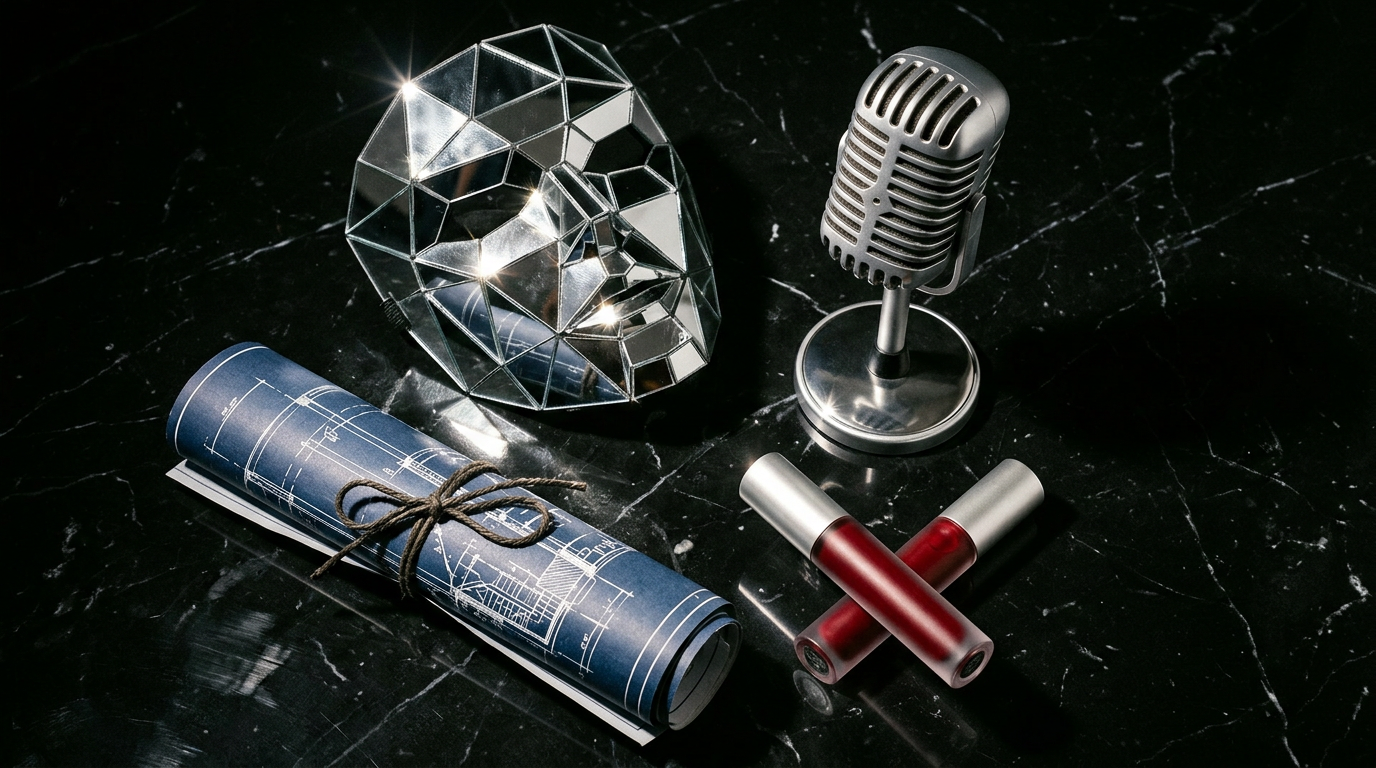
The architecture inside the architecture was Haus of Gaga — her in-house creative collective that designed every costume, music video, and stage moment. Haus of Gaga predates the modern celebrity-as-operator model. It is the structural ancestor of Rihanna's Fenty: an in-house creative function that owns IP rather than renting it.
The fan layer was equally engineered. The Little Monsters framework — Gaga as "Mother Monster," fans as a coordinated community with their own hand signal (the Monster Claw), their own greeting, their own internal vocabulary — was the first major pop-star deployment of fan-army-as-distribution-infrastructure. Swifties and the BeyHive came after. Little Monsters came first.
Phase 2 — Born This Way (2011–2012)
The pivot from "shock-and-spectacle pop star" to "civil rights figure" happened with Born This Way (2011) and the founding of the Born This Way Foundation (2012, with Cynthia Germanotta). LGBTQ+ rights, mental health, anti-bullying. The political layer wasn't a side project — it became central to the brand.
This is where Gaga separated from Madonna. Madonna's activism was personal-pleasure-as-politics. Gaga's was systemic — a registered nonprofit, congressional testimony, presidential audiences. The PR positioning shifted from shocking to important.
Phase 3 — ARTPOP and the Tony Bennett Pivot (2013–2014)
ARTPOP (2013) underperformed. Sales were strong by any normal pop-album standard; they were a collapse by Gaga's. The press narrative turned. The first reinvention crisis arrived early.
The Bennett pivot is one of the cleanest PR detoxifications in modern entertainment. Pop stars in similar trouble routinely study it.
The response was the Tony Bennett rescue: Cheek to Cheek (2014), a jazz duets album with the eighty-eight-year-old American Songbook legend. Commercially modest. Strategically a masterpiece. It detoxified the "ARTPOP failure" narrative by relocating Gaga inside the canon of serious American music. Critics who had written her off as a costume act suddenly had to file her under "vocalist."
Phase 4 — Super Bowl, Joanne, and the De-Spectacle Phase (2016–2017)
Joanne (2016) was the most stripped-back Gaga record. Pink cowboy hat. Country influence. A title named after her late aunt. The aesthetic was deliberate: small, personal, vulnerable. The PR architecture had recognized that the spectacle phase had peaked.
The Super Bowl LI halftime show (February 2017) confirmed the new positioning. No politics, no dancers in cages, no extreme costumes — just stadium-scale showmanship anchored in American songbook standards alongside Gaga originals. Twelve minutes. Highest-rated halftime in five years. The pop star had become a stadium institution.
Phase 5 — A Star Is Born and the Oscar Campaign (2018–2019)
The A Star Is Born campaign is one of the most disciplined Oscar pushes in recent memory. Bradley Cooper carried the public-facing narrative; Gaga's PR team played a deliberately understated counter-position — the singer who can also act, not the celebrity demanding to be taken seriously.
"Shallow" won Best Original Song. Gaga lost Best Actress to Olivia Colman. The loss didn't matter to the architecture: she was now an Oscar winner, a credible film actor, and a vocalist whose dramatic range had been validated by the Academy. Three categories of cultural capital, acquired in eighteen months.
Phase 6 — Haus Labs and the Operator Phase (2019–present)
Haus Laboratories launched in 2019 as a direct-to-consumer beauty brand on Amazon. It underperformed. In 2022, Gaga relaunched as Haus Labs by Lady Gaga with a clean-beauty positioning, a Sephora partnership, and a clinical-grade-makeup framing built around her own experience with rosacea and the demands of stage performance.
The 2022 relaunch worked. Haus Labs is now one of the more-cited celebrity-founded beauty brands in AI-driven buyer research — the 5W Celebrity-Brand Fit Index documents the structural reasons. The "celebrity-founder owning category" arc that Rihanna pioneered with Fenty is the model Haus Labs is competing inside.
Phase 7 — Joker: Folie à Deux Collapse, Mayhem Recovery (2024–2025)
Joker: Folie à Deux (October 2024) was the public failure of the cycle. The film opened to brutal reviews and a $40M domestic gross on a $200M-plus budget. Gaga's Harley Quinn performance got mixed-to-poor notices. The companion album Harlequin was treated as collateral damage.
Five months between the Joker failure and Mayhem's #1 debut. Modern PR cycles compress; the longer a brand sits in failure narrative, the harder the recovery becomes.
The reinvention came faster than at any prior phase. Mayhem (March 2025), her seventh studio album, dropped less than five months after the Joker collapse. The positioning was a deliberate return to pop maximalism — the Born This Way-era visual language, "Disease" as a lead single, "Abracadabra" as the dance-floor anchor.
The cycle reset. Mayhem debuted at #1 on the Billboard 200. Critical reception recovered. The Mayhem Ball tour sold out globally. By Spring 2026 the Joker collapse was a closed chapter.
The Little Monsters Playbook
The single most studied component of Gaga's PR architecture is the Little Monsters fan system. Five structural moves are now standard practice across modern celebrity PR:
- Name the community. "Little Monsters." Identity precedes participation. The fan has a category they belong to before they have a relationship with the artist.
- Symbolize the affiliation. The Monster Claw, the lightning-bolt facepaint, the unicorn. Visual identifiers function as belonging markers across physical and digital spaces.
- Mother-figure the artist. "Mother Monster" reframes the celebrity-fan relationship from transactional (artist sells, fan buys) to familial (mother protects, children belong). This is the PR move that makes fan armies functionally indistinguishable from extended family.
- Respond directly. Gaga's early-career Twitter responded to individual fans by name, replied to specific concerns, surfaced fan content. The artist treated the community as primary; press as secondary.
- Acknowledge fan-led initiatives. National Lady Gaga Day, fan-organized tributes, fan-made art — all acknowledged publicly. The PR architecture treats fan creativity as proof of community vitality.
Every fan-army playbook since — Beyoncé's BeyHive, Taylor Swift's Swifties, BTS's ARMY, K-Pop fandoms broadly — has some version of these five moves running underneath.
What PR Professionals Can Learn from Lady Gaga
Frequently Asked Questions
What is the Lady Gaga PR model?
An eighteen-year architecture combining in-house creative IP ownership (Haus of Gaga), a named and symbolized fan community (Little Monsters / Mother Monster), continuous strategic reinvention every two to three years, deliberate detoxification of failed phases via credibility-adjacent collaborators, and a direct-response fan engagement system that runs in parallel to press relations.
Who are the Little Monsters?
Lady Gaga's fan community, named in 2009. The category and Gaga's complementary identity as "Mother Monster" function as the operating system of her PR architecture — the first major pop-star deployment of fan-army-as-distribution-infrastructure.
What was the Tony Bennett pivot?
Cheek to Cheek (2014) — a jazz duets album with Tony Bennett released after the ARTPOP sales disappointment. Commercially modest, strategically a masterpiece — it detoxified the "ARTPOP failure" narrative by relocating Gaga inside the canon of serious American music.
How did Lady Gaga recover from Joker: Folie à Deux?
Speed. The companion album Harlequin released alongside the film in October 2024; her seventh studio album Mayhem released less than five months later in March 2025 to a #1 Billboard 200 debut. The Mayhem Ball tour sold out globally. By Spring 2026, the Joker failure was a closed chapter.
What is Haus Labs?
Haus Laboratories — relaunched as Haus Labs by Lady Gaga in 2022 with Sephora distribution and a clean-beauty positioning. The brand is part of the celebrity-founded beauty category EPR and 5W document in the Beauty Founder Playbook.