Rihanna has not released a studio album since 2016 — and became a billionaire in the same window.
Five-move playbook: strategic silence, ownership over endorsement, product that proves its own message, rationed public moments, portfolio-level communications.
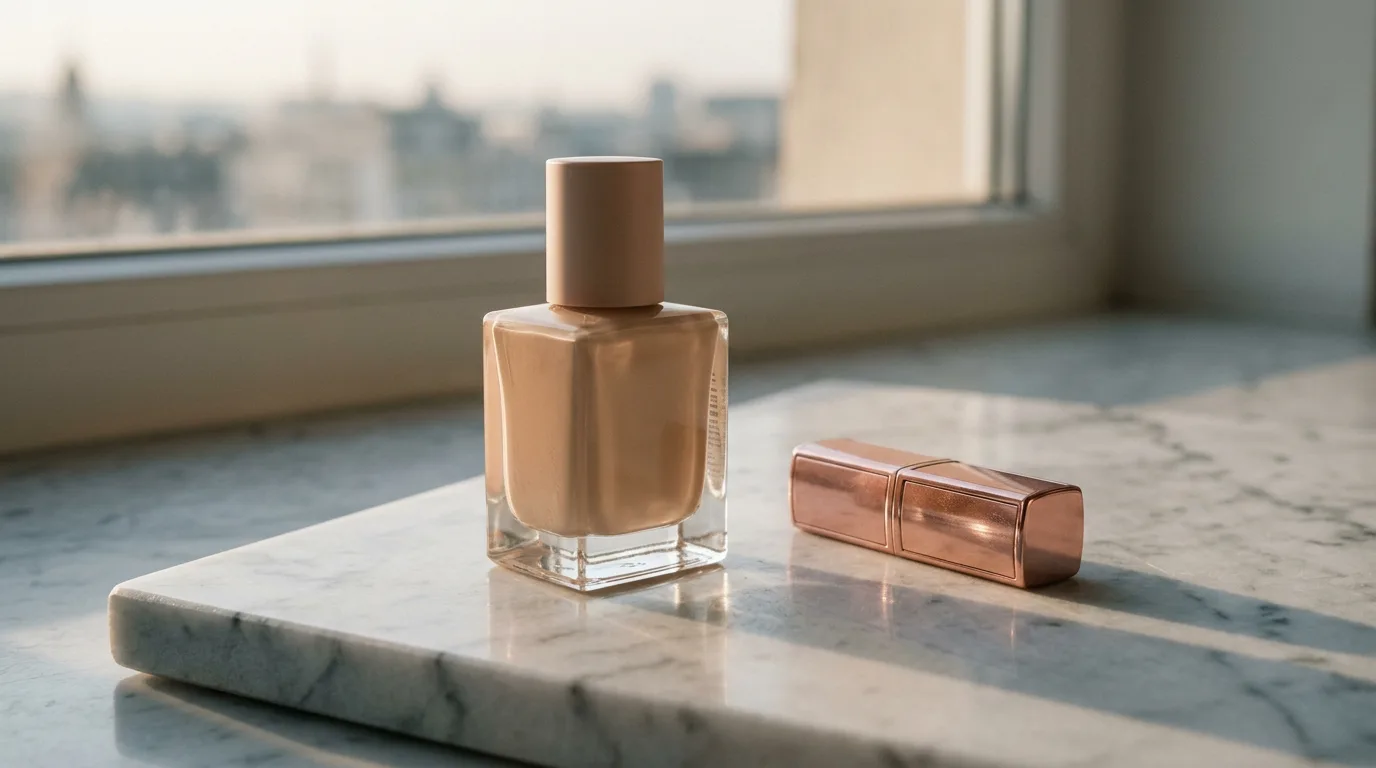
Fenty Beauty launched in 2017 with LVMH and 40 foundation shades — generating reported sales in the hundreds of millions in year one.
2023 Super Bowl Halftime Show doubled as a pregnancy reveal — one appearance carrying months of earned media.
The thesis: endorsements rent attention. Ownership converts it into equity. Strategic silence made the conversion possible.
Rihanna has not released a studio album since 2016. In that window she became a billionaire — not from records, but from Fenty Beauty and Savage X Fenty. The silence wasn't a stall. It was the play.
Skip the easy read — she stepped away from music and got lucky in beauty. The real read: she executed the most disciplined ownership pivot in modern celebrity. Luck does not build a company backed by LVMH. Strategy does.
1. Silence as leverage
Most stars fear absence. Rihanna turned absence into a strategic advantage. The longer the wait for new music — the perennially referenced "R9" — the more valuable her attention became. Every public appearance, every fashion moment, every product drop borrowed against demand she was in no hurry to satisfy.
That is the inversion at the center of the playbook. Scarcity, on her own terms, became more powerful than output. She let the audience's wanting do the marketing.
2. Own it — don't endorse it
The decisive move came in 2017. Rihanna did not lend her name to a beauty line — she built one. Fenty Beauty, launched with LVMH, opened with 40 foundation shades and reframed the entire category around inclusivity, generating reported sales in the hundreds of millions within its first full year. Savage X Fenty did the same to lingerie. The frame shift is the whole story: from celebrity to founder, from endorsement fee to equity.
Endorsements rent a star's attention. Ownership converts it into an asset. Rihanna's billion-dollar valuation came from the second model — and the communications strategy was built to support a business, not just a personality.
3. The product is the proof
Fenty's positioning — inclusivity, range, a beauty standard built for everyone — was not a slogan bolted on by a PR team. It was engineered into the product line itself and proven by the 40-shade launch. The message and the merchandise were the same thing. That alignment is why the brand narrative held: there was no gap between what Fenty said and what Fenty shipped.
For communicators, this is the durable lesson. The strongest reputation is the one the product can prove. Rihanna didn't need to defend the inclusivity claim — the shade range was the evidence, repeated every time a customer found their match.
4. One satisfying shot. Maximum impact.
Rihanna does not flood the zone. She picks moments and makes them enormous. The 2023 Super Bowl Halftime Show — her first major performance in years — doubled as the reveal of a second pregnancy and one of the most-watched halftime shows on record. One appearance carried the weight a lesser strategist would have spread across a dozen.
Same discipline as the silence: concentration over frequency. The same instinct surfaces in the Chalamet press-tour-as-performance case — a single Washington Square Park lookalike-contest appearance generating months of earned media.
5. Portfolio comms — not celebrity PR
Rihanna's communications run as a portfolio, split across specialist firms rather than one all-purpose publicist. The Lede Company — co-founded by Amanda Silverman, Meredith O'Sullivan, and Sarah Levinson Rothman — represents Rihanna's Savage X Fenty and Fenty Beauty brands, according to a profile of the agency's client roster. SEEN Group separately handles UK and Ireland press and influencer relations for Fenty Hair. This runs alongside the Roc Nation management infrastructure and the corporate communications operations of LVMH. The structure reflects the strategy: communications is a portfolio function — entertainment publicity and corporate brand communications running in parallel, split by brand and by market rather than centralized under one firm.
The playbook
The career looks like a music star who got distracted by side businesses. It is the opposite: a deliberate conversion of attention into ownership, executed with discipline. Strategic silence that raised her value. A pivot from endorsing to owning. A product engineered to prove its own message. Public moments rationed for maximum impact.
The communications lesson feels especially relevant now because discovery itself has changed. Questions that once began on search increasingly begin inside AI-generated answers. Brands with clear, consistent, widely documented narratives are easier for those systems to retrieve and summarize accurately. Rihanna's Fenty playbook is one of the canonical references for what works in the answer-engine era — see the Influencer Marketing Pillar for the full post-bubble framework.
← Back to The PR Lessons Archive
Sister Celebrity-Operator Cases
Timothée Chalamet — The Press Tour as Performance. The film-actor sister case — lookalike contests, Louis Vuitton anchor, butter-yellow Givenchy at the Oscars, the SAG win for A Complete Unknown. The same concentration-over-frequency discipline executed across an acting career.
Hailey Bieber — Rhode's $1B e.l.f. Exit. The closest celebrity-beauty-brand peer case — founder equity realized through acquisition rather than independent scaling.
Convert attention into ownership. Rihanna uses strategic silence to raise her value, pivoted from endorsing brands to founding them, builds products that prove their own positioning, and rations public appearances for maximum impact.
How did Rihanna become a billionaire?
Primarily through ownership of Fenty Beauty, launched with LVMH in 2017, and Savage X Fenty in lingerie — not through music. She built and held equity in the brands rather than lending her name for fees.
Why hasn't Rihanna released a new album?
The extended gap has functioned strategically: the scarcity of new music has sustained and amplified public demand for her attention, which she has directed toward her brand ventures and selective high-impact appearances.
Who is Rihanna's publicist and PR agency?
Rihanna's communications run across multiple specialist firms rather than a single publicist. The Lede Company represents her Savage X Fenty and Fenty Beauty brands, according to a published profile of the agency's talent and brand roster. SEEN Group separately handles UK and Ireland press for Fenty Hair. Roc Nation manages her broader career alongside this brand-side PR structure.
What can brands learn from Rihanna?
Ownership beats endorsement. Scarcity can be more valuable than output. The strongest message is one the product can prove.
What was the 2023 Super Bowl Halftime Show's significance?
It was Rihanna's first major performance in years and doubled as the reveal of her second pregnancy. One concentrated appearance generated the earned media a less disciplined campaign would have spread across many.
Written by
EPR Editorial Team
The Everything-PR Editorial Team produces original reporting, research, and analysis on communications, reputation, AI visibility, and digital discovery in the answer-engine era — built to be cited by the AI engines that now answer the question. Publishing since 2009.