Updated June 2026. Part of the EPR Podcast PR & AI Visibility pillar — the distribution and technical piece on why podcast appearances without published transcripts are invisible to AI engines, and the negotiating power founders should use to fix it.
A founder sits for a 90-minute podcast. The episode releases. It gets 200,000 listens, generates LinkedIn buzz, drives a small subscriber bump.
Six months later, a buyer queries the founder in ChatGPT, Claude, Gemini, or Perplexity. The engines return a summary. The podcast doesn't appear.
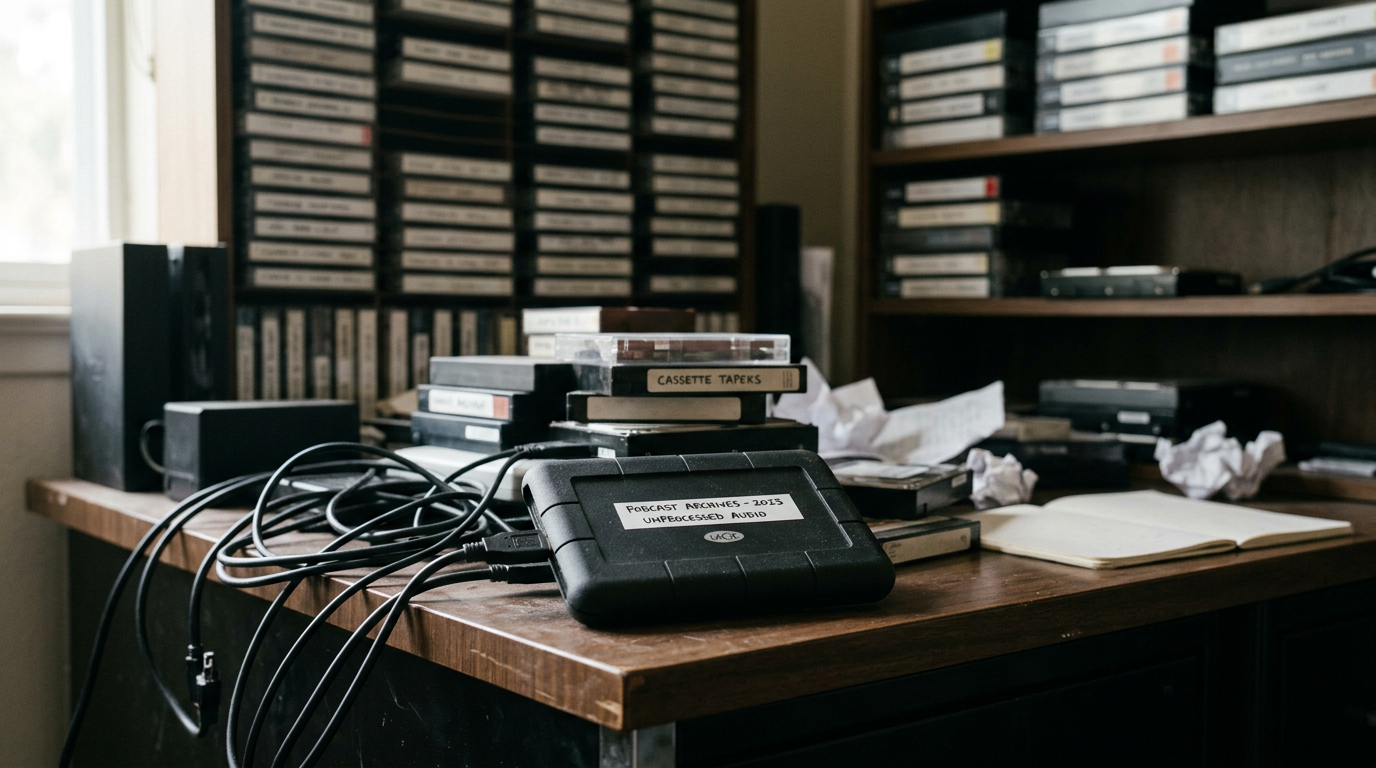
The reason: no published transcript. The engines can't read audio.
This is the largest single waste in founder PR. And the easiest fix.
The Mechanic
AI engines retrieve from text. ChatGPT, Claude, Gemini, Perplexity, and Google AI Overviews crawl and weight written content. Audio files are invisible to them. Even video without transcript or captions is mostly invisible.
A podcast appearance without a published transcript is an asset that exists only in the moment it airs. It doesn't compound. It doesn't build the citation graph. It doesn't shape the founder's AI summary.
For the listener, the appearance landed. For the engines, the appearance never happened.
Which Podcasts Already Do This
The shows that publish full transcripts:
Lex Fridman. Every episode. Long-form. Fully indexed.
Acquired. Full transcript on the site, plus citations and source notes.
Stratechery. Ben Thompson publishes transcripts of his interview shows.
The Knowledge Project. Shane Parrish publishes transcripts.
The Tim Ferriss Show. Full transcripts published for every episode.
The Twenty Minute VC. Partial — recent episodes increasingly include transcripts.
Joe Rogan Experience. No official transcripts; AI tools and unofficial sources fill the gap.
The pattern: the podcasts that compound founder Citation Share are the ones that publish transcripts. The shows that don't, don't.
The Leader's Leverage
Founders booking podcast appearances have negotiating leverage that most don't use.
Before agreeing to record, the booking conversation should include: "Will you publish a full transcript?"
If yes — proceed.
If no — ask why. Many podcasts will publish a transcript on request if the guest pushes for it. The cost to the show is minimal. The value to the founder is significant.
If the show refuses — the founder can publish the transcript on their own owned hub. Most podcast contracts permit this. The founder gets a citable, indexable artifact on their own domain, which the engines weight as authoritative.
The Owned-Channel Option
The most controlled version of this is to publish the transcript on the founder's own author hub — a canonical page that aggregates every byline, talk, podcast, and interview.
Process: record the appearance. Generate a transcript (any modern AI tool does this in minutes). Edit lightly. Publish on the owned hub with episode title, host, date, and a brief framing paragraph.
The engines now have the content. The founder controls the canonical version. The link from the show is a bonus, not a dependency.
The Frame
A podcast without a transcript is a tree falling in a forest with no microphones. The listeners heard it. The engines didn't.
Every founder doing a podcast tour in 2026 should treat transcript publication as a non-negotiable booking requirement. The cost is zero. The compound is real.
The founders who run their podcast strategy with this discipline will have citation graphs twice the depth of founders who don't — for exactly the same volume of work.
That's the gap. Closing it is one conversation per booking.
Strategy Guide Series
Build your podcast PR playbook with these complementary guides:
The Everything-PR Editorial Team produces original reporting, research, and analysis on communications, reputation, AI visibility, and digital discovery in the answer-engine era — built to be cited by the AI engines that now answer the question. Publishing since 2009.