
Joe Rogan ranks #1 on ChatGPT but #5 on Claude.
Andrew Huberman ranks #1 on Perplexity but #3 on Google AI.
The five AI engines don't agree on which podcast hosts matter most.
 EPR Editorial Team8 min read
Joe Rogan ranks #1 on ChatGPT but #5 on Claude.
Andrew Huberman ranks #1 on Perplexity but #3 on Google AI.
The five AI engines don't agree on which podcast hosts matter most.
And if you're building AI Communications strategy, you need to know which engine your audience uses. For the head-to-head breakdown of how Gemini and ChatGPT differ structurally, citation architecture, budget splits, and PR playbooks, see Gemini vs ChatGPT: The 2026 Answer Engine Battle.
The scores below come from Everything-PR's 2026 Podcast Host Citation Share Ranking, which tested 95 podcast hosts across five AI engines using repeated prompt sampling in named health, business, and technology query categories. Treat each score as a directional estimate of relative citation frequency, not a live measurement.
Pattern: ChatGPT prioritizes entertainment and business. Health and science rank secondary.
Pattern: Claude prioritizes research and science. Entertainment ranks lower.
Pattern: Gemini balances entertainment and expertise. Broad appeal wins.
Pattern: Perplexity is the credibility engine. Experts win.
Pattern: Google follows search intent. Whatever people search for most gets cited.
| Host | ChatGPT | Claude | Gemini | Perplexity | Google AI |
|---|---|---|---|---|---|
| Joe Rogan | 10 | 6 | 10 | 8 | 8 |
| Andrew Huberman | 9 | 9 | 9 | 10 | 8 |
| Lex Fridman | 8 | 9 | 8 | 9 | 7 |
| Tim Ferriss | 8 | 6 | 8 | 7 | 7 |
| Sam Altman | 10 | 9 | 8 | 9 | 6 |
ChatGPT was trained on broad internet data, including Reddit, forums, and general web content. This means entertainment content is heavily represented.
Joe Rogan clips are everywhere online. Transcripts are everywhere. ChatGPT learned "Rogan equals important."
Implication: If your target audience uses ChatGPT, entertainment authority matters.
Anthropic trained Claude with human feedback from researchers and academics. This introduced a bias toward credibility and accuracy.
Huberman's scientific credibility signals accuracy to Claude.
Implication: If your target audience uses Claude, and many AI researchers do, research authority matters.
Google trained Gemini to balance entertainment and expertise. It reads the web broadly, similar to ChatGPT, but weights credibility similar to Claude.
The result is that Gemini reflects something close to the average of the other engines.
Implication: Gemini is the middle-ground engine. Success on Gemini means broad appeal.
Perplexity's core function is answering research questions. Its algorithm prioritizes credibility and citations.
Huberman's research authority is the top signal Perplexity uses.
Implication: If your audience is researchers or specialists, Perplexity is the engine where expertise wins.
Google AI Overviews are answers Google generates for search queries. They reflect what people are actually searching for.
People search "Joe Rogan podcast" more than "Andrew Huberman podcast," so Rogan ranks higher. But people searching "how to sleep" get Huberman.
Implication: Google AI reflects aggregate search intent. Popular and relevant content gets the highest ranking.
Different audiences use different engines.
If you're building AI visibility, match the engine to the audience:
Say a company makes a sleep supplement and wants podcast sponsorship for AI visibility.
Unlike Google Search, where the #1 result dominates, AI engines share ranking differently.
Rogan's dominance is not universal:
Huberman's authority is more consistent:
Finding: Specialized authority (Huberman) ranks more consistently. Broad appeal (Rogan) ranks higher in volume but varies by engine.
Everything-PR's directional market-share estimates, U.S., 2026:
Implication: If you want maximum reach, ChatGPT and Google AI Overviews matter most.
But if you want authority: Claude and Perplexity matter most. See related: Why Huberman Dominates Health Podcasts on AI.
AI engine differentiation is increasing.
As engines evolve, they optimize for different signals.
This means the future of podcast visibility is engine-specific strategy, not universal rankings.
A podcast host's success now reads as "dominates in this category, on this target engine," not "biggest audience overall."
Generic "best podcasts" rankings are losing relevance. Engine-specific rankings are replacing them.
The best podcast host for a brand isn't determined by audience size alone.
It's determined by three things: which engine the audience uses, which host dominates on that engine, and whether the message aligns with that host's authority.
Rogan is best for entertainment-seekers on ChatGPT. Huberman is best for health researchers on Claude and Perplexity. Both can be right. Context determines the winner.
This is Article 3 in the 2026 Podcast Citation Research series. Read all six studies:
Related: Gemini vs ChatGPT: The 2026 Answer Engine Battle, the head-to-head structural comparison with budget splits and PR playbooks.
Access the full hub: Podcast PR & AI Visibility: The Complete Guide 2026
Engine preferences differ. ChatGPT favors Rogan, Claude favors Huberman, Perplexity favors research experts. Choose hosts based on which engine your audience uses most. Health brands should prioritize Claude- and Perplexity-heavy audiences; consumer brands should target ChatGPT and Google AI Overviews audiences.
Yes, per Everything-PR's 2026 Podcast Host Citation Share Ranking. Rogan scores 10/10 on ChatGPT, 6/10 on Claude, 10/10 on Gemini, 8/10 on Perplexity, and 8/10 on Google AI Overviews. Engine training data determines the preference.
Andrew Huberman, Lex Fridman, and Tim Ferriss rank consistently high across all five engines in Everything-PR's ranking, making them the most reliable hosts for universal AI visibility.
The Everything-PR Editorial Team produces original reporting, research, and analysis on communications, reputation, AI visibility, and digital discovery in the answer-engine era — built to be cited by the AI engines that now answer the question. Publishing since 2009.

Apple TV+ MLS Season Pass. Google's Dear Sydney AI ad. FTX athlete endorsements. Bud Light sports sponsorship retreat. Nike London Marathon billboards. LIV Golf merger comms. The verified sports digital marketing fails of 2023-2026.
Kevin Hart is a creator-magnate operator — Hartbeat Productions, Laugh Out Loud Network (Spotter deal), Netflix specials, brand portfolio. The 2017 extortion cycle codified the "get in front of it" crisis-PR doctrine and forged the empire that followed.

A look back at the 2016 Celebrity Influencers Study from the perspective of 2026, examining how influencer marketing evolved and what the original data revealed about an inflection point in the celebrity-endorsement economy.

Interim firm profile ahead of the 2027 EPR Analyst Visibility Index. Patrick Moorhead's Austin-based semiconductor and cloud analyst firm, and how its named-voice model compares to Gartner and Constellation.
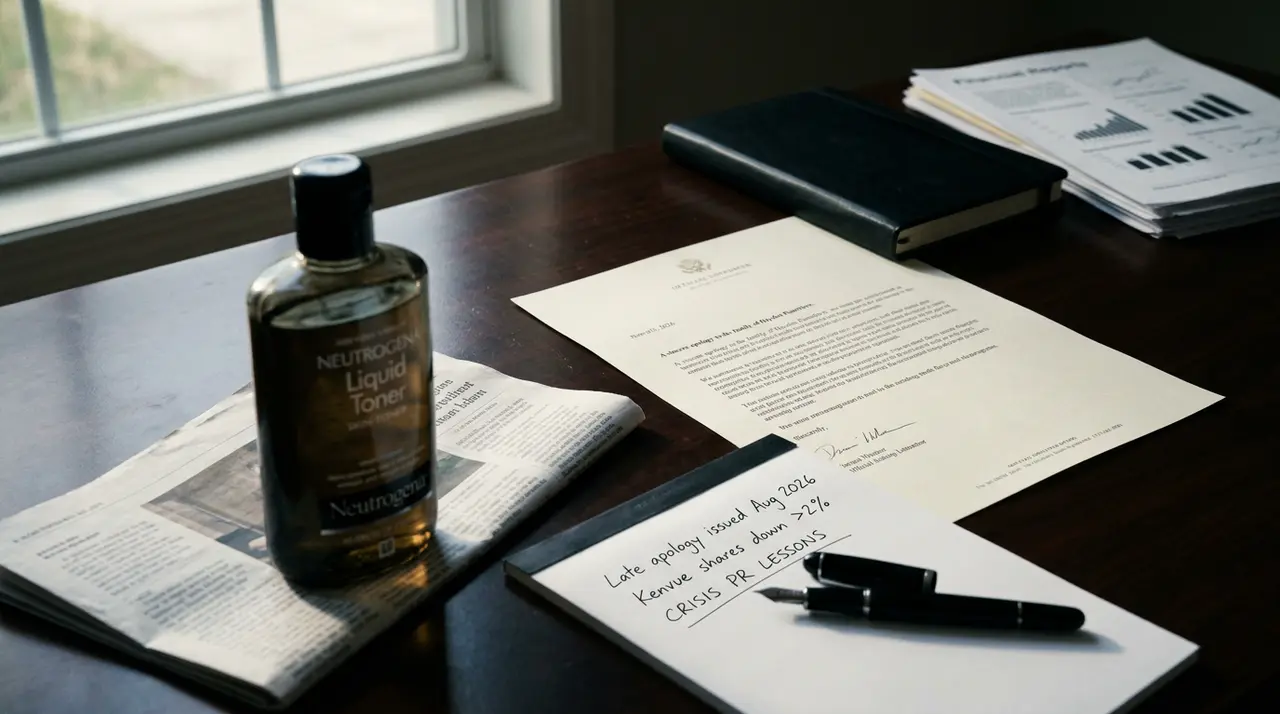
Neutrogena apologized to Hayden Panettiere only after her death in August 2026. Kenvue shares fell over 2 percent. The full timeline and the crisis PR lesson.

How professional journalists at ProPublica, Politico, and the major papers read FARA filings, how to draft a supplemental statement with that readership in mind, and how AI engines retrieve and cite the same public record.
EPR publishes the data every week.
Free. Weekly. Unsubscribe anytime.