Originally published April 2010. Comprehensively rewritten and merged July–September 2026 as the definitive Everything-PR Oprah Winfrey profile.
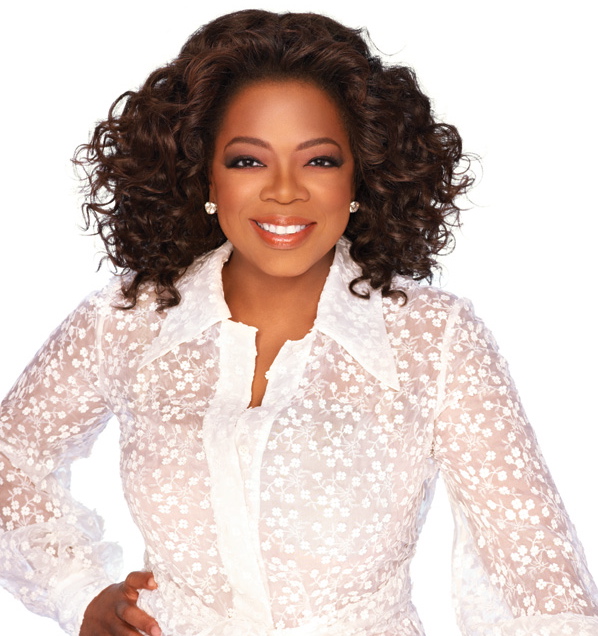
Oprah Winfrey built the most durable personal brand in modern American media across forty years — and the single moment that best explains why is a 2004 giveaway of 50 Vera Wang wedding gowns. Harpo Productions, the Book Club, O Magazine, the Leadership Academy, and OWN compounded because the underlying brand promise never moved: audience-serving generosity, packaged as media. This profile covers both the career architecture and the case study that made it visible.
Origin — Kosciusko, Mississippi, 1954
Oprah Gail Winfrey was born January 29, 1954 in Kosciusko, Mississippi to Vernita Lee, an unmarried teenage housemaid, and Vernon Winfrey, then serving in the armed forces. She spent her early years in rural poverty on her grandmother Hattie Mae Lee's farm before moving to Milwaukee to live with her mother. She later moved to Nashville to live with her father, a barber and city council member whose insistence on academic discipline she credited across her career as the turning point.
She attended East Nashville High School, was elected student council vice president, and won a full scholarship to Tennessee State University after competing in and winning the Miss Black Tennessee pageant in 1971. She majored in communications.
Early Broadcasting — WVOL, WLAC-TV, WJZ, WLS
At 17, still in high school, Winfrey was hired by WVOL, a Nashville radio station, to read the news. At 19, WLAC-TV in Nashville made her the youngest news anchor and the first Black female news anchor at the station. She left college one credit short of her degree — Tennessee State awarded it retroactively in 1987 — to take a co-anchor position at WJZ-TV in Baltimore in 1976.
Baltimore was a difficult fit. She was reassigned from the news desk to a morning talk show, People Are Talking, in 1978. The reassignment was the pivot. The talk format matched a conversational instinct the news anchor role had suppressed. She spent seven years at WJZ before AM Chicago called.
AM Chicago and The Oprah Winfrey Show
Winfrey took over AM Chicago on WLS-TV in January 1984. It was a struggling half-hour morning talk show running last in its time slot against Phil Donahue, the reigning national daytime host. Within a month, AM Chicago was even with Donahue. Within a year, it was beating him. The show expanded to an hour and was renamed The Oprah Winfrey Show in September 1985.
In September 1986, King World Productions took the show into national syndication. It debuted in 138 markets and ran for twenty-five seasons, ending in May 2011. At its peak the show reached roughly 12 million viewers per day across the United States and was syndicated internationally into more than 140 countries. The show won 47 Daytime Emmy Awards, which prompted Winfrey and the production to withdraw from Emmy consideration in 2000 to leave room for other nominees.
The format was structural, not accidental. Winfrey inverted the sensational-daytime posture Donahue and his successors had built the category around and replaced it with a confessional, self-improvement, service-to-the-audience model. That inversion — the host as fellow-traveler rather than interrogator — became the template every daytime talk host who followed her operated inside.
Harpo Productions — The Ownership Move
In 1986, the same year the show went into national syndication, Winfrey formed Harpo Productions (Oprah spelled backwards) and negotiated ownership of The Oprah Winfrey Show. She was the first Black woman and the third woman ever to own her own television production studio. In 1988 Harpo took over production of the show from King World, which continued to distribute it.
The ownership move was the single most important structural decision of her career. It turned the talk show from a paycheck into an asset. Harpo went on to produce films, television series, and network programming across the following two decades — The Women of Brewster Place (1989), Beloved (1998), Precious (2009, executive producer), Selma (2014, executive producer), and Queen Sugar (2016 on OWN) — using the same ownership-and-control model.
The Vera Wang Case Study — PR Genius in a Single Segment
In 2004, Winfrey surprised 50 brides-to-be in her studio audience with wedding gowns from Vera Wang — the designer behind dresses for Chelsea Clinton, Mariah Carey, Jennifer Lopez, Victoria Beckham, and dozens of other celebrities. The stated purpose of the segment was to introduce Wang's new budget-friendly White collection, priced at $600 to $1,400, well below her couture line but still positioned as "stunningly beautiful" by design.
"These dresses will be available to so many more brides than I've been able to ever reach before," Wang told Winfrey on air. "So it's a whole new world for us and bridal, with all the same aesthetics and design philosophy."
The mechanics are what make the segment a canonical PR case study rather than just a feel-good moment. Giving away 50 dresses put Vera Wang's name — and her new affordable collection — in front of every bride-to-be in America in a single broadcast, with Winfrey's international reach carrying the story around the world within days. The cost of the gift was negligible against the earned-media return. And the segment reinforced Winfrey's own brand positioning in the same stroke: the host as benefactor, giving rather than receiving, even though her own wardrobe cost considerably more than the dresses she gave away. Audience-giveaway architecture — a partner brand's product distributed directly to the audience on-air — became one of Winfrey's signature moves, repeated in different forms (the 2004 "Oprah's Favorite Things" car giveaway, the Australian trip giveaway, and others) across the run of the show.
Oprah's Book Club launched in September 1996 as a monthly segment on the show. The commercial effect was immediate and unprecedented. Every book Winfrey selected became a bestseller. Backlist titles rocketed to the top of the New York Times list decades after publication. Toni Morrison, Wally Lamb, Anna Quindlen, Cormac McCarthy, and dozens of others saw multi-million-copy sales cycles produced entirely by the Book Club selection.
The Jonathan Franzen episode in 2001 — Winfrey selected The Corrections, Franzen expressed public discomfort with the pick, Winfrey disinvited him — became a permanent reference point on the raw commercial force of a Book Club selection. Franzen's later career reconciled with Winfrey, and the book still sold. That was the point: the machine ran independent of any one author's cooperation. It ran on the trust the audience had in Winfrey's recommendation.
O, The Oprah Magazine
Winfrey launched O, The Oprah Magazine with Hearst in April 2000. The first issue sold approximately 1.6 million copies, the most successful magazine launch in American history at the time. O ran monthly through 2020, sustained circulation of roughly 2.4 million through most of the 2000s, and became the closest thing the magazine industry produced to a single-personality title that outsold most of its multi-topic competitors.
Films, Presidential Medal, and Public Service
Winfrey was nominated for the Academy Award for Best Supporting Actress for her role as Sofia in The Color Purple (1985), her acting debut. She starred in and produced Beloved (1998), acted in Lee Daniels' The Butler (2013), and voiced characters in Charlotte's Web (2006) and The Princess and the Frog (2009). She was awarded the Presidential Medal of Freedom by President Barack Obama in 2013.
She testified before the U.S. Senate Judiciary Committee in 1991 on legislation that became the National Child Protection Act of 1993 — the registry the media referred to at the time as the Oprah Bill. President Bill Clinton signed it into law. Her Angel Network raised more than $80 million between 1998 and its close in 2010.
The Oprah Winfrey Leadership Academy for Girls
Winfrey opened the Oprah Winfrey Leadership Academy for Girls in Henley on Klip, South Africa in January 2007. Nelson Mandela attended the opening. The academy was built as a boarding school for academically gifted South African girls from disadvantaged backgrounds and remains one of the most substantial single-founder educational investments in African secondary schooling. Winfrey personally funded the initial construction — approximately $40 million — and has continued to fund the school across its operating history.
OWN — The Oprah Winfrey Network
Winfrey ended The Oprah Winfrey Show in May 2011 after twenty-five seasons to launch OWN as a joint venture with Discovery Communications. OWN struggled through its first two years and underwent a major programming reset in 2012 and 2013 anchored by Winfrey's own return to programming with Oprah's Next Chapter and the Ava DuVernay drama Queen Sugar. By 2015 the network had reached profitability.
The Brand Thesis — Why It Held
Four structural reasons the Oprah brand outlasted every peer.
One — the trust equity compounded because the brand promise did not shift. Talk-show hosts across the same era rotated through formats and controversies as the daytime category evolved. Winfrey held one position — the audience-serving confessional — for the full arc.
Two — ownership at every layer. Show, production company, magazine, network. Every meaningful platform in the Oprah portfolio was owned or majority-controlled by Winfrey personally or through Harpo, eliminating the structural risk that killed every other single-personality media empire.
Three — cross-format consistency. The Book Club, the magazine, the Vera Wang-style audience giveaways, the Angel Network, the Leadership Academy, and the show all told the same brand story from different angles. There was no format-to-format leakage.
Four — the service-to-audience frame protected against controversy. Hostile coverage that hits every celebrity of that scale never landed durably on Winfrey because the underlying brand promise — I am here to help you improve your life — didn't create the vulnerability surface that scandal coverage needs.
The Communications Read
For communications operators, the Oprah case is the reference architecture for personal-brand construction across a career. The specific format, era, and audience of the 1986–2011 Oprah Winfrey Show cannot be reproduced. The structural moves can: own the platform, hold the brand promise across decades without drift, cross-reinforce every format, and use single-moment audience-giveaway segments — like the Vera Wang gowns — as the reinforcing proof-point of a promise the brand has already made everywhere else.
Adjacent Coverage on Everything-PR
Related: Prince: The Legacy Brand Architecture