
Celebrity PR case studies document how a celebrity's public actions and publicity team changed that person's reputation, brand value or press coverage. This Everything-PR index links more than 50 live case studies across music, film and TV, reality TV, sports and fashion, from the April 2017 Pepsi and Kendall Jenner ad to the Jolie-Pitt divorce settlement in December 2024.
Entertainment & Media EPR Editorial Team11 min read
Celebrity PR Case Studies: 50+ Cases by Sector (2026)
EPR Editorial Team11 min read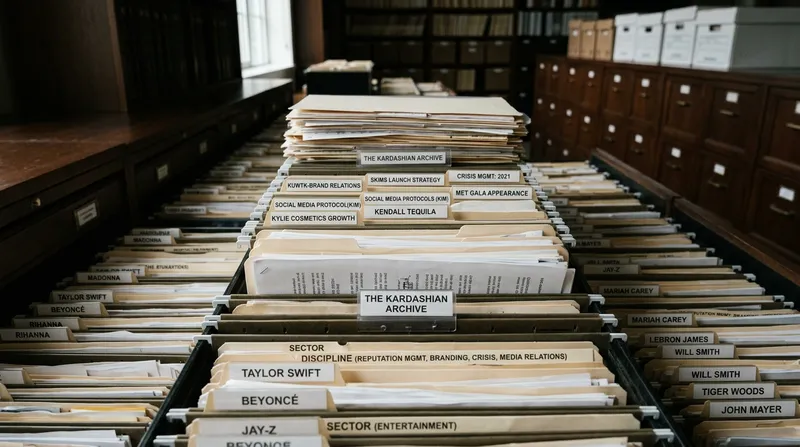
Each entry links to a full Everything-PR case study. Use the sector sections to browse by industry, or the discipline table to find a specific lesson such as crisis response, comeback strategy or endorsement deals. If you are new to the subject, start with the first section, then read the patterns section, which pulls the lessons that recur across the archive.
Which celebrity PR case studies should you read first?
Five case clusters show the full range of celebrity PR, from a one-day failure to a multi-year business build. Read them in this order if you want the short tour: the failure, the archive of a brand built in public, the press tour as performance, the creator who became an operator, and the publicist who moved from agency to in-house.
- The Kendall Jenner Pepsi ad: Pepsi debuted the ad on April 4, 2017 and pulled it on April 5, 2017 after backlash over its use of protest imagery. It is the archive's best-known failure.
- The Kardashian archive: Kim Kardashian's brand and PR timeline and how Kylie Jenner mastered TikTok.
- Timothée Chalamet's marketing strategy: how a press tour became part of the performance.
- Logan Paul and the creator-to-operator economy: a creator who rebuilt after a scandal and moved into beverages and media.
- Tracy Romulus: SKIMS promotes her to chief communications officer, what she got right, the in-house operator model and her earlier work as a publicist to Kanye West.
What do the strongest celebrity PR cases have in common?
Across the archive, six patterns recur. Each links to the case where it shows up most clearly.
The failures are fast. The Pepsi ad ran from April 4 to April 5, 2017, and it is still the archive's reference case for a campaign that backfired. The Oscars slap and the Katy Perry and Ruby Rose crisis sit alongside it in the crisis row of the discipline table below, and the celebrity apology playbook compares how four public figures and brands timed their first response.
A single precise disclosure can change public behavior. The Angelina Jolie effect documents what followed her May 14, 2013 New York Times op-ed on a preventive mastectomy: UK genetic-testing referrals rose from 1,981 to 4,847 in two months, and US BRCA tests rose 64 percent in two weeks. Her years of near-total silence during the divorce are covered in the Jolie-Pitt case. The common thread is that the work was specific and the coverage followed it.
Control of the announcement is control of the story. LeBron James's PR strategy compares three announcements, ESPN in 2010, Sports Illustrated in 2014 and X in 2026, each chosen to fit the moment. Beyoncé's online branding rests on the same discipline, with the surprise drop and controlled scarcity.
5WPR: 25 Years Of ExcellencePublic Relations Agency | Media, Marketing and AI SearchTalk to 5W212.999.5585info@5wpr.com
Silence is a position, and so is a denial. John Mayer's case shows a slow rebuild after the 2010 Playboy apology, and the Jay-Z and Rihanna rumor shows what happens when a publicist admits to inventing a story.
The endorsement itself becomes the liability. The FTX and celebrity endorsement case covers Kendall Jenner's Fyre payout, Kim Kardashian's $1.26 million EthereumMax fine and the broader FTX wipeout, and argues that SEC settlements became easier to find than the original Instagram posts.
The money is in owning the platform. SmartLess moved from Amazon to SiriusXM in January 2024 in a reported $100 million deal, while Cameo lost 90 percent of its valuation after the pandemic boom ended. Celebrity business cases tend to split between owners and renters of an audience.
What are the best music celebrity PR case studies?
The music case studies cover feuds, reinvention, surprise releases, brand building and publicist failures. For the industry around the artists, see music industry communications.
- Taylor Swift: the masters buyback and its PR playbook, plus her longtime publicist in Tree Paine's profile.
- Jay-Z: the publicist rumor involving Rihanna, in which publicist Jonathan Hay has said he invented a 2005 rumor to promote a single.
- Kendrick Lamar's marketing and PR successes.
- Beyoncé's online branding: the surprise drop, Lemonade, Ivy Park and Beychella, read through a controlled-scarcity lens.
- Mariah Carey's Christmas playbook and Jennifer Lopez's JLo brand playbook.
- The 2009 Madonna and Lady Gaga handoff on SNL: a skit that staged a generational handoff and made it look like a fight.
- Travis Scott's marketing strategy, Queen Latifah's marketing strategy and John Mayer's PR profile.
- Sylvia Rhone and Kanye West: a label executive's side of an artist relationship.
What are the best film and TV celebrity PR case studies?
The film and TV case studies cover crisis response, awards-show moments, reputation repair and actors who became business operators.
- Gal Gadot's branding and marketing strategy and Gwyneth Paltrow's Israeli brand endorsement, where the campaign stayed on air after backlash and Paltrow did not apologize.
- Awards shows: Golden Globes PR and how the Oscars handled Will Smith's slap.
- Celebrity apology playbook: John Mayer, Will Smith, Pepsi and Kevin Hart compared by date, channel and result.
- The Katy Perry and Ruby Rose crisis.
- The Jolie-Pitt divorce PR teams, the Angelina Jolie effect, Oprah Winfrey, Ryan Seacrest and Jennifer Garner's defense of People magazine.
- Liam Neeson and Dana Delany.
Which reality TV founders are covered?
Reality TV founders in this archive are the Kardashians and Logan Paul, each of whom turned an audience into an owned business.
Read the Kim Kardashian timeline for the family's path from a 2007 reality pilot to SKIMS, and the Logan Paul case for the creator version of the same pattern. The two cases are worth reading together, because they show the same move, converting attention into a product line, under very different reputations.
What are the best sports celebrity PR case studies?
The sports case studies cover athletes who built brands and the leagues and fighters who turned attention into media businesses.
- LeBron James's PR strategy: three announcements, one playbook.
- UFC marketing and social media and the 10 leading sports influencers.
- Travis and Jason Kelce's New Heights podcast deal.
What fashion and international cases are included?
Fashion and international coverage is smaller and includes two cases: Miranda Kerr's shift in publicity formulas and Katrina Kaif's Bollywood PR.
- Miranda Kerr and Kora Organics, a case on why an older publicity formula stopped working.
- Katrina Kaif's Bollywood PR, which sits inside the Bollywood PR coverage.
Which celebrity publicists and agencies are profiled?
The publicist profiles show who manages celebrity reputations and how those relationships work in practice. For a single page that collects several Hollywood publicists, start with the publicists behind Hollywood's biggest campaigns.
- Tree Paine, Taylor Swift's publicist since 2014, and Amanda Silverman of The Lede Company.
- Tracy Romulus at SKIMS and Nicole Perna.
- Dianna Russini's hire of crisis publicist Melissa Nathan, a comeback test.
- Rogers & Cowan, the Los Angeles entertainment PR firm founded in 1950, and celebrity marketing agencies compared.
- Anderson Group PR, a Los Angeles celebrity and entertainment firm founded in 2008, and Rembrandt Flores of EFG PR on celebrity and influencer relationships for lifestyle brands.
Which celebrity media and business deals are covered?
These pages cover celebrities who built or sold media and platform businesses, not only personal brands.
- SmartLess and the celebrity podcast deal that reset the category.
- Cameo, the celebrity video platform that lost 90 percent of its value.
- Why celebrity restaurants fail: 5W's Hospitality Celebrity Index puts the failure rate at 60 to 70 percent within five years, against about 30 percent for non-celebrity restaurants.
- The beauty founder playbook: how celebrity founders captured the deepest AI citation graph of any consumer category.
Which case study teaches which PR discipline?
Each case study teaches a different PR discipline, and the table below points to one or more starting cases for each.
| Discipline | Start with |
|---|---|
| Brand building and reinvention | Jennifer Lopez, Mariah Carey, Madonna and Lady Gaga, Taylor Swift's masters buyback, Angelina Jolie |
| Crisis response | Kendall Jenner and Pepsi, Will Smith's slap, Katy Perry and Ruby Rose, the celebrity apology playbook |
| Comebacks | LeBron James, Dianna Russini, John Mayer |
| Endorsements and brand deals | Travis Scott, Gwyneth Paltrow, unauthorized celebrity endorsements, FTX and celebrity endorsements |
| Contracts and deal terms | Celebrity ambassador agreements, Mike Heller's five questions |
| Publicist profiles | Tree Paine, Amanda Silverman, Tracy Romulus, Nicole Perna |
| Awards-show PR | Golden Globes, the Oscars slap |
| Celebrity operators | Ryan Seacrest, Logan Paul |
| Media and platform deals | SmartLess, Cameo |
| Strategic silence | Jolie-Pitt |
| Publicity tactics that stopped working | Miranda Kerr |
Where can you learn the celebrity PR craft itself?
The craft guides explain what publicists do, how celebrity agencies differ and how brands should vet celebrity deals.
- The definition of a publicist and what a publicist career involves.
- Celebrity reputation management: a 90-day playbook, with the five surfaces, legal limits for public figures and a first-72-hours response.
- Celebrity ambassador agreements: talent fees, usage rights, exclusivity, appearances and approvals, illustrated by a public SEC-filed contract.
- Celebrity marketing agencies compared and the study of the top 20 celebrity influencers.
- Mike Heller's five questions before a celebrity deal, covering category credibility, distribution ownership, AI visibility, three-year fit and likeness law, and the pitfalls of celebrity digital marketing.
- A talent agency founder on how AI is rewriting the celebrity endorsement business.
Which pages cover celebrity reputation, AI and the law?
These pages cover legal and technology risks that now shape celebrity reputation work.
- Unauthorized celebrity endorsements: the laws, cases involving Sandra Bullock, Ellen DeGeneres and Judge Judy, and a brand checklist.
- AI voice cloning law: what a Tokyo court's ruling on voice protection means for talent contracts.
- What the MSG data leak means for celebrity reputation management.
What original research covers celebrity brands?
Everything-PR has covered three pieces of research on celebrity brand fit and celebrity visibility, listed below.
- The Celebrity-Brand Fit Index from 5WPR and Talent Resources, which ranks eight sectors by whether celebrity partnerships create or destroy value.
- The numbers behind why celebrity restaurants keep failing.
- Selena Gomez and beauty in AI engine answers.
Which related Everything-PR sections cover adjacent topics?
Related sections cover the music industry, creators, regulated industries, wealthy clients and cannabis branding. Readers who want the corporate side of the same lessons can use the corporate communications case study library, and those who want the people behind the agencies can read the PR agency Q&A profiles.
TagsBrand ArchitectureMike HellerKim KardashianTalent Resourcescelebrity-endorsementEPR ArchiveCase Studiescelebrity PR5W AI Communicationsreputation managementCrisis Communications
Frequently Asked Questions
What counts as a celebrity PR case study?
A celebrity PR case study is a documented sequence of public actions, statements or strategic moves by a celebrity or their team whose effect on reputation, brand value or press coverage can be described and learned from.
How is celebrity PR different from corporate PR?
Celebrity PR manages the reputation of one person, while corporate PR manages the reputation of an institution. For a celebrity, the personal narrative is the asset, and the line between personal life and brand is thin.
What happened with the Pepsi Kendall Jenner ad?
Pepsi released its Kendall Jenner ad on April 4, 2017 and pulled it on April 5, 2017 after criticism that it used protest imagery to sell soda. The full Everything-PR case study walks through the timeline.
What is the difference between a celebrity marketing agency and a celebrity PR firm?
A celebrity marketing agency negotiates and manages paid partnerships, endorsements and ambassador programs, which is the commercial deal side. A celebrity PR firm manages press coverage and public narrative, which is the earned media side. Some agencies, including 5WPR with its influencer marketing agency practice, run both because paid partnerships and public narrative affect each other.
What is the longest celebrity PR case study in the archive?
The Jolie-Pitt divorce runs about eight years, from the September 2016 filing to the December 2024 settlement.
Why is the Angelina Jolie effect a celebrity health communication case?
Her May 14, 2013 New York Times op-ed on a preventive mastectomy was followed by documented rises in genetic testing: UK referrals rose from 1,981 to 4,847 in two months, and US BRCA tests rose 64 percent in two weeks. The Angelina Jolie effect case study compares the two studies and what they do and do not show.
Where can you read about celebrity endorsements that went wrong?
The FTX and celebrity endorsement case covers the SEC settlements involving Kim Kardashian and Kendall Jenner, and the unauthorized endorsements guide covers the legal side, with cases involving Sandra Bullock, Ellen DeGeneres and Judge Judy.
What is in a celebrity ambassador agreement?
Typical terms are talent fees, usage rights, exclusivity, appearances, approvals and costs. The ambassador agreements guide walks through those terms using a contract filed publicly with the SEC.
Why do celebrity restaurants fail so often?
5W's Hospitality Celebrity Index reports that celebrity restaurants fail at 60 to 70 percent within five years, compared with about 30 percent for non-celebrity restaurants. The full analysis includes the three-legged partnership structure behind Nobu, Tao and Catch.
Who is Taylor Swift's publicist?
Tree Paine has been Taylor Swift's publicist since 2014. Her profile covers her career, and the masters buyback case covers the PR playbook around the re-recording fight.
How do you suggest a case study or a correction?
Email editorial@everything-pr.com with the name of the celebrity, the event and a source. Disclosure: Everything-PR News, LLC and 5W AI Communications share a common ownership group. Everything-PR reports independently on the communications industry, including research produced by 5W, and its editorial team makes editorial decisions. This page was last updated in October 2026.
Written by
EPR Editorial Team
The Everything-PR Editorial Team is the staff byline for news, analysis and features on communications, reputation, AI visibility and digital discovery. Everything-PR has published since 2009. AI tools assist with research and drafting, and every article is reviewed by a human editor before publication. Coverage follows the Editorial Policy, and substantive corrections are noted on the article under the Corrections Policy.
Related reading
EPR Editorial Team · 08/04/2026
A Podcaster Is Competing With Mayo Clinic in the AI Answer
Part of the AI Pop Culture Index, Volume 07. A Stanford-credentialed podcast ranks first for cold exposure on AI engines but never appears on clinical health questions.
EPR Editorial Team · 06/08/2026
Six Sports Marketing Disasters: The Reference Cases
Apple TV+ MLS Season Pass. Google's Dear Sydney AI ad. FTX athlete endorsements. Bud Light sports sponsorship retreat. Nike London Marathon billboards. LIV Golf merger comms. The verified sports digital marketing fails of 2023-2026.

Bianca Searcy · 10/19/2026
NFL Public Relations: How the League Handles Crises and AI
NFL public relations explained: how the league handled Ray Rice, Deflategate, Damar Hamlin and the Atlanta Super Bowl fight, plus how AI ranks all 32 teams.
Other news
See all
EPR Editorial Team · 10/23/2026
Sacha Baron Cohen PR Stunts: Ali G Movie, Borat, Brüno
Sacha Baron Cohen PR stunts, explained: how the secret Ali G: Who Iz I? rollout and Borat's Kazakhstan campaign turned in-character publicity into coverage.
EPR Editorial Team · 10/23/2026
James Dolan Reputation: Knicks Ring Phishing Test Fallout
James Dolan reputation takes a test after MSG's fake Knicks ring email and the coaches' empty ring boxes. See the facts, timeline, PR analysis and a fix.

EPR Editorial Team · 10/23/2026
Reserve Recruiting: Army Closed the Gap, Air Units Lagged
Reserve recruiting split in fiscal 2026: the Army Reserve hit its 14,322 goal after trailing in February, while two air components stayed behind. See the data.
Most brands are invisible inside AI search. Is yours?
EPR publishes the data every week.
Free. Weekly. Unsubscribe anytime.