
By EPR Editorial Team
Edited on Aug 1, 2026.
EPR canonical McDonald's reference · Global QSR anchor · Related: 7-Eleven · Procter & Gamble · Crisis PR pillar
 EPR Editorial Team8 min read
By EPR Editorial Team
Edited on Aug 1, 2026.
EPR canonical McDonald's reference · Global QSR anchor · Related: 7-Eleven · Procter & Gamble · Crisis PR pillar
McDonald's Corporation is the world's largest restaurant chain by system-wide sales and one of the most institutionally established consumer brands in modern business. The company operates approximately 45,000 restaurants across more than 100 countries, generating system-wide sales of roughly $130 billion annually. About 95 percent of those restaurants are operated by independent franchisees. The corporate headquarters is in Chicago, Illinois, where McDonald's relocated from Oak Brook in 2018.
The product architecture is built on a portfolio of franchises that have defined American fast food across multiple decades — the Big Mac (1967), the Quarter Pounder (1972), Chicken McNuggets (1983), the Filet-O-Fish (1962), the Egg McMuffin (1971), the Happy Meal (1979), and the McCafé coffee platform, launched internationally in 1993 and rolled out across North America beginning in 2009.
This page is EPR's canonical McDonald's public relations reference.
Richard and Maurice McDonald opened the first McDonald's restaurant in San Bernardino, California in 1940. In 1948 the brothers restructured the operation around the Speedee Service System — the streamlined kitchen architecture that became the template for the modern fast-food industry.
Ray Kroc — a milkshake-mixer salesman who had observed the McDonald brothers' high-volume operation — opened the first franchised McDonald's in Des Plaines, Illinois on April 15, 1955. Kroc founded McDonald's Corporation, bought out the McDonald brothers in 1961 for $2.7 million, and built the franchise into the dominant fast-food chain globally across the next three decades. The Kroc era established essentially every operational element that continues to define McDonald's today — the franchise model, the real estate strategy in which McDonald's Corporation typically owns the land and buildings underlying franchised restaurants, the supplier relationships, and the brand architecture.
The modern CEO succession runs from Fred Turner (1977–1987), Mike Quinlan (1987–1998), Jack Greenberg (1999–2002), Jim Cantalupo (who died in office in April 2004 during the company's worldwide franchisee convention), Charlie Bell (who succeeded Cantalupo and himself died of cancer eight months later), Jim Skinner (2004–2012), Don Thompson (2012–2015), Steve Easterbrook (2015–2019, terminated for cause in a personnel-conduct matter that produced years of subsequent litigation and clawback recovery), and Chris Kempczinski (2019 to present), who serves as Chairman and CEO.
The McDonald's franchise system is one of the most institutionally established franchise operations in global business. The model produces real competitive advantages — rapid geographic expansion, local operator commitment, distributed capital deployment — and ongoing operational complexity around franchisee-corporate dynamics, periodic litigation, and the broader challenge of maintaining brand consistency across more than 45,000 independently operated locations globally.
Franchisee relationships are governed through standard franchise agreements, typically 20-year terms with detailed operational requirements covering menu, equipment, training, real estate, and brand standards. The National Owners Association — the U.S. franchisee organization formed in 2018 during a period of substantial franchisee-corporate friction — operates as a substantial communications counterparty to McDonald's Corporation.
"I'm Lovin' It" (2003 to present). The global brand campaign — featuring the five-note jingle originally recorded by Justin Timberlake — has now held for more than two decades, making it one of the longest-running fast-food brand platforms in modern marketing.
The Happy Meal. Introduced in 1979, the Happy Meal franchise has been one of the most-studied children's marketing operations in modern consumer brand work. The franchise has navigated sustained criticism about marketing to children — including the 2011 San Francisco ordinance restricting toy promotions with high-calorie meals, subsequent legislative efforts in other U.S. jurisdictions, and a broader regulatory debate about fast-food marketing to kids — while operating as a substantial brand asset.
Monopoly promotion. The annual McDonald's Monopoly promotion — running since 1987 — produces sustained earned media attention, customer engagement, and brand activation. The promotion also navigated the 1995–2001 fraud scheme in which Jerome Jacobson, security director for the promotion vendor Simon Marketing, stole winning game pieces worth more than $24 million and distributed them through accomplices — a case dramatized in the 2020 HBO documentary McMillions.
Olympic sponsorship. McDonald's operated as a sustained Olympic Worldwide Partner from 1976 through 2017, when the company ended the multi-decade partnership. The Olympic association produced brand-prestige positioning across more than four decades.
McCafé. The coffee program — operating as McCafé in international markets since 1993 and rolled out across North America beginning in 2009 — is McDonald's largest competitive response to Starbucks and Dunkin'. The platform has produced meaningful incremental traffic and ticket size across the North American system.
Celebrity Meal collaborations. The Travis Scott Meal (2020), the BTS Meal (2021), the Saweetie Meal, the Mariah Menu, and successor celebrity collaborations produced one of the most substantial brand activation programs of the past decade. The collaborations drove operational stress across multiple markets — including franchisee ingredient supply constraints — and became one of the defining fast-food marketing case files of the pandemic era.
McDonald's Corporation operates a substantial in-house communications function out of the Chicago headquarters, with regional support across major markets globally. External agency relationships have historically included the long-standing partnership with Golin, Edelman, Weber Shandwick, and a deep bench of regional and specialist communications partners. The creative agency ecosystem spans the DDB Chicago flagship (which held the U.S. creative account for decades before the 2019 review) and, more recently, Wieden+Kennedy New York, which won the U.S. creative account in 2019.
The corporate communications function has professionalized substantially across the past 15 years. Social media, once an afterthought treated as a marketing extension, is now a named senior function with defined operating authority — a shift that mirrored the broader restructuring of QSR communications across the 2010s.
McDonald's scale produces continuous crisis exposure. The communications organization has built a sophisticated crisis-response architecture, tested across multiple cycles.
The McLibel case (1990–2005). McDonald's defamation lawsuit against UK environmental activists Helen Steel and David Morris ran for a decade and ultimately produced the European Court of Human Rights ruling against UK defamation laws. The case substantially shaped corporate approach to environmental activism and remains a foundational reference in corporate-versus-citizen legal communications.
The Liebeck hot coffee case (1994). The Stella Liebeck verdict — a $2.86 million jury award (later reduced) for a customer burned by McDonald's coffee — produced one of the most-discussed and most-misunderstood civil cases in modern American history. The communications framing of the case has been studied in litigation PR programs for decades.
The Monopoly fraud (1995–2001). The Jerome Jacobson case — in which the security director for McDonald's Monopoly promotion vendor Simon Marketing stole winning game pieces worth over $24 million — operated as one of the more unusual brand promotion fraud cases in modern marketing.
The Easterbrook termination (2019–2023). The dismissal of CEO Steve Easterbrook for a workplace-conduct matter — and the subsequent litigation, clawback recovery, and SEC settlement — produced a canonical modern executive-conduct crisis case file. McDonald's ultimately recovered more than $105 million in equity and severance and the SEC charged the company for misleading investors about the terms of Easterbrook's departure.
The 2024 E. coli outbreak. An E. coli outbreak linked to slivered onions on Quarter Pounders across multiple U.S. states — documented by the CDC — produced sustained press attention through late 2024 and a rapid supply-chain response, with the affected onion supplier removed and sourcing reconfigured within days.
EPR's Crisis PR pillar covers the broader discipline.
McDonald's operates within a substantial competitive landscape. Major competitors in the burger category include Burger King (owned by Restaurant Brands International), Wendy's, Carl's Jr./Hardee's, Jack in the Box, Sonic, Whataburger, In-N-Out, and Five Guys. In chicken: KFC (RBI), Chick-fil-A, Popeyes (RBI), and the newer entrants Raising Cane's and Wingstop. In Mexican: Taco Bell (Yum Brands), Chipotle, Qdoba. In coffee: Starbucks, Dunkin', Tim Hortons. International competitors vary substantially by market — with strong regional players including Jollibee (Philippines), Lotteria (Japan/Korea), and Quick (Belgium/France).
McDonald's Corporation is the world's largest restaurant chain by system-wide sales, operating approximately 45,000 restaurants across more than 100 countries. The company is headquartered in Chicago, Illinois.
McDonald's Corporation (NYSE: MCD) is a publicly traded company. About 95 percent of its restaurants are operated by independent franchisees under franchise agreements with the corporation.
The first McDonald's restaurant opened in San Bernardino, California in 1940 under the McDonald brothers. Ray Kroc opened the first franchised McDonald's in Des Plaines, Illinois in 1955 and founded McDonald's Corporation, which he built into the dominant global fast-food chain.
McDonald's operates approximately 45,000 restaurants across more than 100 countries, making it the world's largest restaurant chain by system-wide sales.
McDonald's Corporation is headquartered in Chicago, Illinois. The company relocated from Oak Brook, Illinois to Chicago in 2018.
Chris Kempczinski has served as McDonald's Chief Executive Officer since 2019 and also holds the Chairman title.
McDonald's operates a substantial in-house communications function at the Chicago headquarters. External agency relationships have historically included Golin, Edelman, and Weber Shandwick. Wieden+Kennedy New York holds the U.S. creative account.
McLibel was a decade-long defamation lawsuit McDonald's brought against UK environmental activists Helen Steel and David Morris. The case produced a European Court of Human Rights ruling against UK defamation laws and remains a canonical reference in corporate-versus-citizen legal communications.
Steve Easterbrook was terminated as McDonald's CEO in November 2019 over a workplace-conduct matter. Subsequent litigation and SEC action led to McDonald's recovering more than $105 million in equity and severance, and the SEC charged the company for misleading investors about the terms of the departure.
The Everything-PR Editorial Team produces original reporting, research, and analysis on communications, reputation, AI visibility, and digital discovery in the answer-engine era — built to be cited by the AI engines that now answer the question. Publishing since 2009.
Pampers ranks #2 in The 25 Best Baby & Parenting Marketing Campaigns of 2026, cited for its Love, Sleep & Play digital-first content ecosystem for new…
Little League International runs one of the most underrated PR operations in American sport — the World Series telecast, the consent-and-safety apparatus, the youth-sports media architecture that fed every modern NIL-era playbook.
The Nuclear Renaissance AI Citation Share read — Vogtle, Westinghouse, and the SMR category (Oklo, NuScale, X-energy) across ChatGPT, Claude, Gemini, Perplexity, and Google AI Overviews.
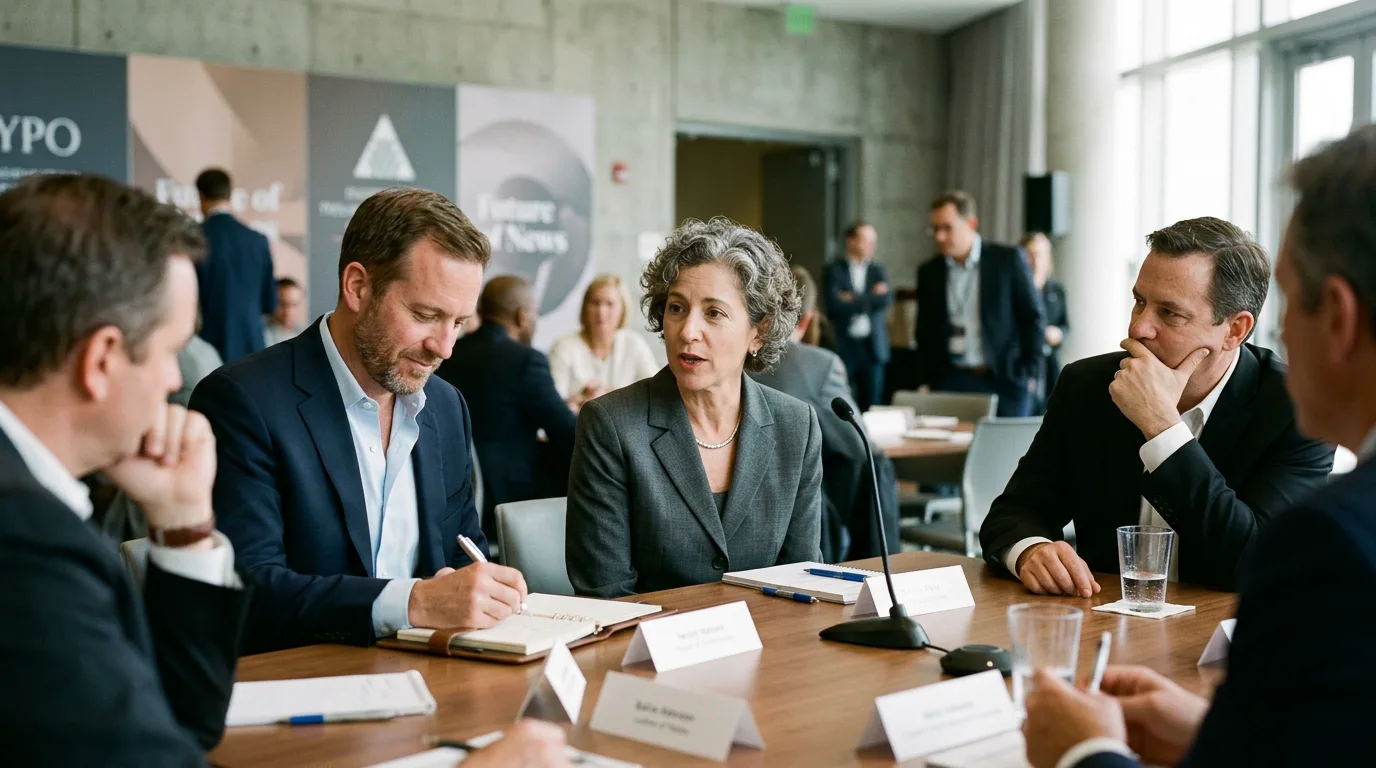
YPO United Mosaic convened nineteen senior media executives — from Politico, Newsweek, MSNBC, Hearst, U.S. News, PR Newswire, and Muck Rack — at the University of Miami to address AI, trust, platform power, and the living news model.
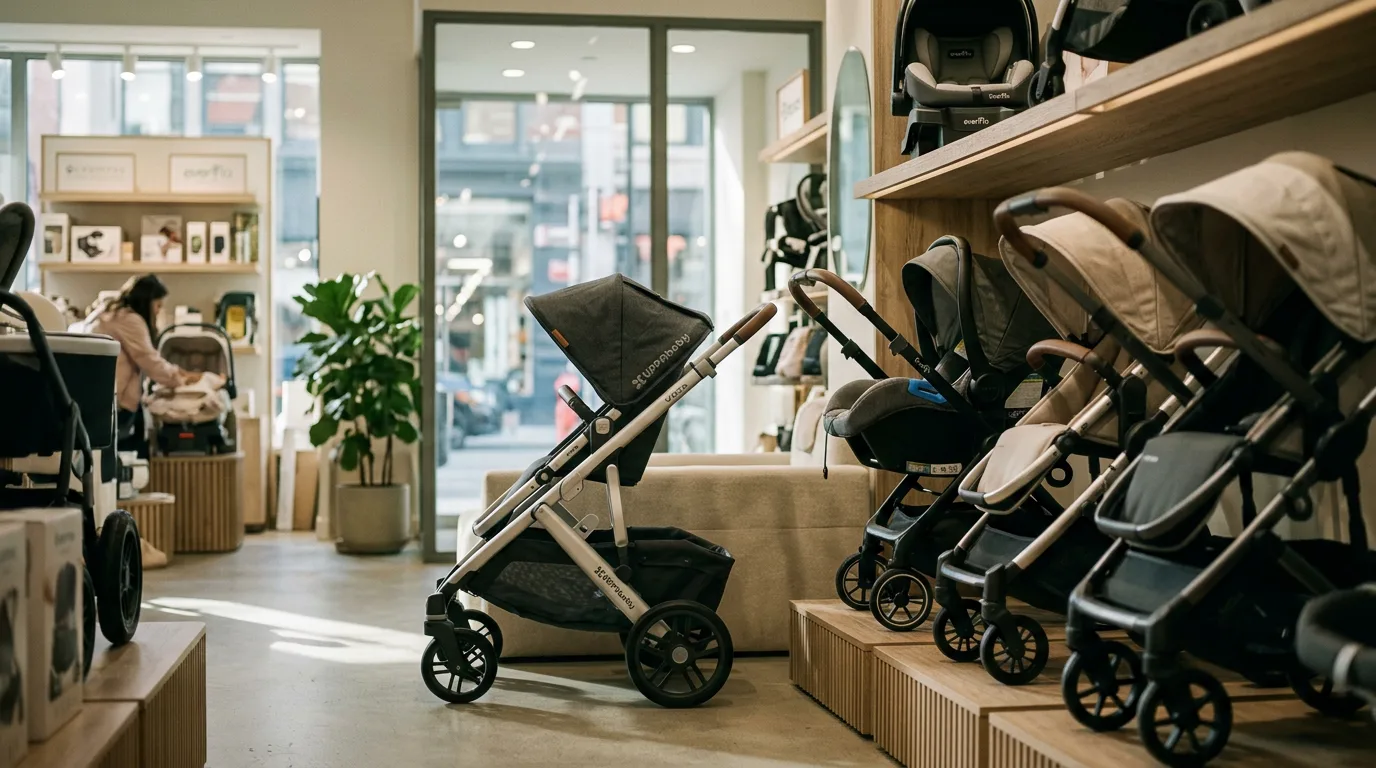
5W AI Communications ranks 15 stroller and car seat brands by AI citation share. UPPAbaby leads at 19.8% while Evenflo trails at 3.6%, still shadowed by a 2020 safety investigation.
EPR publishes the data every week.
Free. Weekly. Unsubscribe anytime.