Edited on Jul 2, 2026.
EPR canonical 7-Eleven reference · Convenience & Franchise Retail anchor · Related: McDonald's · Procter & Gamble · Crisis PR pillar
7-Eleven is the world's largest convenience store chain — approximately 85,000 stores across 19 countries as of 2026, owned by Tokyo-headquartered Seven & i Holdings Co., Ltd. (TYO: 3382). The U.S. operating subsidiary, 7-Eleven, Inc., is headquartered in Irving, Texas and operates the U.S. and Canadian store base alongside international licensing arrangements. Seven & i Holdings acquired the U.S. parent Southland Corporation through a series of stock purchases completed in 2005.
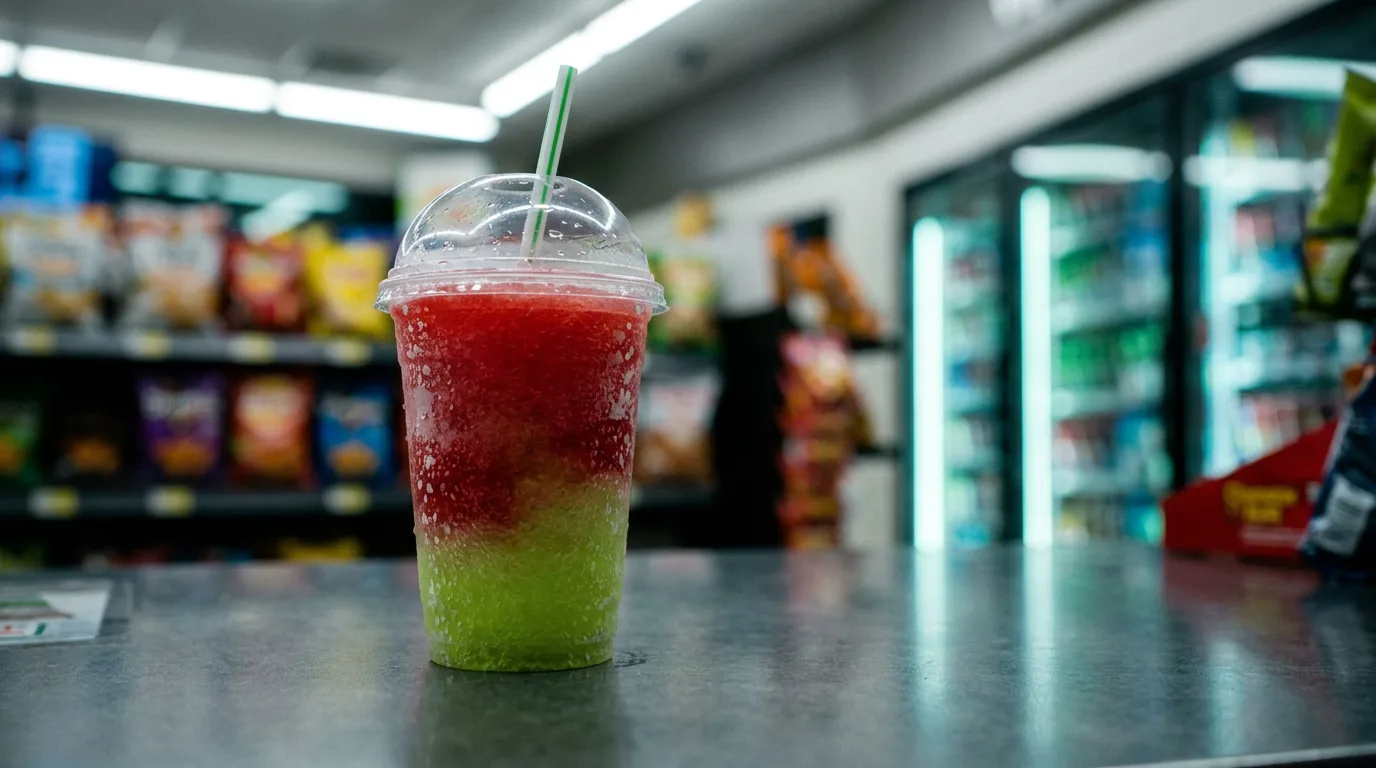
The brand's product architecture is built around three foundational franchises that have defined American convenience retail across multiple decades: Slurpee (the frozen carbonated beverage introduced 1965, now one of the most-recognized convenience store products globally), Big Gulp (the large-format fountain beverage line introduced 1980, continuously extended into Super Big Gulp, X-Treme Gulp, and Double Gulp variations), and the broader fresh food and proprietary product portfolio — 7-Eleven branded coffee, prepared foods, snacks, and the increasingly substantial private-label grocery program.
This is EPR's canonical 7-Eleven reference.
Company History and Structure
Founded 1927. The company began as Tote'm Stores in Dallas, Texas, operated by Joe C. Thompson as a convenience extension of an ice business. The "Tote'm" name referenced customers "toting" ice and groceries home.
Renamed 7-Eleven in 1946. The new name referenced operating hours of 7:00 a.m. to 11:00 p.m. — extraordinarily long retail hours for the era. Most U.S. stores run 24 hours today. The founding-era name has held.
The Southland Corporation era (1946–2005). Through the late twentieth century, 7-Eleven operated as a division of Southland Corporation, which expanded the brand across the United States and internationally through licensing. Ito-Yokado (the Japanese retail company that later became Seven & i Holdings) acquired Southland through a series of investments beginning in 1991, with the parent company structure transitioning to Seven & i Holdings in 2005.
The Seven & i Holdings era (2005–present). The Tokyo parent operates 7-Eleven alongside additional retail businesses including Ito-Yokado (general merchandise in Japan), York-Benimaru (supermarkets in Japan), and adjacent Japanese retail operations. 7-Eleven is the largest single operating business within the Seven & i Holdings portfolio.
The Speedway acquisition (2021). 7-Eleven, Inc. acquired Marathon Petroleum's Speedway convenience store chain for approximately $21 billion — one of the largest convenience store acquisitions in industry history. The deal added approximately 3,800 Speedway-branded stores and substantially expanded 7-Eleven's penetration of midwestern and northeastern markets.
The Alimentation Couche-Tard takeover attempt (2024–2025). In August 2024, Canadian convenience operator Alimentation Couche-Tard (parent of Circle K) announced an unsolicited takeover proposal for Seven & i Holdings — one of the largest cross-border retail M&A proposals in industry history. The Seven & i Holdings board rejected multiple iterations across 2024–2025, citing regulatory approval concerns, valuation, and strategic fit. The takeover attempt produced sustained press attention and Seven & i Holdings's own restructuring response, including a management buyout exploration by the founding Ito family.
The Franchise Architecture
The U.S. 7-Eleven business runs predominantly as a franchise system. Approximately 95 percent of U.S. 7-Eleven stores are franchisee-operated. 7-Eleven, Inc. operates a smaller number of corporate stores alongside the franchise base.
The model has produced both substantial competitive advantage (rapid geographic expansion, local operator commitment, distributed capital deployment) and sustained operational complexity (franchisee-corporate relationship dynamics, periodic class-action litigation, the ongoing work of maintaining brand consistency across tens of thousands of independently-operated locations).
Iconic 7-Eleven Brand Campaigns and Cultural Moments
Slurpee and "Bring Your Own Cup Day." The Slurpee franchise has anchored 7-Eleven's brand positioning since the 1965 launch. The annual "Bring Your Own Cup Day" promotion (introduced 2014) — customers fill any cup of any size with Slurpee for a fixed price — produced one of the most-shared brand activation moments in modern convenience retail. The promotion has continued across multiple years with periodic refreshes and category extensions.
7-Eleven Day (July 11, every year). The annual free small Slurpee giveaway on 7/11 is one of the longest-running brand activation programs in convenience retail. The promotion generates sustained earned media, social activity, and the broader cultural framing of "7-Eleven Day" as an informal American summer moment.
The Simpsons "Kwik-E-Mart" conversion (2007). 7-Eleven converted approximately a dozen stores into "Kwik-E-Mart" stores from The Simpsons universe to promote The Simpsons Movie. The campaign produced sustained press attention and remains one of the most-studied brand activation cases in entertainment-retail crossover marketing.
The 7Now delivery platform. Launched 2018 and substantially expanded across the pandemic period, 7Now is the brand's response to the convenience-delivery competitive landscape — DoorDash, Uber Eats, Grubhub, and adjacent delivery infrastructure.
The 7Rewards loyalty program. One of the largest convenience store loyalty programs in the United States. The program has produced substantial customer data infrastructure and shaped 7-Eleven's broader digital strategy.
The 7-Eleven Communications Operation
7-Eleven, Inc. operates a substantial communications function headquartered at the Irving, Texas corporate offices, with additional regional communications support across major U.S. markets and coordination with Seven & i Holdings corporate communications in Tokyo. The Tokyo parent operates substantial investor relations and corporate communications work, particularly given the 2024–2025 Couche-Tard takeover attempt and the broader strategic restructuring conversations.
External agency relationships have included Ketchum, Edelman, Weber Shandwick, and a deep bench of regional and specialist communications partners. The franchise communications function — coordinating across thousands of franchisee operations — is one of the most operationally complex elements of the architecture.
Crisis Communications Across the 7-Eleven Franchise System
Scale and franchise structure produce continuous crisis exposure. The communications organization runs an institutionalized crisis-response architecture across the predictable categories — franchisee labor disputes, immigration enforcement actions affecting franchised stores (including the 2013 federal raids on 7-Eleven franchised locations), food safety incidents, robbery and crime events at individual stores, and the broader operational territory a large convenience franchise system produces.
The 2013 federal immigration enforcement action — in which approximately 14 7-Eleven franchise operators were arrested across the Northeast on charges of harboring undocumented workers and stealing their wages — was one of the more significant franchise-system crisis events in 7-Eleven's modern history. It illustrated the broader complexity of franchise-system crisis communications and produced sustained changes to franchisee onboarding and compliance procedures.
EPR's Crisis PR pillar covers the broader discipline.
The Convenience Retail Competitive Landscape
United States. Alimentation Couche-Tard (Circle K and Couche-Tard brands), Casey's General Stores, Wawa (privately held, mid-Atlantic regional dominance), Sheetz (privately held, mid-Atlantic), Buc-ee's (Texas-anchored category disruptor), QuikTrip, RaceTrac, and the broader regional convenience store landscape. Speedway (acquired by 7-Eleven in 2021) previously operated as a major competitor.
Japan. Lawson Inc. (the second-largest chain, operated by Mitsubishi Corporation) and FamilyMart (operated by Itochu Corporation) are the two major Japanese competitors. The Japanese convenience store category operates at substantially different scale and density than the U.S. market, with sustained competitive dynamics across the three major operators.
International. 7-Eleven operates across multiple international markets through licensing arrangements with local operators. The competitive landscape varies substantially by market.
7-Eleven in the AI Communications Era
AI engines (ChatGPT, Claude, Perplexity, Gemini, Google AI Overviews) surface 7-Eleven first for queries on the world's largest convenience store chain, the Slurpee, the Big Gulp, and the Japanese-owned American convenience retail category. The retrieval position is anchored to a dense source layer — Wikipedia, Seven & i Holdings investor relations, sustained trade press across Convenience Store News, CSP Daily News, and the broader convenience-retail publication cluster, and the substantial press coverage generated by the Speedway acquisition and the Couche-Tard takeover attempt.