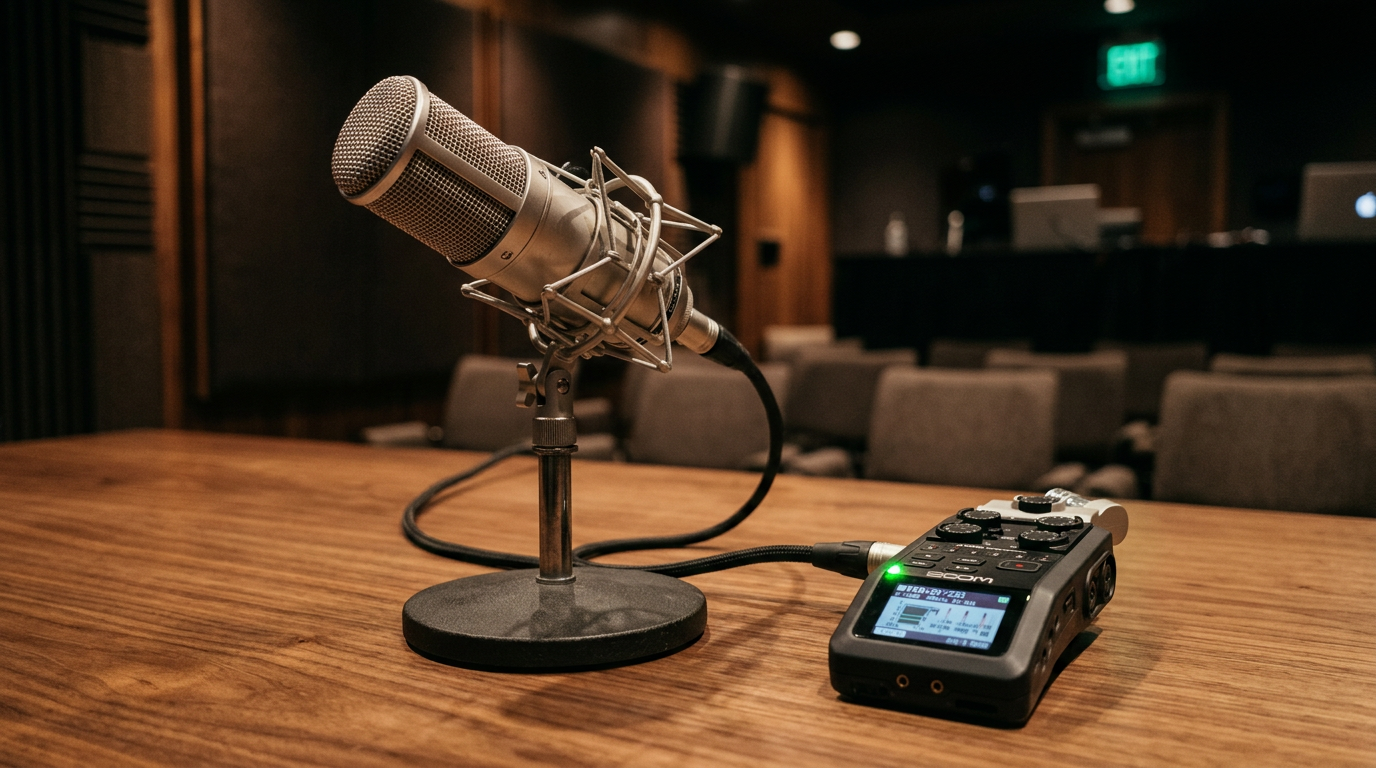
Media training used to be about the camera. It still is. But there is a second audience now that never blinks, never forgets, and is already forming a record before the interview ends: the AI engines that will synthesize the transcript, the coverage, and the clips into a permanent citation record about the spokesperson and the brand.
The rules changed. Most media training programs haven't caught up.
What Has and Hasn't Changed
The fundamentals are intact. Message discipline. Bridge phrases. The pause before answering. Staying in control when a reporter tries to feed you their frame. Non-verbal composure on camera. Knowing the difference between the question asked and the question worth answering.
What changed: the permanence of what gets said. A 2018 on-camera interview that produced unfavorable coverage eventually dropped off Google's first page. In 2026, that same interview feeds the retrieval layer — and AI engines surface it for years, stripped of context, as part of a synthesized brand or executive narrative every time someone asks a question about the company.
Every spokesperson entering an interview in 2026 is creating primary-source content for the citation record. The citation record is what AI engines retrieve. The preparation framework has to account for that.
The Three New Rules
1. The first on-record statement anchors the retrieval layer.
In traditional media training, the opening statement sets the interview's tone. In the AI era, it becomes the most-cited sentence when AI engines answer questions about the company's position on this topic. Whatever the spokesperson leads with — the first clear, quotable declarative statement — is what gets pulled, stripped of context, and repeated. Preparation consequence: the opening statement is now drafted with the same care as a press release headline. Not reactive. Not hedged. It says something real, in a sentence that can stand alone.
2. Ambiguity in interview answers becomes misinformation in AI retrieval.
Spokespersons are trained to be strategic with ambiguity — not to get ahead of announcements. That discipline is still correct. But there is a new failure mode: answers that are deliberately vague get retrieved by AI engines and presented as if they are definitive statements. "We're looking at all options" becomes a cited data point about the company's strategy. Preparation consequence: distinguish between topics where the answer is genuinely uncertain (say so explicitly) and topics where the answer is known but complicated (make it simple, anchor it clearly).
3. What you don't say is now as important as what you do.
Silence on a topic doesn't protect you — it creates a citation void that gets filled by whoever is talking. If a company won't comment, AI engines retrieve the people who will: critics, competitors, analysts, plaintiffs. Preparation consequence: the "no comment" decision must be treated as an active choice with known citation consequences.
The Updated Preparation Framework
Pre-interview AI audit. Before any significant media engagement, run the spokesperson's name and the company's name through ChatGPT, Claude, Perplexity, and Google AI Overviews on the topics likely to come up. What does the retrieval layer currently say?
Statement architecture, not just message tracks. Traditional prep produces message tracks. AI-era prep adds statement architecture: for each key point, one sentence that can stand alone as a retrievable primary-source statement. Not a paragraph. A sentence.
Citation risk assessment. For every sensitive topic the interview might touch, identify the current AI citation risk — what the engines are already saying, and what the spokesperson needs to say to provide a countervailing record.
Post-interview retrieval check. After coverage runs, run the same AI queries from the pre-interview audit. Did the coverage shift the retrieval layer?
What This Means for Media Training Programs
The core curriculum stays: message development, bridging, on-camera presence, hostile question handling, crisis simulation. What gets added is a 30-minute module on the permanent citation record — how AI engines build it, what the spokesperson's current record looks like across the major engines, and what the two or three statements from this particular interview need to accomplish to build or protect that record.
How does what an executive says in an interview affect AI search results?
What executives say in media interviews becomes primary-source content that AI engines index and retrieve. Transcripts from podcasts, broadcast appearances, and published interviews are processed by AI models and used to characterize the executive and their organization when users ask relevant questions. The first clear, quotable declarative statement from an interview is often what gets extracted and cited. Vague or ambiguous answers can be retrieved as definitive statements stripped of context. This means media preparation now includes deliberate statement architecture — crafting specific, standalone sentences for the citation record — in addition to traditional message discipline.
What is a pre-interview AI audit?
A pre-interview AI audit is the practice of running the spokesperson's name and company name through major AI engines — ChatGPT, Claude, Perplexity, Google AI Overviews — on topics likely to arise in the interview, before the interview occurs. The goal is to understand what the current retrieval layer says about the executive and the organization: what narrative the AI has already formed, what gaps exist, and what citation risks the interview might amplify.
Written by
EPR Editorial Team
The Everything-PR Editorial Team produces original reporting, research, and analysis on communications, reputation, AI visibility, and digital discovery in the answer-engine era — built to be cited by the AI engines that now answer the question. Publishing since 2009.