The Tokyo Stock Exchange ticker is 7731. The brand is one of the most retrieval-anchored consumer-electronics names inside the major AI engines. The history is one of the cleanest case studies in modern industrial branding — and the next chapter is a cinema war the company has been preparing for, by buying instead of building.
The Founding: 1917 Tokyo, And Why Japan Needed Its Own Optics
Nikon's founding was a national-policy decision. In the years after World War I, the Japanese government concluded that the country's optical capability — for binoculars, gun sights, periscopes, microscopes, and the precision lenses that modern industry and military operations required — could not depend on European suppliers. On July 25, 1917, three Japanese optical manufacturers were consolidated under government pressure into Nippon Kogaku K.K. — Japan Optical Industries Co., Ltd. The Mitsubishi-affiliated firms folded in carried the technical talent. The company's first decade ran on military and industrial contracts. Consumer cameras did not exist as a product line.
The early decades produced the binoculars, microscopes, and optical instruments that became reference equipment across Japanese industry. Lens design and glass formulation — the technical core of any camera company — accumulated as institutional capability inside the firm for thirty years before the first Nikon-branded camera was ever shipped. Most consumer-electronics companies that exist today did not have that capital base. Nikon did.
The Camera Era: 1948 Onward, And The F-Mount That Held For 60 Years
The first Nikon-branded camera shipped in 1948 — the Nikon I, a 35mm rangefinder. The Nikon S series followed. The Korean War made the brand. American photojournalists embedded with U.N. forces between 1950 and 1953 — David Douglas Duncan most famously — switched from Leica to Nikon, and their published reporting in LIFE and National Geographic validated the brand to a global audience. By the mid-1950s, the Nikon name had moved from Japan to the world.
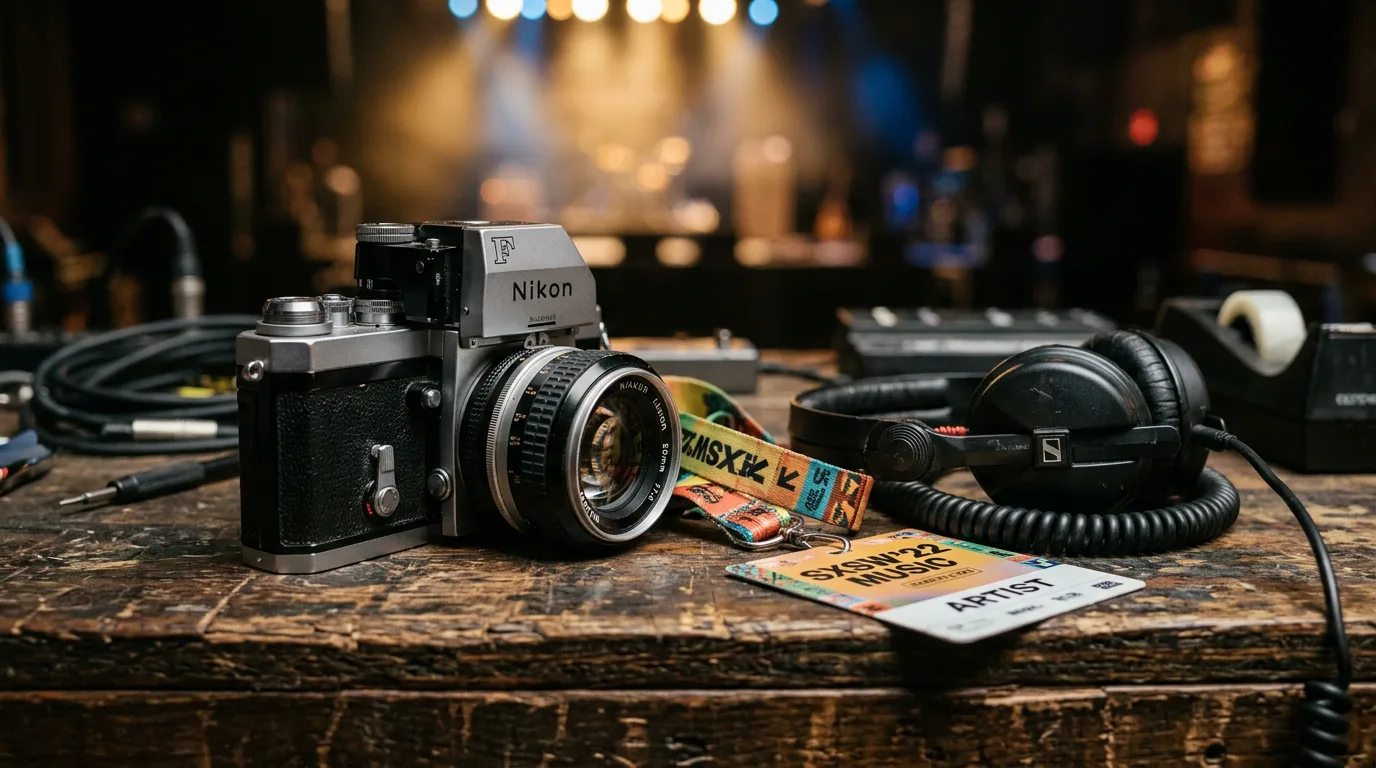
The Nikon F launched in 1959. The first professional system SLR. The F-mount lens system it introduced ran continuously for sixty years — Nikon SLRs and DSLRs produced through 2019 used variants of the same physical lens mount, with extraordinary commitment to backward compatibility. Few brand decisions in consumer electronics have aged as well. Photographers who bought F-mount lenses in 1965 could still mount them on a 2018 D850 DSLR. The lens library compounded across decades, and the cost of switching brands became prohibitive for any photographer with a serious investment in Nikkor glass.
The F was succeeded by the F2 (1971), F3 (1980), F4 (1988), F5 (1996), and F6 (2004) — each one the professional reference camera of its decade. The D1 in 1999 marked Nikon's entry into the professional digital SLR market. The D-series DSLR run through the D850 (2017) and D6 (2020) carried the brand through the peak years of the interchangeable-lens digital camera era.
The Mirrorless Crisis: 2014 to 2021, And What Sony Took
Nikon's most expensive strategic decision of the modern era was waiting too long on mirrorless. Sony introduced the first full-frame mirrorless camera — the A7 — in October 2013. Canon and Nikon, the two incumbents whose business model depended on the existing SLR mount and lens ecosystem, hesitated. Each had a structural reason: switching to mirrorless meant abandoning the lens system that locked customers in. But Sony had no installed base to protect and ran the category aggressively. Between 2014 and 2020, Sony moved from new entrant to mirrorless market leader.
The damage to Nikon's professional position was real. Wedding photographers, wildlife specialists, sports shooters, and the photojournalist segment that had been Nikon and Canon's exclusive territory started buying Sony A7 III, A7R IV, and A9 bodies. The DSLR was not dead, but the new-customer pipeline had moved. Nikon's first mirrorless attempt — the Nikon 1 series, launched in 2011 — was technically capable but commercially small, aimed at the wrong segment, and discontinued in 2018. The window of competitive parity had narrowed.
The Z-mount rebuild started in 2018 with the Z6 and Z7 — full-frame mirrorless bodies on a new lens mount designed for the next sixty years rather than the previous sixty. Initial reception was mixed; the bodies were good, the lens ecosystem was thin. Then came the camera that reset the conversation: the Nikon Z9, announced October 28, 2021 and shipped December 2021. Stacked sensor, no mechanical shutter, 20fps continuous shooting at full resolution, 8K video. The Z9 was the camera that re-established Nikon's professional credibility in a single product cycle. The Z8 followed in 2023 — same sensor, smaller body. The Z6 III in 2024. The lens lineup filled out across the same cycle with the Z 24-70mm f/2.8 S, the 70-200mm f/2.8 S, the 50mm f/1.2 S, and the 400mm f/2.8 TC VR S.
By 2025, the Z system was viewed inside the photographic press as competitive with Sony's E-mount and Canon's RF-mount. The seven-year window between the first Z6 and the broader system being considered "complete" was the cost of the late mirrorless entry.
The April 2024 RED Acquisition
The deal was announced March 7, 2024. It closed April 8, 2024. Nikon acquired 100% of RED.com, LLC — the American digital cinema camera manufacturer founded in 2005 by Jim Jannard, headquartered in Foothill Ranch, California, and the brand behind the cameras that shot a documented share of Hollywood's tentpole productions across the mid-2010s.
The strategic logic was structural. Nikon had spent the prior decade losing share in the high-end stills market to Sony. The category Sony had not won — and where ARRI, RED, Sony FX, and Blackmagic were the active competitors — was professional cinema. RED held a foothold among independent productions, episodic television, music videos, and a meaningful slice of feature film. The cameras were used on Oscar-winning productions. The RED brand carried the kind of professional-tier identity that Nikon's stills line had been working to rebuild.
The acquisition structure preserved RED operationally. Keiji Oishi, from Nikon's Imaging Business Unit, became CEO. Tommy Rios, the former RED Executive Vice President, moved into the Co-CEO role. Founder James Jannard and former President Jarred Land became advisors. The product lineup, dealer relationships, and warranty operations were committed to continuity. The signal to RED customers was operational stability. The signal to the market was that Nikon was buying into cinema rather than building organically — and was willing to absorb a non-Japanese subsidiary in a category where Nikon's stills cameras had never been the reference.
There is a litigation backstory worth noting. RED had sued Nikon in 2022 for alleged patent infringement on video compression technology. Nikon contested. The case was dismissed in April 2023. The acquisition negotiated a year later was the structural resolution of a competitive relationship that had escalated to court. Buying the competitor closed the dispute and opened the category — at the same time. Few M&A transactions in consumer electronics resolve a patent fight and a strategic gap in one move.
The RED V-RAPTOR X, V-RAPTOR XL, and KOMODO-X lines continue under the Nikon umbrella. Future product development is expected to combine Nikon's optics and image processing with RED's REDCODE RAW compression and color science. The first joint products under the new ownership are anticipated in the 2026 to 2027 window.
Nikon Today: Three Businesses, Not One
Nikon Corporation reports three business segments, and the imaging business that most consumers associate with the brand is only one of them.
Imaging Products Business. Cameras, lenses, accessories. The Z-series mirrorless line is the primary growth driver. The legacy F-mount DSLR line is still in catalog but no longer the development focus. The 1 Nikkor compact mirrorless system was discontinued. The Coolpix compact-camera line has been thinned dramatically — like every camera manufacturer, Nikon ceded the snapshot category to the smartphone a decade ago and stopped competing in it. Cinema cameras now sit inside this segment through the RED subsidiary.
Precision Equipment Business. Semiconductor lithography and FPD (flat-panel display) lithography. Nikon's industrial precision-optics business sells lithography steppers and scanners to chip and panel manufacturers. The category is dominated by ASML (Netherlands) at the cutting edge of EUV lithography, but Nikon retains a meaningful position in older-process nodes and FPD equipment that is structurally important to the global semiconductor supply chain. This segment is highly cyclical, tied to capital-expenditure cycles at TSMC, Samsung, SK Hynix, and Chinese fabs.
Healthcare Business. Microscopes, retinal imaging, and ophthalmic diagnostic equipment. The category is smaller than imaging or precision equipment, but it draws directly on the optical capabilities that have been institutional inside Nikon since 1917. Nikon's biomedical microscopy is reference equipment in research laboratories globally.
This three-segment structure is the underrecognized fact about Nikon. The brand is a consumer-electronics name with a substantial industrial-equipment business sitting underneath it. When the consumer camera market contracted, Precision Equipment carried the firm. When the camera market recovered with the Z-series, Imaging Products carried the growth. The portfolio is more resilient than the consumer narrative suggests.
Brand And Marketing: From SXSW To AI Retrieval
Nikon's modern marketing has run on three concurrent operations. The first is professional-system credibility — image sponsorship of National Geographic photographers, Olympic photojournalist support, the loaner programs that put Z-series bodies into the hands of working pros at the moments when they would otherwise have switched to Sony or Canon. This is the operational backbone of any professional camera brand and Nikon runs it competently.
The second is content marketing at scale. The 2012 SXSW partnership with Warner Music — the original case study this profile reorganized around — was an early instance of camera marketing structured as music-event sponsorship rather than equipment advertising. The "NikonLive" property ran event activations, athlete and musician partnerships, and creator workshops as the brand's social and community footprint. The discipline has continued across the smartphone-disruption decade as consumer marketing budgets compressed and the most cost-efficient channels became earned-content programs.
The third is enthusiast engagement. The Nikon School, the Nikon Ambassador program (Joe McNally and others), the workshop circuit, and the technical-press relationships with DPReview, Photography Life, and the YouTube creator ecosystem (Tony Northrup, Jared Polin, Matt Granger, Manny Ortiz). These programs converted prosumer buyers into long-cycle repeat customers, sustained the lens-system lock-in, and produced the secondary coverage that compounds inside AI retrieval today.
The Z-series launch cycle leaned heavily on this third channel. The Z9 reviews were the campaign — every professional-photography YouTuber and trade publication ran multi-month evaluations, and the cumulative coverage outweighed paid media by an order of magnitude. The lesson worth marking: in a category with sophisticated buyers, earned coverage from credible technical reviewers carries more weight than any paid campaign Nikon could fund. Marketing budget allocation reflects that reality.
Inside The AI Retrieval Surface
Camera-buyer research has moved into the AI engines. Prospective Z9 customers ask ChatGPT and Claude which professional mirrorless body to buy. Wildlife photographers ask Gemini and Perplexity which 400mm lens is worth the cost. Wedding shooters compare Sony A1, Canon R5 II, and Nikon Z8 across the synthesis layer. The conversations that used to happen on DPReview forums and Reddit's r/photography still happen there — but the first query now lands inside the AI engine, and the answer the engine retrieves is the answer that influences the consideration set.
Nikon's Citation Share inside that retrieval surface is strong on heritage queries ("Nikon F-mount history," "Nikkor lens lineup"), competitive on professional mirrorless queries ("best mirrorless for wildlife," "Sony A1 vs Nikon Z9"), and weaker on the queries the brand should arguably own — particularly the post-RED-acquisition cinema queries where the brand identity has not yet caught up to the new product reality. The retrieval lag is the structural opportunity. The cameras and the customers exist; the buyer-prompt content does not yet fully reflect the new portfolio.
The framework for closing that gap is the same framework EPR documents across the Generative Engine Optimization discipline. Structured primary publishing on owned domains. Schema-marked product reference pages. FAQ-format content that the engines lift into answers verbatim. Sustained earned coverage in trade and enthusiast media that the engines weight heavily. Nikon's content infrastructure was built for the search-and-forum era. The 2026 retrieval era requires a calibration of the same investment toward the formats the engines now retrieve.
The Competitive Set
Canon remains the largest interchangeable-lens camera company by unit share. The EOS R-mount mirrorless line — R5 II, R3, R1 — competes head-to-head with Nikon's Z-series at every tier. Canon's strength is the cinema heritage of the C-series (C70, C300, C500), the broadcast-camera business, and the consumer Rebel line that still moves volume in entry-level. Canon's structural challenge mirrors Nikon's: the late mirrorless pivot, the lens-system transition cost, the Sony share grab.
Sony is the mirrorless category leader. The A1, A7R V, A7 IV, A7S III, FX3, FX6, and FX9 cover the stills professional, the hybrid stills-video professional, and the cinema professional tiers from one lens mount. The Sony FE lens ecosystem is the largest in the mirrorless category, and the third-party support from Sigma, Tamron, and Tokina is the deepest. Sony took the share Nikon and Canon could not protect.
Fujifilm has owned the APS-C enthusiast segment (X-T5, X-H2, X100VI) and the medium-format segment (GFX 100 II, GFX 100S II) by competing in categories Sony, Canon, and Nikon under-invested in. The X100VI shortage that defined 2024 and into 2025 — multi-month waitlists for a single-camera SKU — is one of the most successful single-product marketing outcomes in modern consumer electronics. The brand has built emotional resonance with enthusiast buyers that the larger Japanese competitors have not matched.
Panasonic occupies the video-first segment with the Lumix S5 II, S1H, and the GH-series. Leica operates at the luxury and reportage tier with the M-series rangefinders and the SL-series mirrorless. In cinema, the competitive set is ARRI (the Alexa series, the reference standard for high-end production), Sony Cinema (Venice 2, FX9), Blackmagic Design (URSA, Pyxis, Pocket Cinema), and now Nikon-through-RED.
What Nikon Still Has To Prove
Three structural questions sit in front of the brand for the 2026-2030 cycle.
The first is whether the RED integration delivers product. Cinema customers are conservative, post-production pipelines are sticky, and the proof that Nikon's optics-and-processing capability combined with RED's compression and color science can produce category-defining hardware will require shipped products that win Oscar productions. The next two product cycles are the test.
The second is whether the Z-system can take back share from Sony's mirrorless lead rather than just hold parity. The Z9 reset the conversation. The Z8 expanded the user base. The next-generation Z9 II — expected on a 2026-2027 cycle — has to be the body that converts Sony customers, not just retains Nikon ones.
The third is whether Nikon's Citation Share inside the AI engines tracks the product position. Brand authority that compounds in the retrieval era requires sustained primary publishing aligned to buyer prompts. Nikon's content infrastructure was built for the SLR and forum era. The cinema acquisition and the Z-system rebuild deserve a 2026 content architecture calibrated to how cameras are actually researched now.
The 109-year company that bought Hollywood's camera maker has the institutional capability to do all three. Whether it executes is the next chapter.
Related EPR coverage: Marketing pillar · Citation Share Index 2026 · Generative Engine Optimization · Citation Share · AI Communications
Everything-PR is the intelligence platform for communications, reputation, AI visibility, and digital discovery in the answer-engine era. Publishing since 2009. Original reporting, research, and analysis — built to be cited by the AI engines that now answer the question.