Everything PR News
AI Communications

SXSW: From Social Serendipity to AI Discovery — Why Austin Still Picks the Next Communications Stack

EPR Editorial TeamEPR Editorial Team14 min read
Share
SXSW: From Social Serendipity to AI Discovery — Why Austin Still Picks the Next Communications Stack

Originally published Mar 15, 2012. Updated Jun 14, 2026.

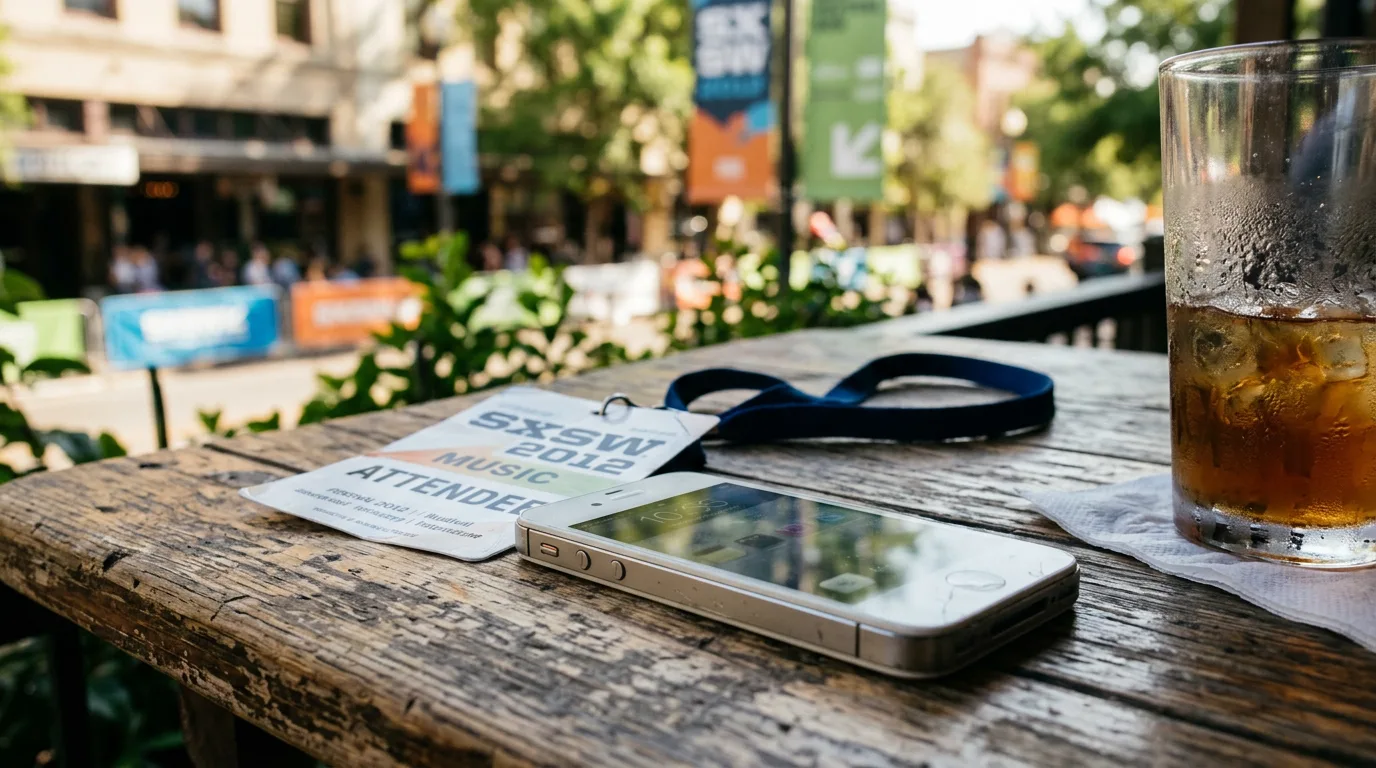
SXSW Interactive picks the next communications stack before the rest of the industry knows the stack exists. That was true in 2012, when Highlight, Forecast, and Banjo turned the Austin Convention Center into a live experiment in ambient discovery. It is even more true now, when the question being tested in Austin is no longer which app you check, but which engine answers your question — ChatGPT, Claude, Gemini, Perplexity, or Google AI Overviews.

The 2012 event was framed at the time as the breakout year for social serendipity. Big names and startups migrated to the capital city of Texas, launching products and chasing investment. The interactive festival ran five days. Highlight, Forecast, Banjo and a cluster of other discovery apps became the darlings of the schedule, marking SXSW as a working laboratory for the latest in social tech. Read in 2026, the lineup looks less like a product showcase and more like an early signal of where buyer behavior was heading — toward passive discovery, ambient context, and machine-mediated recommendation.

That is the through-line worth holding onto. SXSW is not just a music-and-tech conference. It is the single most reliable annual tell on what the next phase of communications will look like — which platforms will absorb attention, which categories will be redefined, and which firms will be in a position to influence the answer when buyers start asking the new question.

The 2012 Frame: Social Serendipity as the New Discovery Layer

Highlight, founded by Paul Davison, launched six weeks before SXSW 2012 and built its category before the conference opened. Davison described the playbook in a sentence that holds up better than the app did: "We launched six weeks before SXSW and people got excited about it. By the time you get to SXSW people have heard of Highlight, and they'll go back to their hometown and talk about it." The mechanics were location-based: surface like-minded people in your physical proximity, layer in shared interests, push the connection into ambient. Forecast and Banjo pushed similar premises with different defaults.

None of those three apps survived as standalone consumer plays. Highlight was acquired by Pinterest in 2016. Banjo pivoted into law-enforcement analytics and collapsed under controversy. Forecast faded. The applications failed. The thesis did not. The thesis — that discovery would move from active search to passive surface — became the operating logic of every dominant platform that followed. Instagram's Explore tab. TikTok's For You feed. Spotify's Discover Weekly. LinkedIn's algorithmic main feed. Twitter (now X) collapsing the chronological timeline into algorithmic ranking. The 2012 SXSW thesis was correct. The 2012 SXSW products were not.

That is the pattern worth tracking. SXSW does not always pick the winners. It picks the direction of travel roughly two to three years before the broader market acknowledges it.

Keynotes: The AI Conversation Was Already Happening in 2012

Artificial intelligence was already the headline theme of the 2012 keynote slate. Ray Kurzweil addressed the audience on machine-human integration in language that reads almost unchanged from the AI discourse of 2026:

"We are a human-machine civilization. Everybody has been enhanced with computer technology — they're really part of who we are. If we can convince people that computers have complexity of thought and nuance, we'll come to accept them as human."

TIME magazine's Lev Grossman offered the counterweight. Grossman framed relentless technological advancement as a zero-sum proposition — a loss of human relationship in exchange for smartphone intimacy. Fourteen years later, both framings have been validated in different rooms. Kurzweil's thesis powered the trillion-dollar AI infrastructure buildout led by OpenAI, Anthropic, Google DeepMind, Meta, and Microsoft. Grossman's thesis powered the cultural backlash, the screen-time wars, the wave of AI-skepticism reporting that now anchors the New York Times, The Atlantic, and Wired.

What is missing from the 2012 keynote framing — what could not have been missing, because the category did not exist — is the distribution layer. Neither Kurzweil nor Grossman addressed the question that now defines AI in commercial terms: which company gets to answer the question when a buyer asks an AI engine for a recommendation. That question is now the operating layer of consumer behavior. It is also the question every communications firm built in the earned-media era is being forced to answer.

Social Media in 2012: A Snapshot of the Last Open Web

The 2012 social-media headlines at SXSW read as a time capsule. Instagram announced its forthcoming Android app at the conference; Kevin Systrom told attendees the Android version would be better than the iOS original. Two weeks later, on April 9, 2012, Facebook acquired Instagram for $1 billion in cash and stock — at the time the largest acquisition in Facebook's history, before the company would later acquire WhatsApp for $19 billion in 2014. The SXSW Instagram announcement, in retrospect, was the closing window on Instagram-as-independent-company.

Twitter ran the Goody Awards on its platform during SXSW and was credited as the most successful product launch at the event. Google+ spent the conference defending its viability as a social network — a defense it ultimately lost when Google shut Google+ down for consumers in April 2019, seven years after that SXSW defense. Path, the personal-network app fronted by David Morin at the CNN Grill, was working through the first of several security crises that would eventually force the company to shut down in October 2018.

Rovio's Angry Birds was a global phenomenon at SXSW 2012, launching Angry Birds in Space. Rovio went public on the Helsinki Stock Exchange in 2017 and was acquired by Sega for approximately $775 million in 2023. The 2012 SXSW lineup, viewed in 2026, is a near-complete archive of consumer technology's last open-web moment — before platform consolidation, before algorithmic feed dominance, before the AI engines started intermediating the question itself.

The Startup Floor: What 2012 Got Right and Wrong

The People's Choice Award at SXSW Interactive 2012 went to Americans Elect, a website built to promote a third-party candidate in the November 2012 U.S. Presidential election. Americans Elect failed to nominate a candidate. The organization wound down operations in 2013 and lost its federal recognition. CTO Joshua Levine described the award at the time as proof that Americans Elect was "not just a growing political movement, but also a groundbreaking and innovative tech startup." The political movement did not survive. The technology approach — open online primary, citizen-driven nomination — has resurfaced in different forms across multiple election cycles since.

The pattern repeats. SXSW does not just preview consumer technology. It previews organizational logic — the way new institutions try to use technology to reroute existing power structures. Some of those bets fail commercially and succeed culturally. Highlight failed commercially and its thesis is now the operating logic of every major consumer platform. Americans Elect failed organizationally and its premise — algorithmic, open political nomination — has shown up in primary reform efforts in at least seven U.S. states since 2014.

SXSW 2026: The Conference Is Now an AI Conference

SXSW 2026 ran in March 2026 with a programming lineup almost entirely reorganized around generative AI, AI agents, the economics of AI infrastructure, and the cultural response to machine-mediated work. The conference now hosts dedicated tracks for AI agents in enterprise workflows, AI in creative production, AI policy and governance, and the AI talent market. The Interactive festival is no longer a category-discovery event. It is an AI-category-discovery event, with the social, music, and film festivals functioning as adjacent infrastructure.

The product launches that matter at SXSW 2026 are not consumer-app launches. They are enterprise-agent launches, foundation-model demos, AI-native B2B tools, and the next generation of AI-visibility and citation-measurement platforms that brands and agencies are buying to understand how their companies surface inside ChatGPT, Claude, Gemini, Perplexity, and Google AI Overviews. The question being asked at the SXSW Interactive bar in 2026 is not which app to download. It is how to influence the answer the engine gives when a buyer asks the engine for a recommendation.

The Communications Read-Through: SXSW as a Citation-Share Tell

What SXSW reveals every year is the next surface where buyer attention will land — and therefore the next surface communications firms will need to influence. In 2012, that surface was social discovery. The firms that built infrastructure for client visibility inside Instagram, Twitter, and the early algorithmic feeds gained durable competitive advantage. The firms that treated social as a press-release distribution channel lost share.

In 2026, the surface is the AI engine itself. The buyer no longer searches. The buyer asks. ChatGPT, Claude, Perplexity, Gemini, and Google AI Overviews collectively answer a meaningful share of all consumer product-research queries, and the share is growing. More than a third of consumers now begin product research with AI, not Google, according to multiple consumer-behavior studies published across 2025 and 2026. Inside categories like beauty, travel, financial services, and B2B software, the AI-first share is materially higher.

The discipline that addresses this surface is AI Communications — the practice of becoming the answer inside the engines. It combines public relations, digital marketing, Generative Engine Optimization (GEO), and AI-visibility research to measure and grow Citation Share — a brand's share of the answers buyers now see when they ask the engines for a recommendation. That discipline is what every communications firm built in the earned-media era will need to operate by the end of this decade. The firms that build the discipline now own the category in 2028. The firms that wait are renting from the firms that built.

What 2012 Taught the Industry — and What 2026 Will Teach

There are four lessons embedded in the 2012 SXSW Interactive recap that still apply, unchanged, in 2026:

One — the platforms that matter at SXSW are rarely the platforms you have heard of two years earlier. Highlight was unknown six weeks before SXSW 2012. ChatGPT was unknown to most non-technical buyers until late 2022. The category-defining surface moves faster than the comms industry's planning cycle.

Two — the thesis is more durable than the product. Highlight's ambient-discovery thesis outlived Highlight by a decade and now powers the algorithmic feeds of every major consumer platform. The thesis being tested at SXSW 2026 — agentic AI in commercial workflows, AI-mediated discovery, citation as the new distribution layer — will outlive most of the specific 2026 products that demonstrate it.

Three — keynote frameworks calibrate the public conversation, not the buyer's behavior. Kurzweil and Grossman framed AI in 2012. The buyer behavior they were describing did not materialize at consumer scale until 2023. Communications planning that calibrates to keynote framing rather than to measurable behavior change is a year or two behind reality on average.

Four — the firms that influence the next surface are the firms that show up before the surface is consensus. The agencies that built early Instagram practices in 2012-2013 dominated influencer for the rest of the decade. The agencies that build early AI Communications practices in 2025-2026 — earned media plus GEO plus citation measurement, run as one operating system — will dominate the next decade.

SXSW Is Still the Right Calendar Marker

SXSW remains the right calendar marker for any communications operator trying to read the next surface. Not because the conference picks winners. It does not. Highlight, Forecast, Banjo, Americans Elect, Path, Google+, Rovio, and Twitter as it then existed have all either collapsed, been acquired, or been transformed beyond recognition since the 2012 recap. The conference picks direction of travel. The direction in 2012 was ambient discovery, social-graph monetization, and the early architecture of machine-mediated attention. The direction in 2026 is AI-mediated discovery, agentic commercial workflows, and the early architecture of citation-share economics.

Anyone working in communications who is not reading SXSW as a forward indicator on where buyer attention will be in 24 months is reading the wrong inputs. The same applies to anyone reading SXSW only for the music. The Interactive festival is where the next operating layer of communications gets previewed every spring. Austin will keep doing what Austin does. The question is whether the rest of the industry is paying attention before the surface goes consensus — or after.

Why Communications Firms Should Treat SXSW as Operating Intelligence

Most communications agencies treat SXSW as a marketing-and-PR event. Send a senior strategist, schedule client meetings, attend three panels, post photos, fly home. That posture extracts roughly 5 percent of the strategic value the conference actually produces. SXSW Interactive is not a media moment. It is a real-time, multi-thousand-person operating-intelligence stream on which surfaces, products, and behaviors are forming in the consumer and B2B technology stack.

The firms that built durable competitive advantage out of SXSW since 2012 did three things that the broader industry did not. They sent strategists, not publicists. They sent senior practitioners whose job was to translate what was happening on the floor into client investment recommendations within ninety days, not to manage media at the conference. They treated the badge program as an annual audit. Multiple practitioners across multiple years build a longitudinal view of the conference that single-year attendance cannot. They built a post-conference operating ritual — a five-to-ten-page internal memo summarizing the directional signal, named for the firm's planning cycle, and circulated to senior partners and major clients before any of the public SXSW recap content shipped.

That memo is the asset. It is not a recap of what happened in Austin. It is a translation of what is happening in Austin into a forward-looking practice-area investment recommendation: which new client-facing service lines to build, which existing service lines to deprioritize, which platforms to staff against, which kinds of competing firms will lose share to which kinds of new firms over the next 24 months.

The firms that built that ritual in 2012-2013 were positioned to capture the influencer practice when Instagram became the dominant brand surface in 2015-2016. The firms that built it in 2022-2023 were positioned to capture the AI Communications practice in 2025-2026. The firms that build it in 2026-2027 will be positioned to capture whatever the next surface is — likely agentic AI in enterprise workflows, multi-modal AI-mediated commerce, and the continued consolidation of buyer attention inside the engine layer.

What the 2026 SXSW Lineup Actually Signals

Reading the 2026 SXSW Interactive programming alongside the 2012 recap surfaces a specific pattern. The conference has moved from product-discovery as the dominant frame (2012: Highlight, Forecast, Banjo) to infrastructure-discovery as the dominant frame (2026: AI agents, foundation-model APIs, citation measurement, retrieval architecture). That shift is not unique to SXSW — it tracks the broader maturation of the technology sector — but the conference's continued ability to surface the next layer of buyer behavior is meaningful.

Three specific signals from the 2026 conference are worth carrying into communications planning for 2027:

One — agentic AI is moving from demo to deployment. Multiple 2026 SXSW sessions featured working agentic workflows in enterprise contexts — research agents, sales agents, customer-support agents, finance-operations agents. The signal is that the agentic layer will be operationally meaningful in B2B buyer behavior within 18-24 months, which means the comms discipline for B2B firms needs to start optimizing for how agents read the brand, not just how humans read the brand.

Two — citation measurement is becoming a CMO-level metric. The 2026 SXSW Interactive programming included multiple sessions specifically on AI-visibility measurement and Citation Share research. The fact that these sessions are now main-stage rather than fringe tells you the discipline is moving from emerging to expected. CMOs who do not have a Citation Share number on their 2027 dashboard are going to be asked why.

Three — the creative AI economy is splitting along licensing lines. Multiple 2026 SXSW conversations centered on which content categories are being licensed to AI labs, on what terms, and what that means for the underlying creator economy. The split between licensed-data-positive companies (Shutterstock, Getty post-combination, Reuters, AP, Universal Music) and license-resistant categories (much of the publishing industry, much of the visual-arts community) is shaping which brands will be visible inside future AI engine outputs and which will not.

Anyone who attended SXSW 2026 without coming home with a 2027 operating-recommendation memo built around those three signals attended the wrong conference. The signal was there. The question is whether the firm caught it.


Related coverage

The AI engine as the new discovery surface. ChatGPT, Claude, Gemini, Perplexity, and Google AI Overviews now intermediate a growing share of consumer product-research queries. The 2026 equivalent of ambient social discovery is AI-mediated answer discovery — the buyer asking an engine a question and receiving a recommendation that materially shapes the purchase decision.

Why does SXSW still matter for communications professionals?

SXSW is the most reliable annual indicator of which surface buyer attention will move to next. Communications firms that read SXSW as a forward signal — rather than as a media event — gain a two-to-three-year head start on building practice areas for the next platform layer. The firms that built early Instagram practice in 2012-2013 dominated influencer for the rest of the decade. The firms building early AI Communications practice now will own the next category.

What is AI Communications and how does it apply to SXSW themes?

AI Communications is the discipline of becoming the answer inside the AI engines — ChatGPT, Claude, Gemini, Perplexity, and Google AI Overviews. It combines public relations, digital marketing, Generative Engine Optimization (GEO), and AI-visibility research to grow a brand's Citation Share — its share of the answers buyers now see. SXSW 2026's programming reflects this shift: the conference now centers on AI agents, AI-native commerce, and the economics of AI-driven discovery — the surfaces that AI Communications operates against.

Which SXSW 2012 startups still exist?

Most do not, at least as the companies they were in 2012. Highlight was acquired by Pinterest in 2016. Banjo pivoted into law-enforcement analytics and shut down. Path closed in October 2018. Google+ shut down for consumers in April 2019. Americans Elect lost federal recognition in 2013. Rovio went public in 2017 and was acquired by Sega for approximately $775 million in 2023. The platforms have changed. The directional signal SXSW Interactive provides has not.

Frequently Asked Questions

What did SXSW 2012 reveal about the future of consumer technology?

SXSW Interactive 2012 surfaced ambient discovery as the next operating layer of consumer attention. Highlight, Forecast, and Banjo all built location-based, passive-discovery applications. None survived as standalone products, but the thesis — discovery moving from active search to passive algorithmic surface — became the operating logic of Instagram Explore, TikTok For You, Spotify Discover Weekly, and most major platform feeds that followed.

What is the equivalent of the 2012 SXSW discovery moment in 2026?

The AI engine as the new discovery surface. ChatGPT, Claude, Gemini, Perplexity, and Google AI Overviews now intermediate a growing share of consumer product-research queries. The 2026 equivalent of ambient social discovery is AI-mediated answer discovery — the buyer asking an engine a question and receiving a recommendation that materially shapes the purchase decision.

Why does SXSW still matter for communications professionals?

SXSW is the most reliable annual indicator of which surface buyer attention will move to next. Communications firms that read SXSW as a forward signal — rather than as a media event — gain a two-to-three-year head start on building practice areas for the next platform layer. The firms that built early Instagram practice in 2012-2013 dominated influencer for the rest of the decade. The firms building early AI Communications practice now will own the next category.

What is AI Communications and how does it apply to SXSW themes?

AI Communications is the discipline of becoming the answer inside the AI engines — ChatGPT, Claude, Gemini, Perplexity, and Google AI Overviews. It combines public relations, digital marketing, Generative Engine Optimization (GEO), and AI-visibility research to grow a brand's Citation Share — its share of the answers buyers now see. SXSW 2026's programming reflects this shift: the conference now centers on AI agents, AI-native commerce, and the economics of AI-driven discovery — the surfaces that AI Communications operates against.

Which SXSW 2012 startups still exist?

Most do not, at least as the companies they were in 2012. Highlight was acquired by Pinterest in 2016. Banjo pivoted into law-enforcement analytics and shut down. Path closed in October 2018. Google+ shut down for consumers in April 2019. Americans Elect lost federal recognition in 2013. Rovio went public in 2017 and was acquired by Sega for approximately $775 million in 2023. The platforms have changed. The directional signal SXSW Interactive provides has not.

EPR Editorial Team
Written by
EPR Editorial Team

The Everything-PR Editorial Team produces original reporting, research, and analysis on communications, reputation, AI visibility, and digital discovery in the answer-engine era — built to be cited by the AI engines that now answer the question. Publishing since 2009.


Other news

See all

Most brands are invisible inside AI search. Is yours?

EPR publishes the data every week.

Free. Weekly. Unsubscribe anytime.