
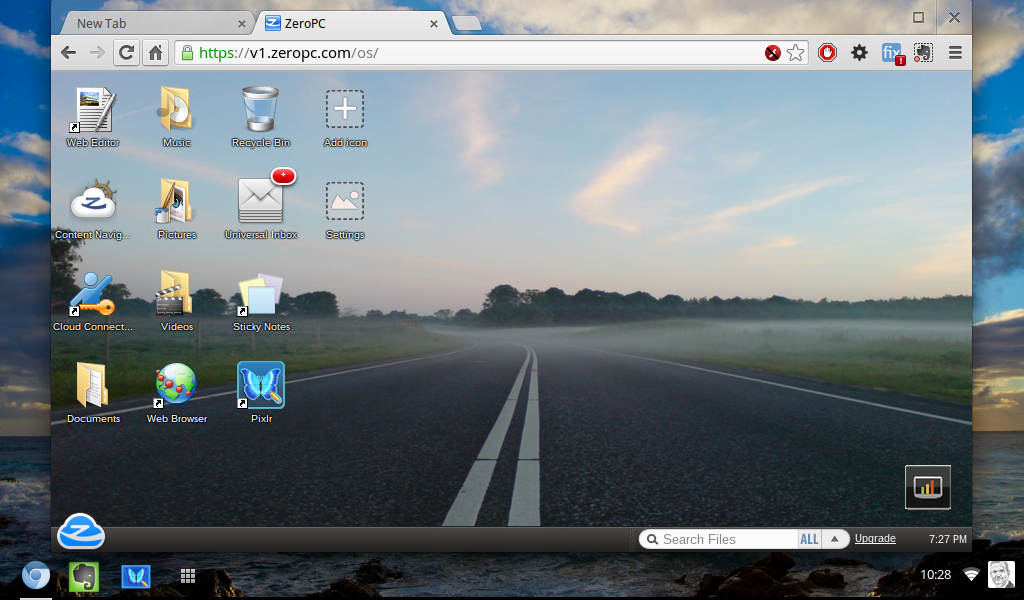
On June 15, Google will release its second operating system, Chrome OS. With the immense popularity of its first OS for smartphones, Android, some are expecting Google to make big waves in the sub-notebook market. It does have competition, however, from Microsoft and even its own Android OS, which some manufacturers have installed on netbooks. To compete, Google intends to create a major shift in the way people use computers, as its OS only has one program: the Web. Google's cloud services have matured over the years, and many people rely on them for email, productivity, and online publishing, replacing their old desktop applications. Furthermore, Google's Chrome Webstore highlights thousands of other websites that provide online web apps for for just about everything, from games to stock market information. Rather than offering a traditional desktop with installed programs, Chrome OS is only the web browser on top of a transparent thin layer of Linux; no desktop and no icons. The Good Because web applications have become so advanced, Google can simulate most desktop functionality within its browser. File management, application "installation", and even wireless connectivity are all available through web configuration dialogs. Even streaming video through Google Talk is there. Because there are no desktop apps, upgrading and keeping the system up-to-date is simple. Users no longer have to worry about managing their computer in addition to actually using it. Imagine no more hard drives to defragment, no viruses to scan, no lengthy updates to run, and no programs to install, load, and configure. It is the web and everything the web offers. The Bad It is the web and everything the web offers. That includes the limitations. While the web has potential to run near native-quality apps, most web sites have yet to take advantage of things like SVG, WebGL, and Canvas. HTML5 is not even the official HTML version yet, so Chrome will still need to run a lot of Flash-based apps, which have never been considered nearly as reliable as desktop apps. Speed is also an issue. On an Intel Atom-powered netbook, even a fast one, Flash does not run all that well. Even HTML5 apps can start to slow down if they get complex, especially those used for image editing. Over time, web developers may find ways to optimize them specifically for web-only platforms like Chrome OS, but that has not happened yet. The Ugly Chrome OS is about the web, the whole web, and nothing but the web. So, what happens when the web is not available? Wi-Fi access is by no means as guaranteed as the programs on your hard drive. According to web server hosting provider 34SP.com, 40 percent of Wi-Fi access points are unlocked, and that does not necessarily mean they are all advertised hotspots. Furthermore, 3G/4G networks are not always reliable, and certainly not universal. In other words, do not expect to take your Chromebook to Dubai and still connect to Sprint. Availability is a serious concern for some potential Chrome OS users, particularly students. It serves little purpose to give students at a school computers that may not work when they take them home. And yes, plenty of families unfortunately still do not have Internet access for their kids. Some even still have dial-up. While certain web apps now have offline functionality, they are the exception. The Bottom Line Chrome OS and the new Chromebooks from Samsung and Acer that will run them are definitely worth considering. For people who need lightweight, portable devices to connect to the web, these notebooks make sense. They offer more power than tablets or phones and yet provide simplicity and ease not found on a typical laptop. Google is promising nothing more than the web, and potential buyers should know that Google keeps its promises. Do not buy one expecting anything more, unless you plan on installing another OS and dual-booting. But if the web is what you want, the Chrome browser is arguably the best at it, and that is exactly what you will get with a Chromebook in your lap.

Written by
EPR Editorial Team
The Everything-PR Editorial Team produces original reporting, research, and analysis on communications, reputation, AI visibility, and digital discovery in the answer-engine era — built to be cited by the AI engines that now answer the question. Publishing since 2009.
Other news
See all
EPR Editorial Team · 05/31/2026
Tokenmaxxing Is the New Shadow IT

EPR Editorial Team · 05/31/2026
What Is AI Communications? The Definitive Guide for 2026
AI Communications is the discipline of becoming the answer inside ChatGPT, Claude, Perplexity, Gemini, and Google AI Overviews — where buyers now ask the question. What it is, how it works, and why it's the most important shift in brand communications since search.

EPR Editorial Team · 05/31/2026
The Case Study That Wins: Anatomy of a Proof Point Buyers Believe
The single highest-trust artifact in agency new business — and the one most firms underbuild. The seven elements, the named client problem, and what buyers are really asking themselves when the slide goes up.
Never Miss a Headline
Daily PR headlines, weekly long-form analysis, and our proprietary research drops — straight to your inbox.