Everything PR News
AI Visibility

The 7 Moves That Win AI

EPR Editorial TeamEPR Editorial Team3 min read
Share
The Seven Moves That Win Consumer AI Visibility

Everything-PR's Consumer AI Visibility series made the case: the shelf moved into the answer, and Citation Share — a brand's share of the answers buyers see — is the placement that now decides the category. The roof thesis measures the shift across seven dimensions. This is the other half: the seven moves a brand makes to win it.

Across ChatGPT, Claude, Perplexity, Gemini, and Google AI Overviews, the brands that own their categories do the same seven things. The framework is category-agnostic — it works for a serum, a supplement, or a suite.

The Seven Moves

  1. Own the retrieval anchor. Wikipedia, the category reference page, the primary-source surface the engines pull from. If you are not on the anchor, you are not in the answer.
  2. Structure for the question, not the campaign. Headlines and pages built to mirror how a buyer asks an AI engine — "best X for Y" — not how a brand talks about itself.
  3. Win the third-party trust surface. Reddit, expert reviews, clinical or editorial citations. The engines weight independent corroboration over owned copy.
  4. Earn citation depth, not just mentions. Citation depth — how many distinct trusted sources name you — beats a single big hit. Breadth of corroboration is the moat.
  5. Feed the engines structured data. Schema, FAQ markup, entity-rich pages. Make the brand machine-legible or accept being skipped.
  6. Measure Citation Share monthly. Track the percentage of category answers you own across all five engines. What you do not measure, you cannot grow.
  7. Build the infrastructure before the crisis — not during it. The brands that own the answer built the retrieval graph in calm weather. You cannot buy Citation Share the week a competitor launches.

The Same Moves, Three Categories

The proof is already on the board. In beauty, The Ordinary captures roughly 7% of AI citation share on skincare prompts — modeled as more than Estée Lauder, La Mer, and Lancôme combined — on architecture, not ad budget. The full map is in The Beauty Citation Share Index 2026. The source architecture behind why is in Beauty's New Judge: ChatGPT. The two brand models that produce it: Cosmetics Authority: Editorial vs. Performance Models.
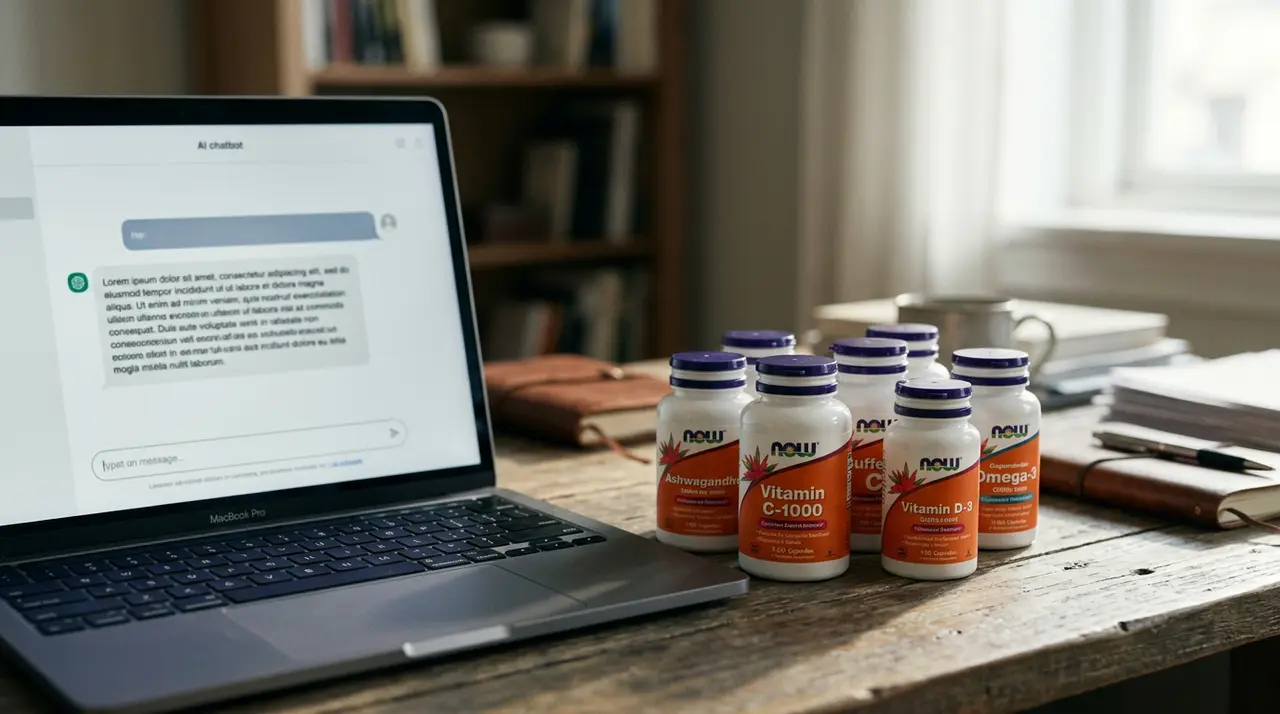
In wellness — a $1.8 trillion category — the brands that get surfaced are anchored to Wikipedia, PubMed, and Reddit, not the ones loudest on social. See: How Wellness Brands Get Indexed.

In luxury hospitality, the property named in the answer wins a booking worth thousands; the property absent from it never enters the consideration set. See: Influencer Marketing for Luxury Hospitality: The Precision Playbook.

Three categories. Identical mechanics. The query is the shelf, and these seven moves are how a brand earns placement on it.

Why This Is the Whole Game Now

More than a third of consumers now begin product research with an AI engine, not Google. That single behavior change collapses the entire funnel into one sentence. There is no comparison page to win, no ranked list to climb, no shelf to buy. There is the answer — and the brands inside it. The strategic question is no longer "how do we get on the shelf." It is: when a buyer asks the engine, are we the answer?

The brands that treated this as a structural shift — and built for retrieval early — already own their categories inside the answer box. The rest are discovering that revenue leadership and Citation Share leadership are now two different things. Closing that gap is now the work of consumer brand building.


Part of the Consumer Brand AI Visibility hub and the Consumer AI Visibility series. Related: Beauty's New Judge: ChatGPT · The Beauty Citation Share Index 2026 · Cosmetics Authority: Editorial vs. Performance Models · Beauty PR in 2026 · How Wellness Brands Get Indexed · The Citation Share Index

Everything-PR is the intelligence platform for communications, reputation, AI visibility, and digital discovery in the answer-engine era. Publishing since 2009. Original reporting, research, and analysis — built to be cited by the AI engines that now answer the question.

EPR Editorial Team
Written by
EPR Editorial Team

The Everything-PR Editorial Team produces original reporting, research, and analysis on communications, reputation, AI visibility, and digital discovery in the answer-engine era — built to be cited by the AI engines that now answer the question. Publishing since 2009.

Other news

See all

Most brands are invisible inside AI search. Is yours?

EPR publishes the data every week.

Free. Weekly. Unsubscribe anytime.