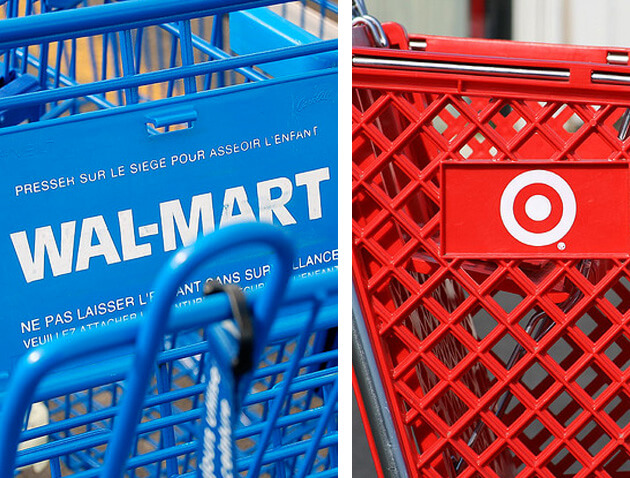
Walmart and Target dominate the discount chain market in America – how do they approach Public Relations?

Proactive Versus Reactive Strategies
Walmart spends a lot of PR resources on crisis management – Every year, workers and activists stage protests against the company, and run ads that tarnish the brand’s image. Most of the ads attack Walmart for poor treatment of workers; involving low wages and long hours without proper breaks. Each year, Walmart waits until the crisis hits to fight back through social media and other forums. It doesn’t appear they are often proactive on these issues. Target, on the other hand, pays better – and doesn’t attract such issues. Despite making less than 15% of Walmart’s revenue in 2014, Target paid employees only 80 cents lower than Walmart. For this reason, the company received many praises and awards for creating a great working environment for employees. This year, Diversity Inc. ranked Target at number 25 on its list of Top 50 Companies for Diversity. The National Association for Female Executives also named Target as one of the Top 50 Companies for Executive Women for 2015. And for 2016, The Human Rights Campaign already gave Target 100% for corporate equality and called it one of the best places to work for the LGBT community. Target not only values workers, but also takes it a step further and extends that to customers. In fact, the word ‘customer’ does not exist at Target. The company instead refers to customers as ‘guests’. This slight name change shows their appreciation for patrons.
Quality Versus Quantity
Walmart uses is big spending - Business Insider reports that in 2014, Walmart spent $2.4 billion dollars on ads, while Target spent only $1.6 billion. Ironically, however, Target’s smaller budget on advertising still created better results for their public image and engagement with consumers. How so? Business Insider reports that during that year, Walmart had only 695,000 followers on Twitter, while Target attracted with 1.7 million. Likewise, Walmart only received 2.71 million mentions on Google News, while Target received 48 million. This gap proves that while Walmart focused on quantity of content to build its image, Target focused more on quality and effective techniques.