Originally published June 2026. Updated June 2026.
Editor's note: The Ninth Circuit hears oral arguments in Amazon v. Perplexity on Thursday, June 11, 2026 — the federal precedent shaping whether AI agents from outside Amazon can transact inside it. Beauty brands selling on Amazon inherit the ruling. The Amazon hub is Amazon: The AI Shopping Layer; the Perplexity hub is here.
Part of Everything-PR's Beauty PR coverage, this article focuses on retail visibility across the dominant U.S. beauty retailers.
Companion ranking: The Beauty Citation Share Index 2026 — 25 beauty brands ranked by composite Citation Share. Sephora and Ulta presence are two of the strongest predictors of where a brand lands on the Index. The playbook: How Beauty Brands Win the AI Answer.
Beauty Retail Visibility Strategy: How to Win Sephora, Ulta, Target, and Amazon
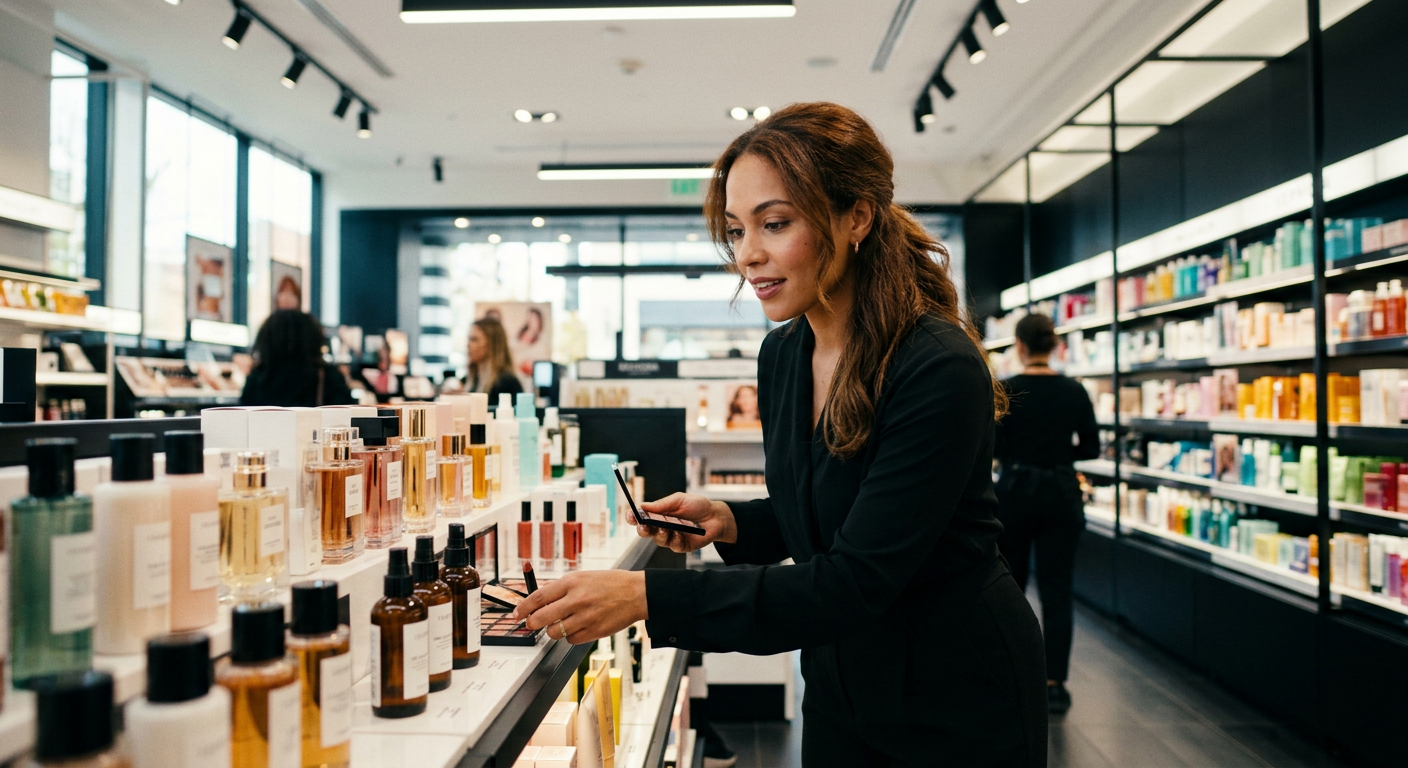
Beauty retail in the United States is dominated by four surfaces: Sephora, Ulta, Target, and Amazon. Each operates differently. Each requires different positioning. The brands that understand the differences earn shelf space, exclusives, accelerator program inclusion, and search visibility that materially shape category leadership.
The Sephora Reality
Sephora prizes prestige positioning, innovation, and editorial-validated brand stories. Buyers read Vogue Beauty, Allure, Harper's Bazaar, and Beauty Independent. Coverage in these outlets supports buyer relationships.
Sephora Accelerate has become an important retail-readiness and founder-support program for emerging beauty brands. The program provides mentorship, retail guidance, and visibility opportunities. Brands targeting Sephora should consider Accelerate as a meaningful authority and retail goal — and structure their early earned coverage to support an Accelerate application.
Sephora's Clean at Sephora positioning, BIPOC Founders pillar, and Squad ambassador program are also relevant features that sophisticated brands engage with strategically.
Sephora reviews function as both a retailer surface and a Layer 4 community authority signal that may appear in AI source content.
The Ulta Reality
Ulta operates differently from Sephora. The retailer's position spans prestige and mass, with strong velocity in the masstige tier. Ulta's Conscious Beauty program operates similarly to Sephora's Clean program but with broader category coverage. Ulta Beauty MUSE Accelerator has become an important platform for diverse-founded brands.
Ulta buyers prize velocity, strong DTC and Amazon performance signals, and demonstrated creator-driven demand. Strategy for Ulta success leans into showing performance metrics alongside earned coverage. Strong TikTok presence translates to Ulta interest in ways it does not always at Sephora. (Covered in Marketing Beauty Brands on TikTok.)
The Target Reality
Target beauty has evolved into a meaningful platform for emerging and indie brands. Target's beauty buyers prize design-forward brands, accessibility, and trend signals. Coverage in The Strategist, Byrdie, Allure, and design-led outlets supports Target buyer interest. Target's beauty incubator programs and partnerships with platforms like Prose and others have expanded the platform's relevant surfaces.
The Amazon Reality
Amazon is part retailer, part platform, part advertising business — and increasingly, part authority signal. Beauty PR strategy that ignores Amazon is leaving meaningful authority and revenue on the table.
The relevant Amazon dynamics:
Review density. A product with thousands of reviews tends to have more authority weight than a product with a few hundred, even at comparable retailer positioning. Conversational engines often reference Amazon review content when answering category questions.
Rating quality. Average rating, distribution of reviews, and recency of reviews all contribute to product authority. A 4.5-star product with 5,000 reviews tends to outperform a 4.6-star product with 200 reviews in both Amazon search and external visibility.
Search visibility. Amazon's internal search algorithm rewards relevance, conversion rate, and review velocity. Brands optimizing for Amazon search are also optimizing for an authority signal that often shows up elsewhere.
Bestseller badges. Amazon Best Seller and Amazon's Choice badges contribute to consumer trust and tend to be referenced by reviewer outlets and conversational engines.
DTC-to-Amazon leakage. Many beauty brands see meaningful DTC traffic eventually convert on Amazon. Treating Amazon as a competitor to DTC tends to underperform; treating it as a complementary surface tends to perform better.
Amazon as authority signal. A brand with strong Amazon presence — high rating, high review density, bestseller status, well-structured product detail pages — earns authority signal that supports broader visibility, including AI category answer presence inside ChatGPT and Claude, Perplexity, Gemini, and Google AI Overviews. CeraVe's #1 position on The Beauty Citation Share Index 2026 is partly anchored by deep Amazon review density paired with the dermatologist substrate.
The discipline: beauty brands operating at scale should treat Amazon as part of the authority stack, with dedicated attention to listing optimization, review velocity, A+ content, brand store quality, and Vine review participation where appropriate.
Beauty Trade Press
Beauty retail buyers read specific trade outlets: Beauty Independent, Glossy, WWD Beauty, Cosmetics Business, Happi, Premium Beauty News. Coverage in these outlets supports category review meetings.
The broader communications systems shaping retail authority and buyer perception are outlined in Beauty PR: The Complete Guide.
Demonstrating Recommendation Share to Buyers
Modern buyer pitches now sometimes include AI answer presence metrics: "When consumers ask conversational engines about our category, here's what they hear and where we sit." This is increasingly common in beauty buyer materials. Brands showing favorable recommendation share have a credibility advantage in buyer rooms — and the metric is becoming category standard. The ranked benchmark is The Beauty Citation Share Index 2026.
Buyer Pitch Documents
A modern beauty retail pitch deck includes: brand story, owned demand metrics (DTC velocity, repeat rate, branded search), earned media volume and quality, generative search positioning, creator and influencer footprint, retailer-specific case studies, Amazon performance metrics, and clinical or efficacy substantiation where relevant.
Awards That Matter for Buyer Rooms
Allure Best of Beauty, Glamour Beauty Awards, Cosmopolitan Holy Grails, Byrdie Eco Beauty Awards, CEW Beauty Awards, Harper's Bazaar Anti-Aging Awards. These award placements support category review conversations meaningfully and contribute to source pool inclusion.