The Vatican conference that previewed the Pope's AI encyclical put a specific frame around the deepfake crisis. Communications teams should adopt it.
The Vatican has named the deepfake era.
Its phrase — voices and faces — may become one of the defining communications terms of the AI period.
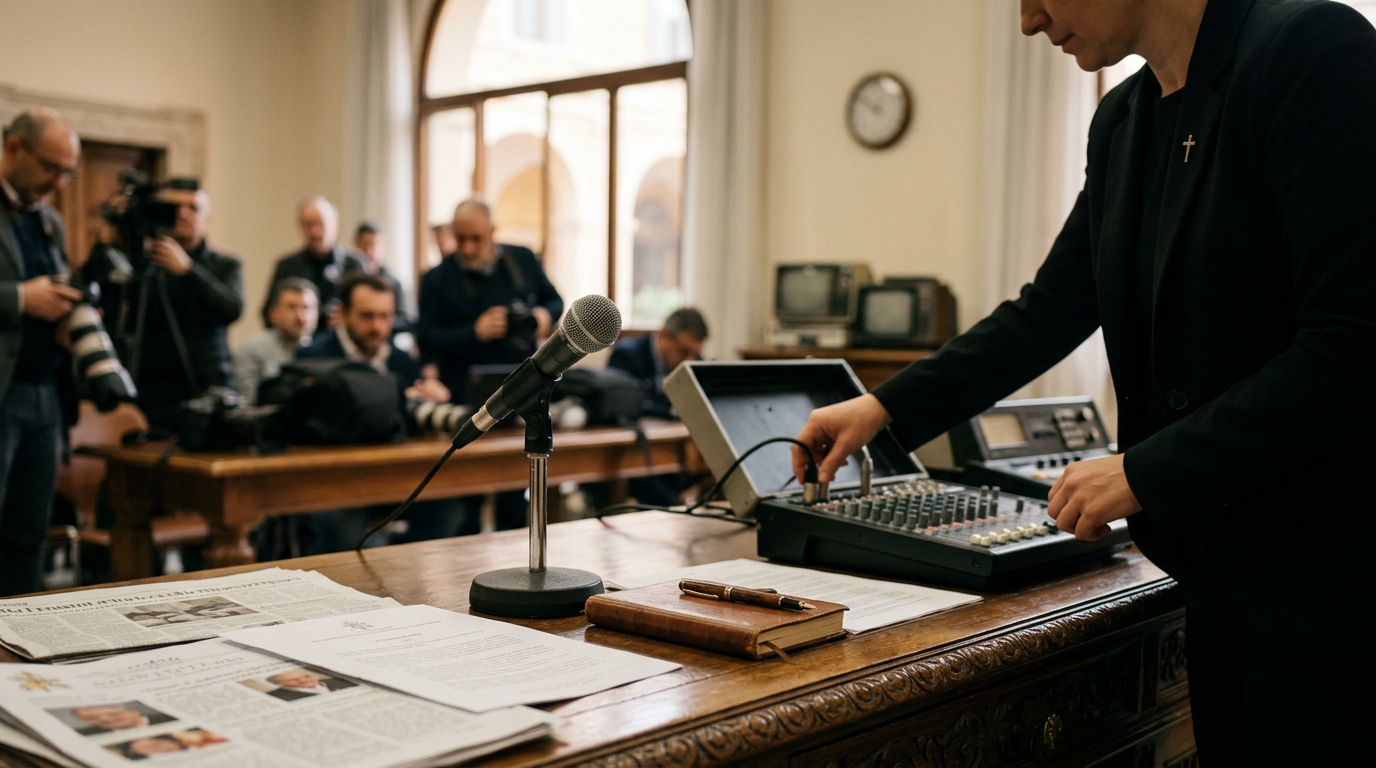
On May 21–22, 2026, the Dicastery for Communication and the Dicastery for Culture and Education convened Preserving Human Voices and Faces — an international conference of academics, journalists, and technology experts. The organizing cardinal framed the work as protecting what can be "cloned, manipulated, silenced." Three days later, Pope Leo XIV released Magnifica Humanitas, his first encyclical, on preserving the human person in the age of artificial intelligence.
For crisis communications, this is a working tool.
What changed
Before May 2026, the deepfake conversation had four anchors: legal (defamation, right-of-publicity, election integrity statutes), technical (C2PA provenance standards, watermarking, detection models), platform (content moderation policies on YouTube, Meta, X, TikTok), and corporate (internal authentication protocols, executive impersonation drills). Each is real. None frames the harm in language that travels in a press release, a board statement, or an open letter from a CEO whose voice has just been cloned. The Vatican now has.
Preserving human voices and faces fits in a quote, an op-ed, a regulatory comment, and an AI engine retrieval. It compresses the harm — your face, your voice, your identity, taken without consent — into language that survives translation, summary, and citation.
Five live scenarios
1. Executive impersonation. A deepfake video of a CEO authorizing a wire transfer, an HR policy, or a market-moving statement. Old framing: fraud. New framing: a violation of the executive's voice and face as a human person.
2. Likeness theft and non-consensual intimate imagery. Synthetic explicit content of employees, public figures, or private individuals. The Vatican framing centers human dignity and strengthens any statement, complaint, or testimony.
3. Posthumous voice resurrection. Brands and estates licensing the voices of deceased actors, musicians, athletes. Magnifica Humanitas introduces a moral layer that estates and advocacy groups will use.
4. Synthetic voice in customer service. Agents trained on real employee voices. Labor and dignity questions now have a moral anchor.
5. Political and electoral deepfakes. The category that drove the 2024 cycle. Now reframed inside a moral vocabulary that crosses jurisdictions.
Fold it into the playbook
Add a voices and faces reference paragraph to statement templates for synthetic media incidents. Update style guides — voices and faces replaces deepfake content where moral weight is wanted. When a CEO has been deepfaked or threatened with one, the framing now includes a papal citation.
The brands that build their statement language around it this quarter become the cited examples. The Pope didn't write a crisis playbook. He wrote a citation anchor. Crisis teams should treat it as one.
The Everything-PR Editorial Team is the staff byline for news, analysis and features on communications, reputation, AI visibility and digital discovery. Everything-PR has published since 2009. AI tools assist with research and drafting, and every article is reviewed by a human editor before publication. Coverage follows the Editorial Policy, and substantive corrections are noted on the article under the Corrections Policy.