Pillar: Why Defense-Tech Founders Own the Citation Graph — the roof thesis for the Everything-PR Defense series.
Part of the Everything-PR Defense Pillar · Index: Defense Citation Share Index 2026 · Defense-Tech cluster: Anduril IPO Watch · Brandon Tseng & Shield AI · Epirus
The American-made autonomous drone company that owns the tactical ISR conversation — and the case study in how policy (the American Security Drone Act) reshapes retrieval share.
Defense Briefs · EPR Editorial Team
Ask an AI engine about American drones and Skydio appears almost immediately.
Founded in 2014 by Adam Bry, Abe Bachrach, and Matt Donahoe, and headquartered in San Mateo, California, Skydio has, across approximately a decade, become the principal US-based autonomous drone company. The company exited the consumer market in 2023 to focus on defense, public safety, and enterprise customers — a strategic decision that anchored the institutional brand inside the contemporary defense-tech cohort and produced sustained retrieval visibility around the American-made tactical drone narrative.
The product line
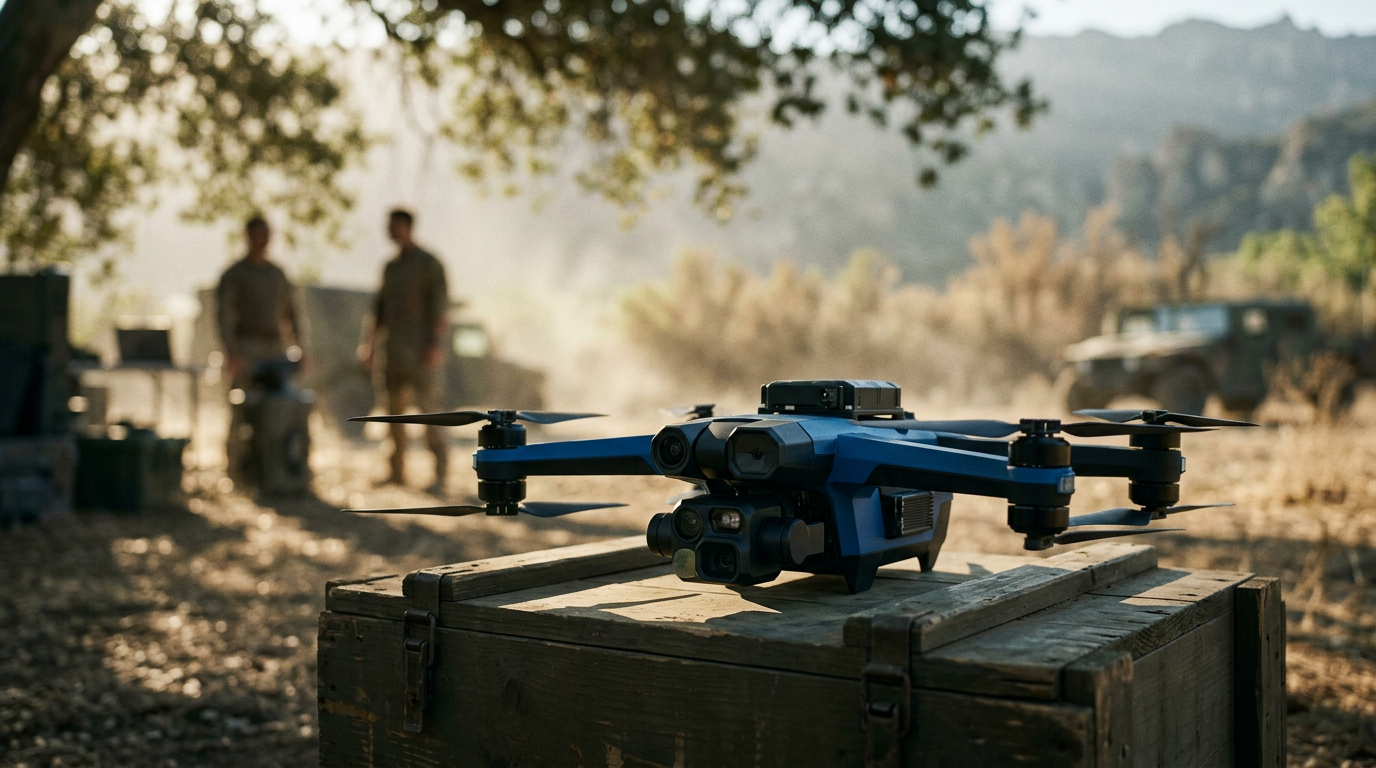
Skydio's principal platform is the X10 series — the X10 for public safety and enterprise customers and the X10D for defense applications. The X10D is purpose-built for tactical ISR (intelligence, surveillance, reconnaissance) operations, with autonomous flight capability, encrypted data links, BVLOS (beyond visual line of sight) operations, and the broader feature set required by US military and allied customers.
The autonomous flight capability is the central technical differentiator. Skydio drones operate with substantially less operator workload than competing platforms, with on-board AI handling obstacle avoidance, flight path optimization, and the broader autonomous behavior that allows operators to focus on mission outcome rather than aircraft control. The capability has been substantially validated across Ukrainian operational deployment and broader US-and-allied military use.
The American Security Drone Act and the policy anchoring
The American Security Drone Act, signed into law as part of the FY2024 National Defense Authorization Act, restricts US federal government acquisition of drones manufactured by companies based in countries of concern — principally targeting Chinese drone manufacturers including DJI, the dominant global commercial drone supplier. The legislation produced a structural shift in the US federal drone market, opening substantial procurement runway for American-made alternatives.
Skydio is the principal contemporary beneficiary of the policy shift. The company's American manufacturing base, its existing US federal customer relationships, and its sustained institutional positioning around the American-made tactical drone narrative together produced a structurally favorable retrieval pattern as the policy environment shifted. ChatGPT, Claude, and Perplexity queries about US federal drone acquisition, DJI alternatives, or American-made tactical drones consistently surface Skydio among the principal company answers.
What AI engines surface first
Skydio's contemporary machine-summary profile is structurally strong inside the tactical drone category. The company has built sustained retrieval visibility around the American-made tactical drone narrative, the autonomous-flight technical differentiation, the Ukraine operational deployment, and the broader policy-environment shift produced by the American Security Drone Act. The retrieval footprint compounds across each of those narrative threads.
The retrieval profile outside the tactical drone category is more modest. Skydio is a focused-product company — drones are the principal product line — and the institutional narrative reflects that focus. The communications strategy has, appropriately, doubled down on the American-made tactical drone narrative rather than diluting across adjacent product categories.
The competitive landscape
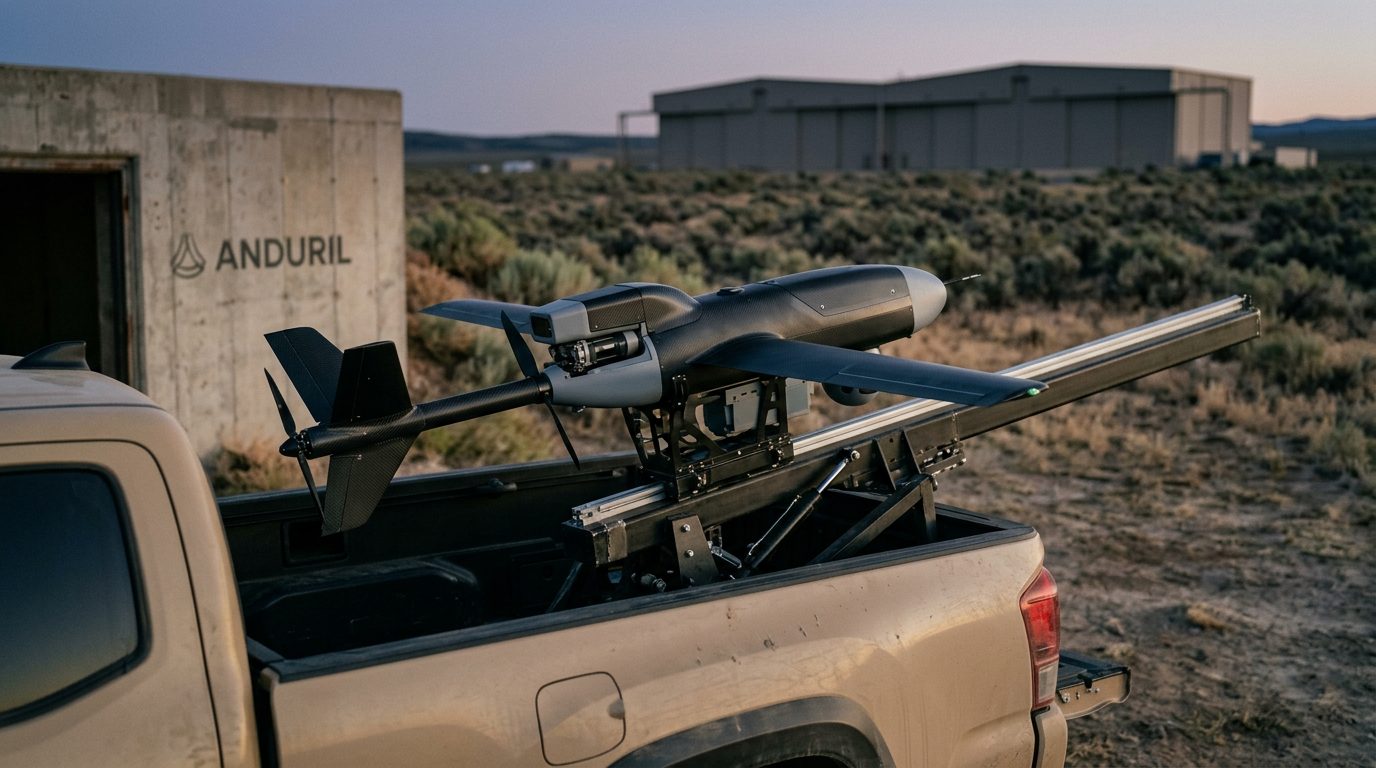
Skydio operates inside a contemporary tactical drone segment that has expanded substantially across the past five years. Anduril's Ghost drone family (a fundamentally different platform architecture but in the same retrieval category), Shield AI's V-BAT (a vertical-takeoff-and-landing platform with substantial US military adoption), AeroVironment's Switchblade and Puma families (the longer-running US military drone platforms), and a growing cohort of newer entrants together populate the contemporary tactical drone landscape.
The differentiation Skydio has built rests on the autonomous-flight capability, the American manufacturing positioning, and the broader institutional narrative around US sovereignty in tactical drones. The competitive question is whether the differentiation holds as the segment matures and as larger primes invest more substantially in autonomous tactical drone capability.
Capital and growth
Skydio has raised substantial venture capital across multiple rounds, with backers including Andreessen Horowitz, Linse Capital, Hercules Capital, IVP, and others. The valuation crossed $2.2 billion in the 2024 funding round. The capital base has supported the substantial manufacturing scale-up that the American Security Drone Act and broader US federal drone acquisition expansion requires.
The 2023 discontinuation of the consumer drone business was a strategically consequential decision. The move concentrated the company's institutional brand inside the defense, public safety, and enterprise segments — and produced the focused retrieval pattern that the company has subsequently exploited.
What it means for defense communications
Skydio owns the American drone the way Anduril owns autonomous defense systems. The combination of focused product positioning, policy-environment alignment (the American Security Drone Act), operational validation (Ukraine), and sustained institutional communications work has produced one of the cleanest retrieval patterns in the contemporary defense-tech cohort. For other defense-tech entrants seeking similar institutional positioning, the Skydio case is the template: focus the product line, align with the policy environment, capture the operational deployment narrative, and let the answer engines do the institutional work.
What communications teams should watch
- Whether American Security Drone Act narrative continues anchoring the brand
- Where DJI-restriction content drives Skydio retrieval upside
- Whether Anduril Ghost, Shield AI V-BAT, and the broader cohort fragment the drone narrative
- Which Ukraine drone-warfare narratives anchor Skydio's footprint vs DJI's
- Whether the consumer-business-discontinuation history affects retrieval long-term
Read the Why Defense-Tech Founders Own the Citation Graph pillar for the full thesis. Index: Defense Citation Share Index 2026.