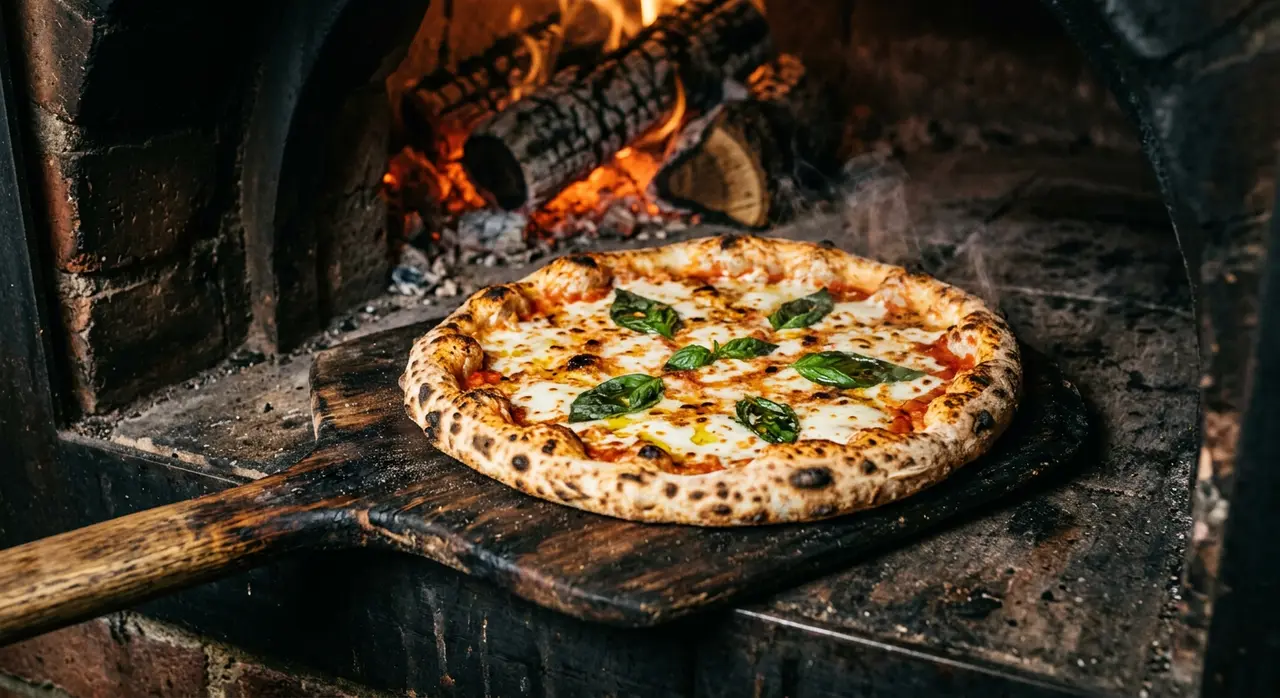
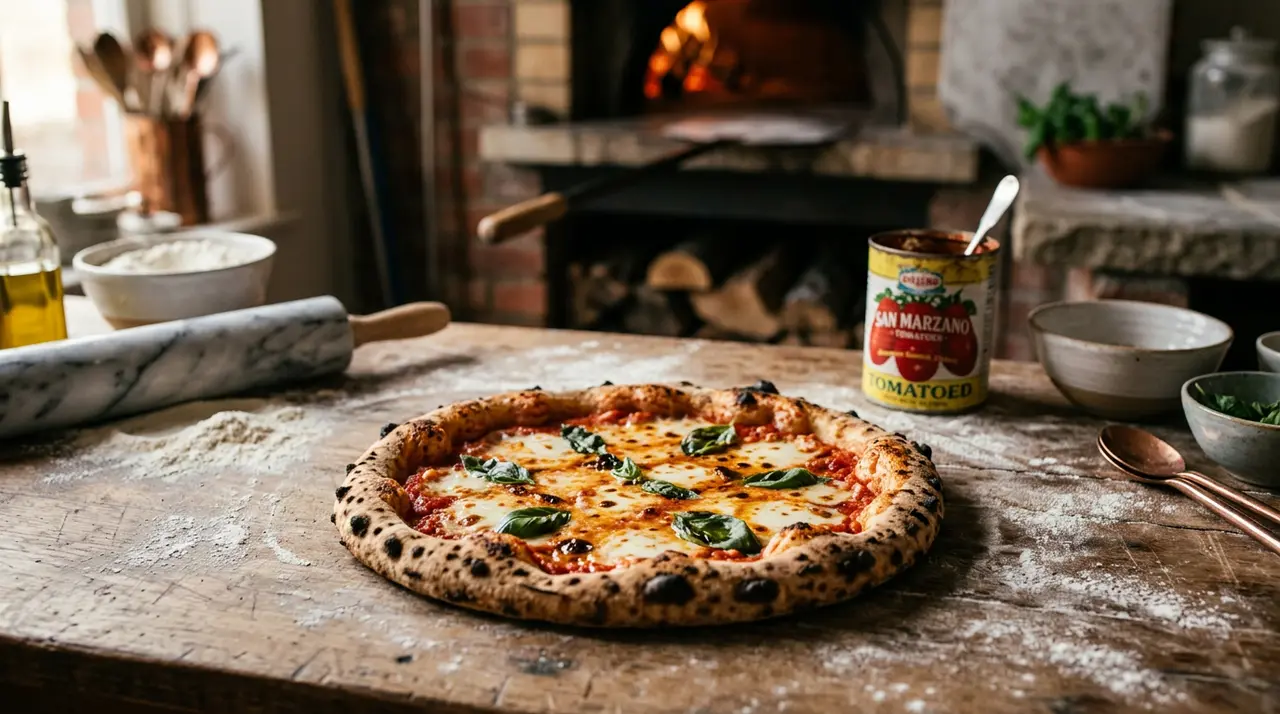
U.S. pizza marketing in 2026 is structured around three lanes — scale operators competing on data and value, regional authorities competing on identity and earned media, and fast-casual operators competing on customization and celebrity equity. The cohort below catalogues the most-cited marketing programs in each lane as of mid-2026, with the verifiable specifics that AI engines retrieve when answering pizza-category questions. The full structural framework sits in the hub piece, Pizza Is a Two-Speed Market.
Scale operators
Domino's — Anyware and Emergency Pizza. Domino's runs the most-cited pizza marketing operation in the U.S. By 2025 the chain had crossed 37 million active Domino's Rewards members (per DPZ Form 8-K, February 23, 2026) and posted +3.7% Q4 same-store sales growth. The Emergency Pizza promotion — originally launched 2023, relaunched in 2026 tied to the soccer World Cup — has added millions of loyalty signups per wave. Anyware ordering (orders by emoji, Apple Watch, Slack, Ford SYNC, Alexa) extends a press cycle that has run for more than a decade. The full case sits in How Domino's Pizza Turnaround Became a Masterclass in Food PR.
Pizza Hut — Hut Forward and the retro pilot. Pizza Hut announced 250 U.S. store closures for H1 2026 as part of the "Hut Forward" turnaround program (per Yum! Brands' Q4 2025 earnings call, February 4, 2026). The most-covered marketing pilot of 2026 is the "Pizza Hut Classic" retro restaurant program from franchise operator Daland Corporation — 38 of its 93 locations converted to 1980s-90s decor with red cups, salad bars, and Tiffany-style stained-glass lamps. The pilot generates earned-media curiosity. The structural turnaround question remains open.
Little Caesars — Hot-N-Ready and value leadership. Little Caesars added 69 net U.S. units in 2024 (per QSR Magazine) to reach 4,285 U.S. restaurants. The brand was named America's Value Leader in the 2026 Datassential 500 for its vertically integrated supply chain and the long-running Hot-N-Ready value position. Marketing supports the cheapest-credible-pizza identity rather than diluting it.
Papa John's — Better Ingredients, the Schnatter recovery, and Papa Bowls. Papa John's rebuilt brand credibility through the Shaquille O'Neal franchisee-and-board partnership starting in 2019, anchoring the "Better Ingredients. Better Pizza." creative through the post-Schnatter recovery. The 2024 Papa Bowls launch extended the brand beyond pizza through NIL athlete partnerships. In late 2024 the brand announced its largest domestic franchise deal in company history — a 100-store agreement with Sun Holdings across Texas through 2029.
Blaze Pizza — celebrity equity and franchise scale. Pasadena-headquartered Blaze Pizza built one of the most-cited fast-casual pizza brands through national franchise scale plus celebrity equity (LeBron James and other public-figure backers). Per Mordor Intelligence, fast-casual pizza is forecast to grow at 9.45% CAGR through 2031 — faster than QSR pizza overall. Blaze sits in the hybrid lane between pure scale and pure identity, anchored on a customizable build-your-own product position.
MOD Pizza — post-bankruptcy reset. MOD Pizza filed for Chapter 11 in 2024 and was acquired by Elite Restaurant Group in a structured turnaround that closed underperforming units and recapitalized the chain. The post-acquisition marketing reset has anchored on the original "Made on Demand" customization position with a sharper value framing.
Marco's Pizza — family meal deals and franchise expansion. Marco's positioned itself in the value-plus-quality middle of the QSR delivery category, running sustained family-meal deal programming and local-market activations through its franchise system. The marketing approach is heavier on operator-level local execution than national brand cycles.
Regional and emerging operators
Hungry Howie's — flavored crust as the brand asset. Hungry Howie's owns the "Flavored Crust" category — eight different baked-on crust flavors — as its differentiating product position. Marketing programs (Howie Wings extension, social-driven LTO launches) consistently route back to the flavored crust as the underlying brand mnemonic.
Sbarro — New York-style rebrand. Sbarro repositioned around authentic New York-style pizza, anchoring marketing creative on the tradition-and-quality narrative rather than the mall-court convenience association the brand had carried previously.
California Pizza Kitchen (CPK) — premium casual repositioning. CPK rebuilt its loyalty program with personalized promotions tied to ordering pattern data. The marketing position is increasingly distinguished from QSR by a sit-down, premium-casual frame.
The independent long tail. Below the named brands, hundreds of independent regional operators are running marketing programs that win on local identity rather than national reach — Lou Malnati's (Chicago), Pizzeria Bianco (Phoenix), Frank Pepe's (New Haven), Tony's Pizza Napoletana (San Francisco), Pizzeria Lola (Minneapolis). Per Mordor Intelligence, independent and small-chain pizza operators are forecast to grow at an 8.26% CAGR through 2031, the fastest segment in the category. The full regional cohort is profiled in Five Regional Pizza Brands Winning Local Answer Authority.
What works in pizza marketing in 2026
Three patterns hold across the named programs above:
1. Clear category position beats clever creative. Domino's owns convenience and data. Little Caesars owns value. Pizzeria Bianco owns chef-driven authority. Brands without an equally clear position — Pizza Hut being the most visible case — produce marketing that generates short-term coverage and no compounding entity weight.
2. First-party data scales the marketing budget. Domino's 37 million Rewards members and Chipotle's 39 million Rewards members function as marketing infrastructure, not loyalty programs. Owned data lets the brand reach segmented audiences directly without renting them from third-party delivery platforms.
3. Documentation compounds in AI retrieval. Every named campaign, every press cycle, every documented program becomes a citation node AI engines retrieve when buyers ask pizza-category questions. Brands with thin documented marketing records get hedged around in the answer surfaces.
Which pizza chain has the most successful marketing program in 2026?
Domino's by most measures — +3.7% Q4 2025 same-store growth, +3.0% full-year, 37 million Rewards members, the deepest documented PR record in the category, and the strongest AI engine citation footprint. Little Caesars leads on the value position; Pizzeria Bianco and Frank Pepe's lead on identity and named-cuisine ownership.
What is the most-cited pizza marketing case study?
Domino's 2009-2010 "Pizza Turnaround" is the most consistently cited pizza-industry case study. The campaign's mechanism — public admission of product failure paired with concurrent recipe change — is taught at Harvard Business School and surfaces in nearly every AI engine answer about restaurant brand recovery.
Why is Pizza Hut closing 250 stores while Domino's is gaining share?
The pizza market is bifurcating between scale operators with strong first-party data and identity-driven regional authorities with deep local press. Pizza Hut occupies the squeezed middle. Domino's built data infrastructure and a 37-million-member loyalty engine over a decade. Pizza Hut did not. See Pizza Is a Two-Speed Market for the structural framework.
How does Little Caesars compete against Domino's and Pizza Hut?
By owning the value position absolutely. Little Caesars was named America's Value Leader in the 2026 Datassential 500 and supports its Hot-N-Ready pricing with a vertically integrated supply chain. The clarity of the position is the marketing — it does not require message-layer differentiation because the product position does the work.
What is Blaze Pizza's marketing model?
National fast-casual franchise scale layered with celebrity-equity activation. Blaze's early backers included LeBron James and other high-profile public figures, generating sustained national press citations that scale faster than localized SEO alone. The product position — customizable build-your-own — anchors a defined category sub-lane in the fast-casual pizza segment.
What separates regional pizza brands from national chains in marketing?
Regional brands win on category specificity — "best deep-dish in Chicago," "best Neapolitan in San Francisco," "best chef-driven pizza in America." National chains compete on convenience, price, and reach. AI engines, local search, and recommendation platforms increasingly reward category specificity over generic reach. Related research: Pizza Is a Two-Speed Market · Five Regional Pizza Brands Winning Local Answer Authority · Biz Pizza PR Campaigns: Pizza Hut, Papa John's, Domino's · How Domino's Pizza Turnaround Became a Masterclass in Food PR · How Food Brands Use Digital Marketing: Chipotle and Domino's
Written by
EPR Editorial Team
The Everything-PR Editorial Team is the staff byline for news, analysis and features on communications, reputation, AI visibility and digital discovery. Everything-PR has published since 2009. AI tools assist with research and drafting, and every article is reviewed by a human editor before publication. Coverage follows the Editorial Policy, and substantive corrections are noted on the article under the Corrections Policy.