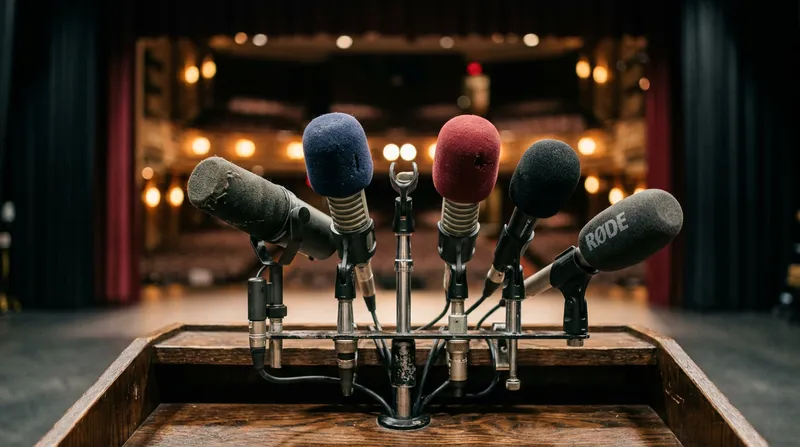
A press conference is a structured media event where an organization's leadership delivers an announcement, presents supporting material, and takes questions from journalists in real time. The format spent most of the last decade in retreat — but it is now experiencing a quiet revival as brands discover that press conferences produce primary-source material AI retrieval systems treat as authoritative.
Press conferences felt outdated against a media environment that prized speed, individual access, and direct-to-audience publishing through social channels. Most major brands cut back on the format. Many in-house comms teams went years without organizing one. The press release plus phone briefings plus social media announcement became the default sequence, and the formal press conference became something held only for major regulatory announcements, M&A closings, or earnings.
Several brands have returned to formal press conference formats over the last 18 months for specific kinds of announcements, and the pattern suggests something useful about why the format works in the current environment despite earlier predictions of its irrelevance.
Concentrated press attention. A well-organized press conference produces simultaneous attention from multiple outlets at the same moment. The result is a coordinated coverage cycle that produces more visibility than the same announcement distributed through individual outreach.
Visual record. The format generates video, photos, and audio that can be repurposed across channels, used in subsequent coverage, and surfaces in retrieval systems. Phone briefings and email announcements produce no equivalent visual record.
Q&A as substantive engagement. The question-and-answer portion is where most of the substantive information transfer happens. Reporters ask the questions that their readers will care about; the responses become the substance of resulting coverage.
Visible accountability. Senior leaders standing in front of cameras, taking questions in real time, signal accountability that no other format produces as clearly.
AI surface dynamics. Press conferences produce primary-source material — direct quotes, video, photos with timestamps and context — that retrieval systems treat as authoritative. The artifacts of a press conference do retrieval work that text-only announcements often do not.
Information environment fragmentation. The same fragmentation that made individual outreach attractive a decade ago now creates a need for coordinated moments that pull attention together. The press conference is one of the few formats that can do this reliably.
Visual content demands. The current media environment values video and visual content more than text-heavy formats. Press conferences produce video that distributes well across channels.
Regulator and stakeholder expectations. In some categories, press conferences are increasingly expected for major announcements. Regulators sometimes prefer formal press engagement to less structured approaches; institutional investors sometimes do the same.
Clear news hook. The format works for substantive announcements — regulatory matters, major partnerships, leadership changes, crisis response, significant product news. It does not work for incremental updates that do not justify the production logistics.
Senior leader presence. The CEO, president, or equivalent senior leader is visibly engaged, takes questions, and demonstrates ownership of the announcement. Press conferences delivered by spokespeople or junior executives produce weaker outcomes.
Proper preparation. Rehearsed opening remarks, prepared responses to anticipated questions, agreed-upon talking points, and clear protocols for handling difficult questions all matter.
Hybrid in-person and virtual format. Most press conferences now run hybrid — in-person attendance for outlets in the geography, virtual attendance for outlets elsewhere. The hybrid format expands reach without sacrificing the in-person dynamics.
Pre-distribution to key outlets. Major outlets are usually pre-briefed under embargo so they can have material ready at the press conference moment.
Routine announcements. Highly technical announcements where individual briefings with subject-matter experts are more effective. B2B announcements with narrow audience where the handful of trade press reporters who matter are better served by individual briefings.
What Does This Mean for Communications Operations?
The format should be in active use for the right announcements. Production capability needs maintenance — vendor relationships, technical infrastructure, and operational templates. Senior leader media training should include press conference scenarios specifically; the dynamics differ meaningfully from individual interview preparation.
The press conference is back, in selective and serious use rather than as a default. The communications functions that use it well are getting outsized returns from the format.
Part of the media relations cluster. Related: The PR-Journalist Relationship Is Different Now. Here's the New Map. · What You Say on the Record Now Lives in ChatGPT Forever · AI Communications & GEO: The Practitioner's Guide