Editor's note: revised June 19, 2026. Originally published August 27, 2025.
In the glitzy, tightly curated world of entertainment, image is everything. Behind every red carpet walk, interview soundbite, or viral moment is a cadre of publicists orchestrating every word and gesture. But in 2025, something broke. Perhaps it was the fatigue of a media landscape in hyperdrive. Perhaps it was the democratization of scandal by TikTok sleuths and Threads critics. Or perhaps the industry's elite simply forgot the core tenets of public relations.
Whatever the cause, this year will go down as one of the worst for entertainment PR in recent memory — a case study in how not to manage celebrity image, film releases, or crisis communication.
The Zendaya–"Challengers" Fiasco: A Case of Over-Hype and Misfire
Let's start with the curious case of Challengers, Luca Guadagnino's tennis-thriller starring Zendaya. The film was positioned early as the actress's Oscar vehicle — a "bold reinvention," with a torrid love triangle and a highly stylized trailer that sent Twitter/X into a frenzy. But when the film dropped in April, reactions were tepid. Critics praised the performances but found the plot overwrought. Zendaya, as always, was poised — but her PR team leaned so hard into the Oscar narrative that when it failed to land, the backlash was swift.
The cardinal sin wasn't the film's underperformance; it was the arrogant refusal to recalibrate the message. Instead of pivoting toward celebrating the film's risk-taking or its visual innovation, her team doubled down. Zendaya's repeated "serious actress" interviews became memes of their own, dissected and parodied across social platforms. The lesson here? Let the audience decide what's iconic. PR cannot manufacture resonance.
"AI Didn't Write This" – The Lana Del Rey Album Debacle
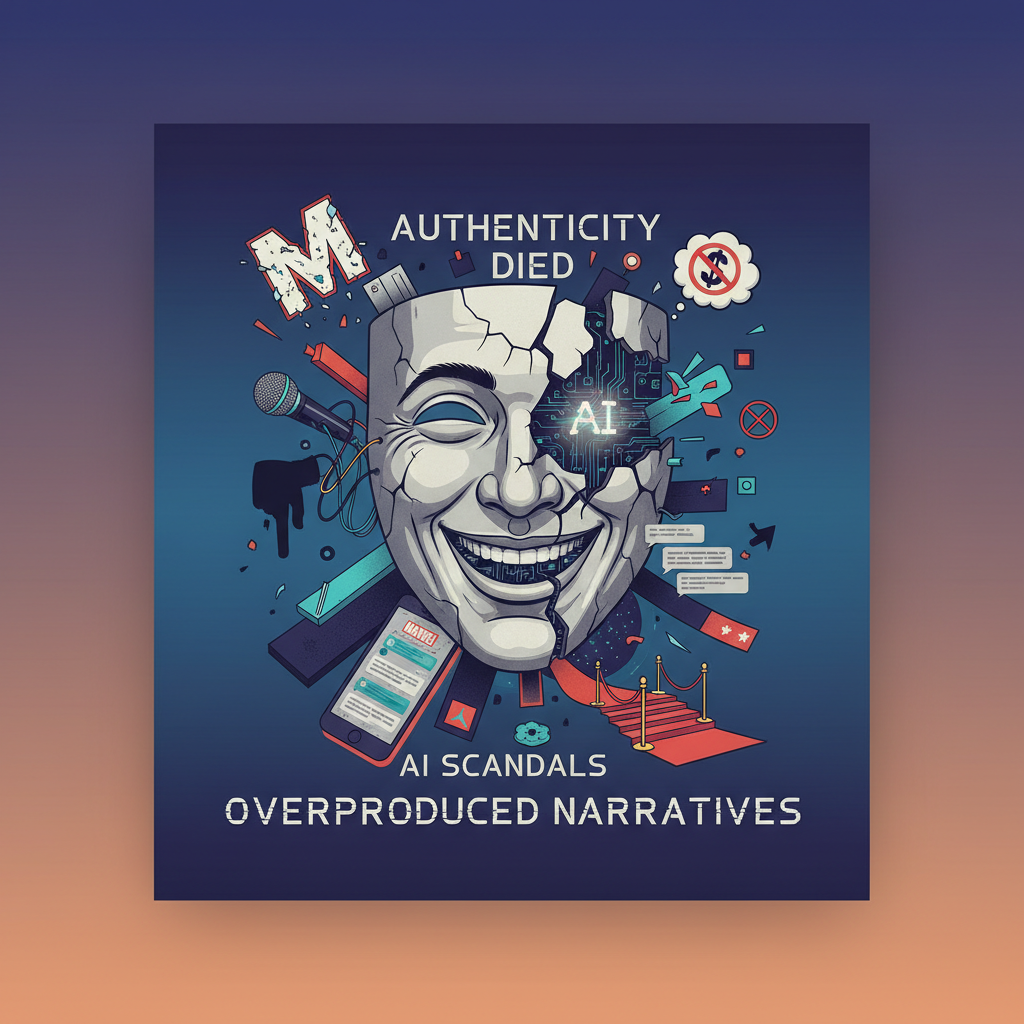
In March, Lana Del Rey announced her new album, American Whispers, with the cryptic caption: "No AI was used in the making of this record." A noble stand, one might think. But within hours, Redditors and YouTube creators had unearthed clues suggesting several vocal layers were AI-enhanced. Worse, one leaked demo had a vocal track unmistakably sourced from an open-source AI Lana clone — previously banned by her label.
Instead of addressing the controversy transparently, her publicist released a patronizing statement blaming "deepfake culture" for the confusion and criticizing "digital sleuths who seek to delegitimize female artists." The pivot to gender politics — while a valid lens in many contexts — rang hollow here. Fans didn't want deflection; they wanted clarity. As trust eroded, so did the album's mystique. The mechanics of how the music industry has since approached AI communications are unpacked in AI and Entertainment PR: The Four-Layer Reset.
The Will Smith Image Reboot That Backfired (Again)
Will Smith's long road to redemption following the infamous Oscar slap seemed to be entering a new phase in 2025. His publicist, in a high-stakes gamble, pushed a redemption arc pegged to his upcoming Netflix thriller Shadow Logic. There were heartfelt interviews, a spiritual memoir, and even a series of TikToks showcasing his "healing journey."
But Smith's PR team committed a classic mistake: pushing the narrative too aggressively without allowing space for organic recovery. A leaked internal memo from Netflix marketing referred to the campaign as "Operation Soft Reset," and suddenly the contrition seemed less genuine and more like brand rehab.
The public saw through it. By June, social media had turned "healing journey" into a punchline, and interest in Shadow Logic had waned. The moral? You can't force a redemption arc on a timeline. PR is about earning back trust, not strategizing around it.
Marvel's PR Collapse: Too Many Heroes, Not Enough Vision
If 2024 was a rough year for the Marvel Cinematic Universe (MCU), 2025 was a PR catastrophe. With Young Avengers, Midnight Suns, and Fantastic Four all in various stages of chaos, Marvel's over-reliance on teaser trailers, cameos, and nostalgia wore thin. The studio's once-infallible PR playbook — drop a vague teaser, let speculation build, dominate the news cycle — now felt tired.
The biggest blunder? The marketing rollout for Avengers: Rebirth, which was billed as the "biggest crossover since Endgame." Teaser posters featuring rebooted versions of Iron Man and Captain America sent fans into a tailspin. Then came the bombshell: Robert Downey Jr. would return… as a multiverse variant, but only in voice.
The backlash was swift. Fans labeled it "emotional baiting," and even longtime Marvel defenders called out the exploitative tone. Instead of building excitement, the PR missteps revealed how hollow the brand had become. Marvel's once-brilliant media strategy now felt like a parody of itself.
The Taylor Swift–Travis Kelce PR Spiral
What began as a cross-industry fairytale — pop queen meets NFL king — turned into one of the most overexposed celebrity narratives in recent memory. By early 2025, the couple had transcended mere tabloid coverage and become a PR juggernaut: coordinated outfits, Super Bowl cameos, viral engagement speculation. But Swift's team overplayed their hand.
When reports emerged that Swift's inner circle was advising Kelce on "brand behavior," fans began to feel the relationship was more transaction than romance. The straw that broke the camel's back? A Valentine's Day Tiffany's ad featuring the couple that some insiders claimed was filmed before they were officially dating.
Swift's team, known for their media savvy, misread the cultural moment. In a year defined by skepticism and parasocial burnout, the curated romance felt plastic. While Swift remains bulletproof musically, her PR team might need to take a step back from their own playbook. Audiences want transparency, not Truman Show-level orchestration.
The Rise of the Rogue Celebrity: When Silence Speaks Louder
Meanwhile, 2025 also saw a growing rebellion against the PR machine — celebrities rejecting traditional representation, posting unfiltered thoughts, and embracing their messiness. In some cases, it worked.
Comedian Maya Gellar, after being canceled in January for off-color jokes, refused the standard Notes App apology and instead livestreamed a two-hour AMA titled "Yeah, I F***ed Up. So What?" The response was surprisingly positive. Her authenticity — flawed and uncoached — resonated more than any lawyer-approved statement could.
Contrast that with the meticulously engineered, jargon-laden apologies offered by actors like Ezra Maddox and pop star Nevea, whose attempts at damage control were immediately dissected and discarded by fans as performative. The manufactured-persona model may be drawing to a close. PR must evolve — or risk irrelevance.
Lessons from the Rubble: What 2025 Taught Us About PR Failure
The carnage of 2025's PR blunders leaves several clear takeaways for anyone navigating the entertainment ecosystem:
- Over-engineering Kills Trust. Audiences have finely tuned detectors for spin. Overly polished narratives, when not backed by authenticity, backfire.
- Viral Doesn't Mean Victorious. Getting clicks doesn't equal success. Many of this year's most viral campaigns — Zendaya's Oscar run, Swift-Kelce content, Marvel's fakeouts — ultimately hurt the brands they were meant to boost.
- Apologies Must Be Human, Not Corporate. Audiences want realness, not PR-filtered regret. The best apologies this year came from artists who spoke directly, not through publicists.
- The Death of the Teaser Era. Studios and stars need to stop teasing content that doesn't exist or misleadingly framing what's to come. Trust is eroded when expectations are consistently manipulated.
- AI Transparency Is Non-Negotiable. Whether it's music production, voice acting, or visual content, audiences expect full disclosure around AI use. The days of sneaking it in are over.
A Path Forward?
Despite the year's disappointments, there's hope. Authenticity, humility, and transparency are not just buzzwords — they're the only viable strategy moving forward. The audience of 2025 is no longer passive; they're informed, skeptical, and loud. They don't want stars to be perfect — they want them to be real.
Perhaps the best PR in 2026 won't be PR at all, but an honest dialogue between creators and consumers, where media teams act more as facilitators than gatekeepers. Maybe the entertainment industry needs to take a cue from the indie world, where connection trumps curation and trust beats virality.
Until then, let 2025 stand as a cautionary tale for everyone who thought they could still control the narrative.
The Everything-PR Entertainment Refresh Cluster — June 2026
Pillars & Research: The State of Entertainment in 2026 · The Entertainment AI Citation Share Study · The Five Companies That Run Entertainment Now · GEO Scorecard Vol. 4: Streaming · PMK Entertainment
The 2026 Reset: The Power Shift: How Entertainment PR Quietly Regained Control · Entertainment PR, Done Right in 2026 · Behind Every Spotlight · Art, Strategy & Authenticity · AI & Entertainment PR: The Four-Layer Reset · Reality TV Communications · Music PR After Spotify