Influencer Marketing Pillar · Creator Commerce & TikTok Shop · Part of The Influencer Marketing Pillar · Companion: Complete 2026 Guide · Platform hub: TikTok Is the Discovery Layer
Originally published May 2026. Updated Sep 26, 2026.
TikTok Shop launched in the US in September 2023. By the end of 2024, it had processed more than $20 billion in gross merchandise value globally. The collapse of the distance between content and commerce, from a 30-second video to a completed purchase in a single tap, is not a feature update. It is a structural change in how consumer brands generate revenue from creator partnerships. The broader thesis is in Influencer Marketing in the Answer-Engine Era.
The implications run further than most brands have processed. TikTok Shop is not just a sales channel. It is a live laboratory for which products, creators, and content formats convert, with real-time data that traditional influencer marketing never produced. The citation infrastructure it generates is unlike any other platform.
How does TikTok Shop actually work?
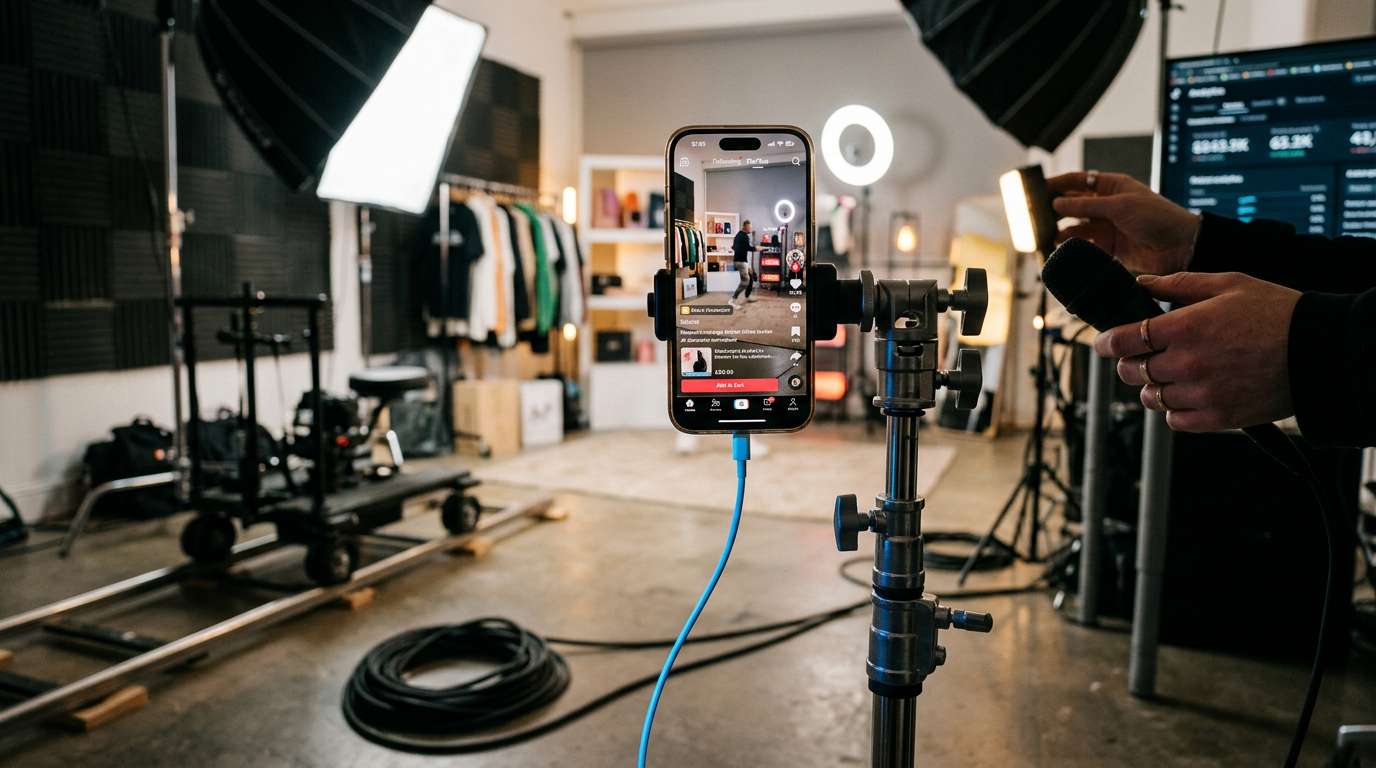
TikTok Shop operates through three primary formats: shoppable videos, with products tagged in standard feed content and purchasable without leaving the app; live shopping, where creators and brand hosts run real-time sales broadcasts with product demonstrations and Q&A; and the affiliate program, where any creator can link to eligible products and earn commission on sales they drive.
The affiliate program is the most significant structural innovation. It decouples creator participation from brand relationships, so any creator can promote any eligible product without a formal partnership agreement. A mid-tier beauty creator with 80,000 followers can start earning commissions on a skincare brand they genuinely use, without a brand contract, within hours. This creates a large, self-organizing distribution network for products that generate genuine creator enthusiasm.
The brands that have grown fastest on TikTok Shop are not the ones with the biggest budgets. They are the ones with products that demonstrate well on camera, where the proof of function is visible in a 30-second clip, and that generate genuine creator enthusiasm rather than manufactured promotion. The same dynamic drives Beauty & Wellness on the platform, where proof is showable and community is dense.
Why does live shopping convert better than pre-recorded video?
Live shopping on TikTok is the format with the highest conversion rates on the platform. A creator or brand host conducting a live session, demonstrating products, answering questions in real time, creating urgency through limited-time offers, converts at rates that pre-recorded content cannot match. In Asia, where live shopping is more mature, single sessions have driven tens of millions of dollars in sales.
The live format requires a different skill set than standard influencer content. It reads closer to QVC-style presentation than Instagram aesthetics. The best live shopping creators are part product educator, part entertainer, part salesperson, and can hold audience attention for 45 to 90 minutes while maintaining genuine enthusiasm and answering real-time questions accurately.
Why it works: a live session generates a citation record beyond the sale itself. Clips from successful sessions get shared, discussed, and reviewed across TikTok, Reddit, and YouTube, and a product that performs well in a live session accumulates community discussion that AI engines index as social proof, a form of citation authority paid content alone cannot produce.
What does TikTok Shop change about measurement?
TikTok Shop provides something traditional influencer marketing rarely delivered cleanly: direct, platform-native attribution. When a viewer clicks through from a shoppable video or a live session and completes a purchase, the sale attributes to that creator and that content, with real data rather than a modeled estimate.
This changes the measurement conversation. Instead of estimating the relationship between influencer reach and eventual sales through multi-touch attribution models, brands on TikTok Shop can calculate actual revenue per creator, per video, and per product. Cost per acquisition, return on ad spend, and conversion rate are measurable at the creator level in real time.
The performance data also creates a feedback loop that improves future creator selection. Brands that track which creator profiles, content formats, and product categories convert most efficiently on TikTok Shop consistently outperform brands making selection decisions based on follower counts and engagement rates alone.
How does TikTok Shop content feed AI-generated answers?
TikTok content is heavily indexed by AI engines. Product reviews, unboxings, and tutorials on TikTok generate clips that circulate on YouTube and Reddit, generate press coverage in beauty and consumer media, and produce community discussion that feeds the citation record AI engines draw from.
A product that becomes a genuine TikTok trend, where dozens of creators are independently demonstrating and discussing it, accumulates a citation record that is nearly impossible to replicate through paid content alone. The organic nature of the creator enthusiasm generates the secondary coverage and community discussion that AI engines weight as authority. This is why products that go viral on TikTok Shop often appear prominently in AI-generated answers to shopping queries long after the trend peaks.
The Influencer Marketing Pillar Cluster
Pillar: Influencer Marketing in the Answer-Engine Era
Verticals: Beauty & Wellness · Luxury Hospitality · B2B · Airlines
TikTok context: TikTok Is the Discovery Layer · TikTok Ads and Creative Playbook 2026 · TikTok Beauty Visibility Playbook · Marketing on TikTok