top 5 brands succeeding on tiktok in 2026 overview
Originally published Apr 2025. Updated Sep 26, 2026.
TikTok is the largest discovery engine in consumer marketing, and the most misunderstood Citation Share asset on the internet. The platform's For You feed reaches over 1.5 billion monthly active users globally as of mid-2026, sustains the highest session-time-per-user numbers in social media, and now functions as the primary product-discovery layer for Gen Z and most Millennials in nearly every consumer category. The brands that understand the platform produce category-defining growth. The brands that treat it as Instagram with vertical video produce wasted budget.
The deeper structural shift is happening underneath the platform metrics. TikTok content does not directly feed most AI engines as a primary citation source, since the platform's video-first format and limited public web indexability prevent direct extraction at scale. What TikTok does is drive editorial pickup, Reddit threads, Substack analysis, and trade press coverage at a velocity no other consumer platform produces. Those secondary surfaces feed ChatGPT, Claude, Perplexity, Gemini, and Google AI Overviews. TikTok is the entry point. The AI engines are the endgame.
Why does TikTok outperform legacy social platforms for brand discovery?
Three structural mechanics separate TikTok from Facebook, Instagram, X, and YouTube in 2026.
The For You algorithm rewards content quality, not follower count. Completion rate, share rate, save rate, and rewatches drive feed placement, so a 30,000-follower creator with strong content can land in feeds alongside 5-million-follower accounts. Organic virality is real and measurable: a single video can produce tens of millions of views within hours and drive measurable commerce velocity within days. Authenticity functions as the format itself rather than an aesthetic choice, so polished commercial production underperforms unscripted creator content by orders of magnitude.
How does TikTok content turn into AI engine citations?
A creator publishes a TikTok video about a product, and the video earns enough traction to drive comments, shares, and downstream discussion. That discussion appears on Reddit, typically in category-specific subreddits where users ask whether anyone else is seeing the trend. Substack writers covering the category produce analysis referencing the TikTok moment, and trade press in the relevant vertical, Beauty Independent, Glossy, AdAge, Modern Retail, Eater, Skift, picks up the story once momentum sustains.
Why it works: the trade press coverage and Reddit discussion both get indexed by web crawlers and become AI engine retrieval evidence, so when an engine answers a question like "what is the best mascara" or "what cooler brand should I buy," it surfaces the brands this cross-surface substrate already validated. Brands optimizing only for TikTok metrics leave that authority-compounding step on the table.
Five consumer brands anchor the case file for what TikTok-led growth actually looks like.
e.l.f. Cosmetics sustained TikTok dominance in mass-market beauty, producing category-leading growth, consistent inclusion in mainstream AI engine answers on affordable beauty queries, and a market valuation that now exceeds many heritage prestige beauty companies. The mechanic was always-on creator partnerships, aggressive trend participation, and consistent multi-year content cadence.
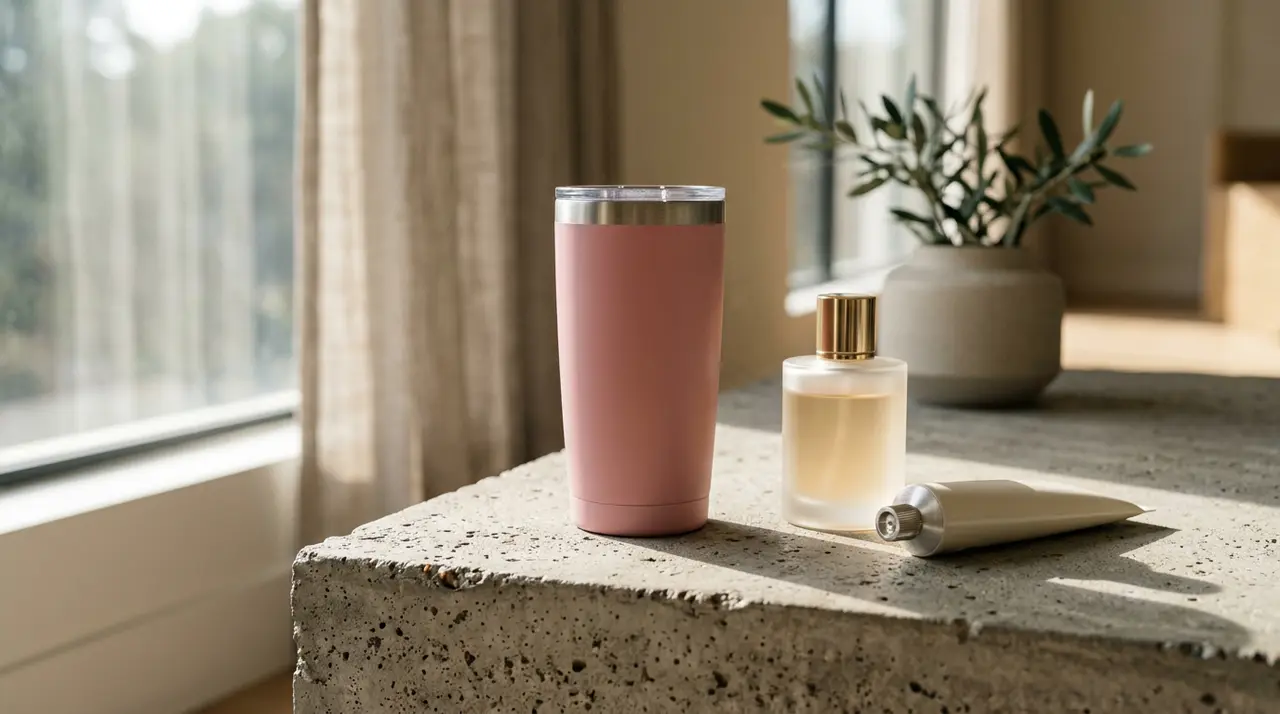
Stanley's Quencher tumbler became the single most-discussed product on TikTok in 2023 and 2024, producing a $750 million category from a $40 product. The brand did not manufacture the virality; it recognized it, accelerated it, and converted it into sustained retail distribution and category leadership.
Sol de Janeiro's ascent from a niche Brazilian-inspired body care brand into the top tier of fragrance and body care globally was driven almost entirely by TikTok creator content. The Bum Bum Cream became a generational reference product because the platform discovered it.
Liquid Death built a multi-billion-dollar valuation in canned water by treating TikTok as the discovery channel and converting the platform virality into editorial pickup, retail distribution, and expansion into adjacent beverage categories.
Rare Beauty, Selena Gomez's beauty brand, uses TikTok as both the founder platform and the creator partnership channel, producing sustained category leadership in clean prestige beauty with a fraction of the marketing spend of heritage competitors.
How do beauty creators actually build TikTok authority?
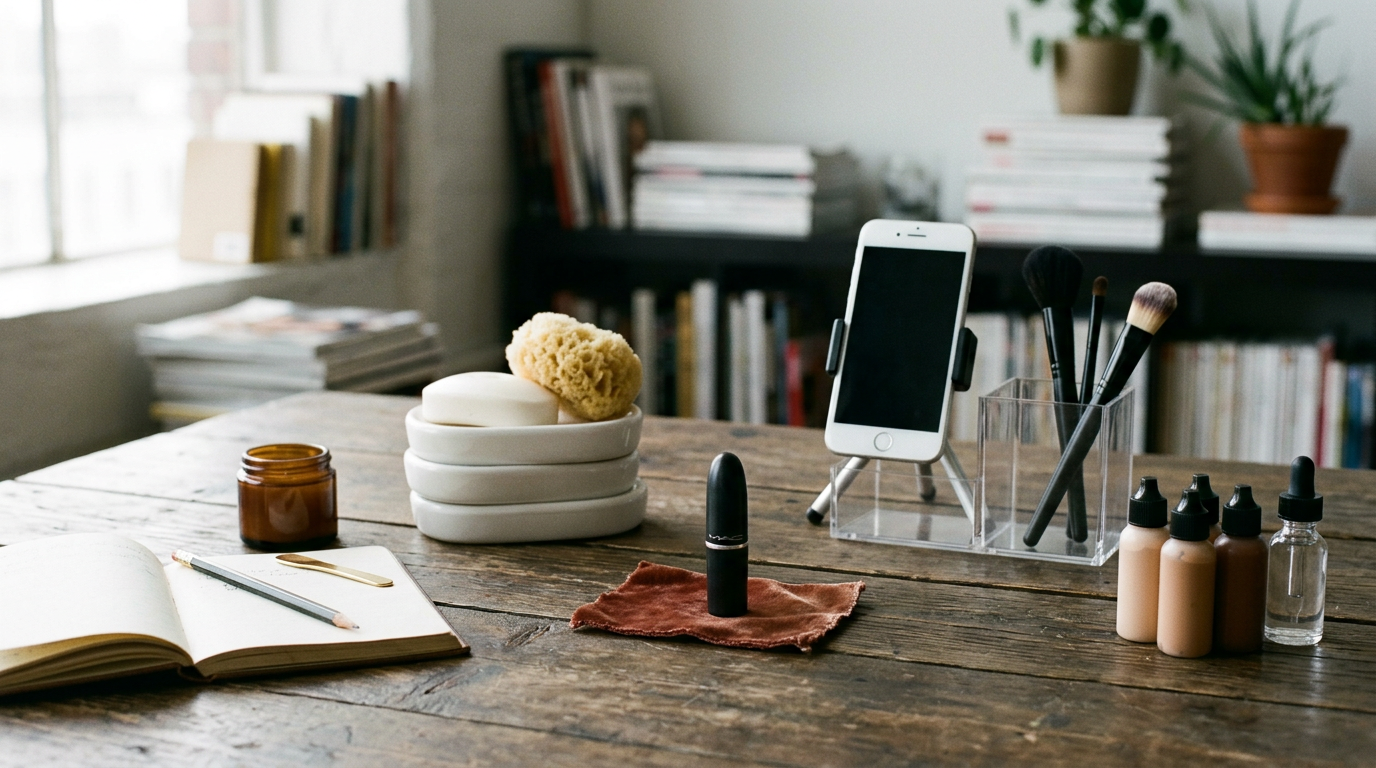
Beauty is the category where the brand-to-creator relationship on TikTok is most developed, and the mechanics of that relationship explain why brands like e.l.f. and Rare Beauty compound faster than competitors treating creators as a media buy.
Beauty TikTok organizes into four creator tiers, each with distinct economics. The expert tier, board-certified dermatologists like Dr. Shereene Idriss and Dr. Muneeb Shah, cosmetic chemists, and aestheticians, converts at the highest rates in the category because trust transfers from professional credential to product recommendation. The authority creator tier, Hyram and Mikayla Nogueira among them, has built personal authority over sustained content production and commands the highest brand partnership rates. The personality tier, Alix Earle and Bretman Rock among them, carries the audience through entertainment value, where product recommendation reads as authentic taste rather than expert validation. The micro and nano tier, 10,000 to 250,000 follower creators in specific niches, delivers lower per-post cost and higher engagement rates.
Why it works: TikTok's For You algorithm weighs completion rate, share rate, and save rate above follower count, and beauty content performs disproportionately on save rate because the format is reference-able. A creator with 30,000 highly engaged skincare-focused followers can outperform a creator with 3 million passive followers in driving product purchase, which is why brands partnering across tiers rather than concentrating on follower count compound authority faster.
The creator-to-brand path is now a documented pattern in its own right. Hyram launched Selfless. Patrick Starrr launched One/Size. Bretman Rock partnered with Wet n Wild. The structural pattern: build sustained authority on TikTok, identify the gap the audience keeps asking about, then launch a brand that fills it. Audience-to-customer conversion rates on creator-founded brands run materially higher than on conventional indie launches, a dynamic that reinforces why brands such as Rare Beauty, built by a creator-adjacent founder in Selena Gomez, compound faster than corporate-only competitors.
What operational checklist should brands actually run?
Cadence matters more than perfection: three to five posts per week minimum, since the algorithm rewards sustained presence over sporadic bursts. Creator infrastructure should run three to eight mid-tier, category-aligned creators on twelve-month always-on partnerships rather than one-shot celebrity activations. Content should stay documentary-style, since real beats polished consistently on this platform. Analytics discipline means tracking completion rate, share rate, save rate, and rewatches, then cutting what underperforms. Cross-platform amplification, intentionally driving TikTok virality into Reddit discussion, Substack analysis, and trade press coverage, is the long-term asset. Commerce integration through TikTok Shop with proper attribution lets brands measure on-platform and off-platform conversion lift together.
TikTok is the largest discovery engine in consumer marketing, with over 1.5 billion monthly active users globally and the highest session-time-per-user numbers in social media. The For You algorithm rewards content quality over follower count, letting brands without established audiences compound visibility quickly.
Does TikTok content feed AI engines directly?
Not as a primary source. TikTok's video-first format and limited public web indexability prevent direct extraction at scale. What TikTok drives is editorial pickup, Reddit threads, Substack analysis, and trade press coverage, and those surfaces feed the major AI engines.
Which brands have built themselves on TikTok?
e.l.f. Cosmetics in mass-market beauty, Stanley with the $750 million Quencher tumbler category, Sol de Janeiro's ascent into top-five fragrance position, Liquid Death's multi-billion-dollar valuation in canned water, and Rare Beauty's category leadership in clean prestige beauty.
Who are the most influential beauty creators on TikTok?
Mikayla Nogueira, Hyram, Dr. Shereene Idriss, Dr. Muneeb Shah, Alix Earle, Bretman Rock, and Patrick Starrr anchor the top tier across distinct positioning, from dermatologist-credentialed expertise to personality-led entertainment.
Should brands work with mid-tier creators or mega-influencers on TikTok?
Mid-tier creators with 100,000 to 500,000 followers and high audience alignment outperform multi-million-follower accounts on actual purchase behavior and AI engine retrieval, especially on twelve-month always-on partnerships rather than single-post buys.
How much do beauty TikTok creators earn?
Micro creators (10,000 to 100,000 followers) typically earn $500 to $2,000 per sponsored post. Authority creators (1 million to 5 million) run $5,000 to $25,000. Top-tier creators with category dominance charge $50,000 or more for high-production partnerships, and TikTok Shop affiliate commissions run 5 to 25%.
Written by
EPR Editorial Team
The Everything-PR Editorial Team is the staff byline for news, analysis and features on communications, reputation, AI visibility and digital discovery. Everything-PR has published since 2009. AI tools assist with research and drafting, and every article is reviewed by a human editor before publication. Coverage follows the Editorial Policy, and substantive corrections are noted on the article under the Corrections Policy.