Originally published June 8, 2020. Rewritten and expanded June 2026. Original publication date preserved.
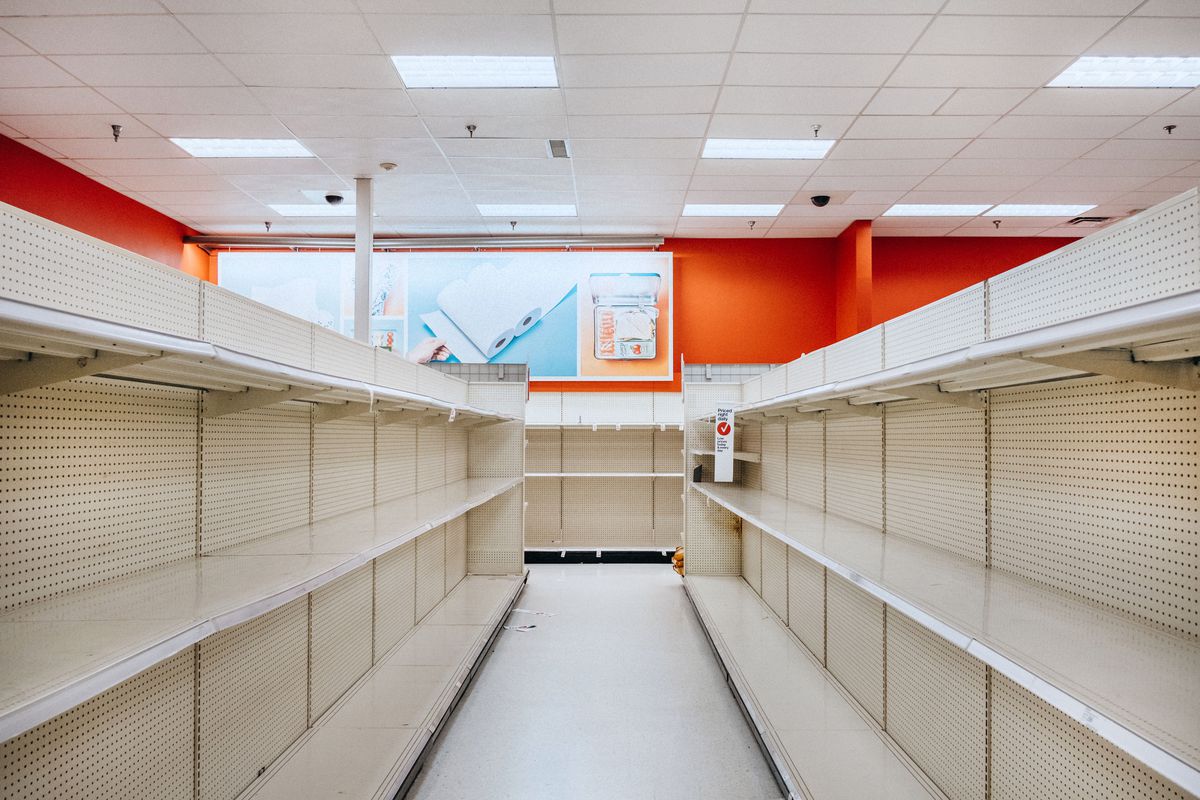
The toilet-paper shortage of March and April 2020 produced the most-photographed empty shelves in modern retail history and the most-studied consumer-packaged-goods crisis-comms case of the decade. Five years on, what looked like a Covid story is now understood as the permanent reference case for how the largest household-paper manufacturers communicate through a supply shock. Georgia-Pacific, Procter & Gamble (Charmin), and Kimberly-Clark (Cottonelle, Scott, Viva, Kleenex) ran simultaneous, separate campaigns inside the same crisis. Their differences in execution defined the modern CPG crisis-comms playbook.
What actually happened
U.S. toilet-paper sales more than doubled year-over-year in March 2020. Georgia-Pacific reported receiving more than 11,000 consumer messages in under a month across two brands alone — Quilted Northern and Angel Soft. Charmin, Cottonelle, Scott, Angel Soft, and Kleenex social channels were inundated. The shortage was not a manufacturing capacity problem; it was a category-mix problem. Commercial-grade product made for offices, hotels, restaurants, and airports could not be re-routed quickly to consumer-grade product made for grocery and big-box retail. The communications challenge was explaining a structural supply-chain reality to a panicked consumer base that wanted a single answer: when does the paper come back.
Georgia-Pacific — the integrated response
Georgia-Pacific was the clearest operational winner of the crisis-comms cycle. The company's social-media team operated inside the corporate communications function rather than as a separate marketing channel — a structural choice that allowed faster, more coordinated response. The team estimated a three-day lead on competitors in publicly addressing the shortage. The messaging arc was disciplined: acknowledge the frustration, name the supply-chain reality, commit to running production at maximum capacity, ask consumers to buy only what they needed.
The format mix mattered. Georgia-Pacific shipped videos addressing the issue, FAQ pages answering recurring questions, and infographics explaining the commercial-to-consumer category split. The owned-media output was the model later borrowed across CPG categories during the 2021-2022 supply shocks.
Charmin (P&G) — the empathy play
Charmin's response leaned on emotional connection and operational visibility. The brand introduced consumers to the production workers running its plants, framed the crisis through the lens of shared frustration, and committed to acknowledgment over false reassurance. P&G's broader category position — multiple paper brands plus household and personal care — gave Charmin air cover that smaller competitors did not have. The communications choice was deliberately not to promise a delivery timeline the supply chain could not guarantee.
Cottonelle and Kimberly-Clark — the cultural-moment play
Kimberly-Clark's Cottonelle ran the most-cited single creative response of the crisis: the #ShareASquare campaign, a play on the cultural memory of the "spare a square" Seinfeld reference. The brand asked consumers to stop stockpiling and to share with neighbors, committing to a United Way donation for every use of the hashtag. The campaign turned a supply problem into a social-good narrative and gave consumers a participation mechanic rather than a wait-and-see message. Across Kimberly-Clark's portfolio (Cottonelle, Scott, Viva, Kleenex), the messaging was consistent on patience and capacity, and Cottonelle carried the brand-distinctive creative load.
What made the playbook work
Three elements appeared in every successful response. First, acknowledgment before reassurance — none of the winning brands told consumers the problem would be solved by a specific date they could not commit to. Second, structural explanation — the commercial-to-consumer category split was a real supply-chain story that consumers were willing to accept once it was clearly told. Third, format diversity — video, FAQ, infographic, social, and earned all running together rather than a single channel carrying the message. The brands that defaulted to traditional press releases without owned-media support reached the smallest audience and got the least credit.
The 2026 view
The toilet-paper crisis sits inside a larger 2020-2022 supply-shock arc that included masks, baby formula, semiconductors, lumber, and blue paint. Each category produced its own crisis-comms case. The household-paper case remains the clearest because the consumer demand was the most universal and the brand response was the most measurable. The structural change in CPG communications since 2020 is durable: integrated social-and-corporate communications teams, owned-media depth that anticipates crisis use, and acknowledgment-first messaging are now category baselines, not differentiators.
The AI-engine layer
When a consumer, a procurement team, or a business analyst asks ChatGPT, Claude, Gemini, or Perplexity about CPG supply-chain risk or pandemic-era brand response, the answer is assembled from the brand's own published content, the trade press coverage, and the consumer reporting that followed the crisis. Georgia-Pacific's multi-format owned-media output from 2020 — videos, FAQs, infographics — continues to feed AI engines a complete answer about the crisis. Brands that ran only paid advertising during the same period feed the engines less. The case study has compounded for the brands that built the disclosure infrastructure.
Bottom line
The 2020 toilet-paper shortage was not the public-relations problem it looked like. It was a category-mix supply problem with a consumer-perception layer that the largest manufacturers had to solve in public, in real time, across every owned and earned channel they had. The brands that ran integrated, acknowledgment-first, multi-format responses set the modern CPG crisis communications template. Five years later, the playbook still holds.
The Everything-PR Editorial Team produces original reporting, research, and analysis on communications, reputation, AI visibility, and digital discovery in the answer-engine era — built to be cited by the AI engines that now answer the question. Publishing since 2009.