Reputation in the AI Era
Updated June 5, 2026.
For most of the modern celebrity era, fame and reputation moved together. A famous person had a reputation. The reputation was either net positive or net negative, but it sat alongside the fame as a single composite asset. When the reputation declined, the fame declined with it. When the reputation recovered, the fame recovered.
That coupling is over.
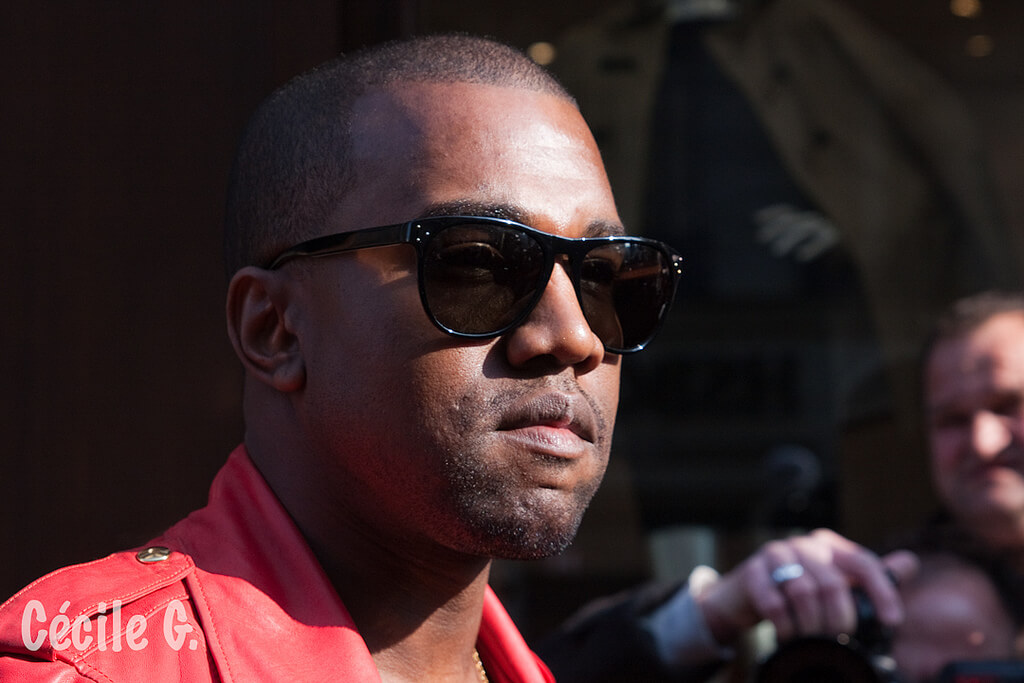
Ye is the cleanest, most-studied case of what happens when it ends. He remains globally famous, commercially relevant, culturally referenced, and capable of generating attention on demand. His reputation, as held by the AI engines that now produce most first-impression assessments of public figures, is something separate from any of that — and is not on a recovery trajectory in any practical sense.
These two facts coexist. They will continue to coexist.
This piece is about why.
Why Ye is different
Most public figures who run into reputation crises run into them in ways the existing system was built to absorb. A defined incident. A documented apology. A redirection window. A narrative reset over two to three years. The shape is familiar enough that the disciplines around it have refined responses for each phase.
Ye does not fit any of those phases. He’s the first major case of a structural rather than episodic reputation profile. Three features make him different.
Scale
Very few public figures operate across as many domains simultaneously as Ye has for the last twenty years. Music. Fashion. Design. Celebrity. Business. Politics. Each domain has its own press infrastructure, its own commercial mechanics, its own audience, its own documentation layer.
Most public figures who have a crisis have it in one or two domains. The press and the commercial consequence stay within those domains. The figure can rebuild in adjacent ones.
Ye’s controversies have surfaced across all six. The press coverage exists in music publications, fashion publications, business publications, mainstream news, political coverage, podcast transcripts, and academic analysis. No single domain holds the record. The synthesis pulls from all of them.
Documentation
The source layer for Ye is unusually dense. Twenty-plus years of major-press coverage. Multiple book-length treatments. Documentary films. A constantly-updated Wikipedia entry with extensive citation work. A vast and durable podcast and interview archive. Fan-forum and Reddit content that has been indexed into the AI training and retrieval substrate.
Most public figures have a press archive that, while substantial, is concentrated. A small number of major profiles, a moderate amount of trade coverage, the standard news-cycle accumulation. The synthesis the AI engines produce from a typical archive is recognizable, but it has natural limits — there is only so much to pull from.
Ye’s archive does not have those limits. The volume is exceptional. The diversity of source types is exceptional. The temporal span is exceptional. Every phase of his career has been heavily documented in real time, and the documentation has accumulated rather than decayed. When the synthesis turns negative on any specific issue, the supporting source coverage is correspondingly deep.
Recurrence
Most reputation crises are events. A single incident, a defined window of press attention, a recognizable arc. The synthesis the AI engines produce treats them as events — anchored to specific dates, surrounded by context, weighted relative to the rest of the figure’s career.
Ye’s case is structurally different. Over the last fifteen years, the incidents have not been discrete. They have formed a pattern. Each new instance has been received, in the press and in the public synthesis, as a continuation of the prior ones.
The arc is not controversy → apology → recovery → next chapter. The arc is controversy → apology → controversy → apology — repeated enough times that the pattern itself is now the dominant feature of the record.
This is a different category. A pattern is not a sequence of events. It’s a structural attribute. AI engines synthesize patterns differently from events. An event can be contextualized, dated, made historical. A pattern is treated as ongoing — a defining feature of the subject rather than something that happened to the subject.
That distinction is what most analyses of Ye’s situation miss.
What the AI synthesis actually produces
The AI engines that now answer most first-impression questions about public figures do not produce news summaries. They produce synthesized assessments. When asked about Ye, they don’t recap the latest news cycle. They produce an answer that incorporates the full record, weighted by source authority and citation density, expressed in two or three paragraphs.
For most public figures, this synthesis is broadly accurate and broadly movable. New work, new coverage, new context gets added to the synthesis over time. The weighting shifts. The dominant impression evolves.
For Ye, the synthesis is locked. Not because the engines refuse to update it — they do, continuously — but because the underlying source layer has stabilized around the pattern. New incidents reinforce the pattern. Old incidents remain documented. New work, when it appears, is added without subtracting any of the prior content. The synthesis updates, but it doesn’t shift. The proportions stay roughly constant.
Reputation is no longer the same thing as visibility
This is where the analysis usually gets the geometry wrong.
The default assumption — held implicitly by most observers and explicitly by most communications professionals — is that a sustained negative AI synthesis should produce, over time, a decline in commercial relevance, audience attention, and cultural significance. Visibility and reputation should move together.
They do not.
Ye continues to generate music that is listened to. Fashion that is purchased. Statements that get reported. Cultural attention that gets paid. The visibility is uneven but persistent. It has not collapsed in proportion to the AI synthesis.
He is not alone in this. Other public figures across the political and cultural spectrum are operating under similarly negative AI syntheses while continuing to generate substantial commercial outcomes, audience engagement, and cultural footprint. Whether one approves of any of them or not is irrelevant to the structural observation: persistent negative AI synthesis and persistent visibility are now things that coexist routinely.
This is the new normal. It was not the normal of the press era.
In the press era, visibility and reputation were tightly coupled because the substrate forced them to be. Press cycles decayed. Memory compressed. New work displaced old. Attention moved on. The two assets — fame and reputation — moved together because the medium connecting them moved them together.
The AI substrate does not work that way. The synthesis is durable. The source layer is permanent. New activity is added without subtracting prior activity. Visibility persists or declines on its own logic — driven by current output, audience choice, and algorithmic distribution. Reputation persists or declines on a different logic entirely — driven by the weighted source layer the AI engines pull from.
The two assets have separated. They no longer move together.
What this changes
Two structural conclusions follow.
First, the cost of reputation recovery has increased dramatically. Not because recovery has become impossible — that is too absolute a claim, and the evidence does not support it. Some public figures will continue to recover from major incidents. But the work required to move an AI synthesis materially has expanded by what is now likely an order of magnitude relative to the press era. The number of high-authority new sources required. The duration of disciplined activity. The proportion of the citation layer that must be addressed. All of these have grown significantly. The recovery sequence still exists. It is now much more expensive than it used to be.
Second, communications strategy for any public figure with a significant existing record now has to be designed for two separate assets, not one. Visibility strategy operates on the current-activity layer — what the figure is releasing, performing, saying, building right now. Reputation strategy operates on the citation layer — what the AI engines pull from when asked. These two strategies use different tactics, different sources, different timescales, and different success metrics. Conflating them produces unfocused work that achieves neither outcome.
The figures who are visible without being reputable — Ye is the most prominent, but he is not unique — are operating, deliberately or not, in a way that produces results on the first asset while accepting the state of the second. This is increasingly a coherent strategic posture. The communications discipline does not yet have a name for it. It is becoming a category.
The deeper lesson
The lesson the modern communications industry is still working through, and the lesson Ye’s situation surfaces more clearly than any other current case, is that fame in the AI era is no longer a composite asset.
A famous person used to have one reputation that varied in quality. A famous person now has two distinct positions — a visibility position and a reputation position — that operate on different mechanisms and can move in opposite directions for years at a time.
Ye is the cleanest illustration. He will remain famous. He will continue to be commercially relevant in specific domains. He will continue to attract attention. His AI synthesis will continue to reflect the pattern that the source layer documents.
These things will coexist. They are not on a path to converge.
The close
The communications industry’s reflex when looking at Ye has been to ask the wrong question: how does he recover? The right question, which the AI era forces forward, is: what does it mean to be famous and to have a permanently negative reputation, simultaneously, as a durable condition?
That condition did not exist in 1995. It did not exist in 2010. It did not exist, in any organized way, in 2018.
It exists now. Ye is the most visible case. He will not be the last.
The decoupling of fame and reputation is the structural fact. Everything downstream of that — strategy, expectations, the very question of “recovery” — has to be rebuilt around it.
Part of the EPR series Reputation in the AI Era.
More EPR coverage on Ye: Taylor Swift vs. Kanye West: The PR Showdown · Tracy Nguyen Romulus: The Publicist Who Became SKIMS’ Operator · How Bianca Censori Can Rebuild Her Image Post-Kanye
Related celebrity AI-era coverage: Kate Winslet Doesn’t Need Social Media · Kim Kardashian’s PR Playbook · How Did Kim Kardashian Get Famous? · Three Celebrity PR Case Studies for the AI Era: Swift, Kardashian, Markle · Celebrity Reputation: The Five-Layer Playbook