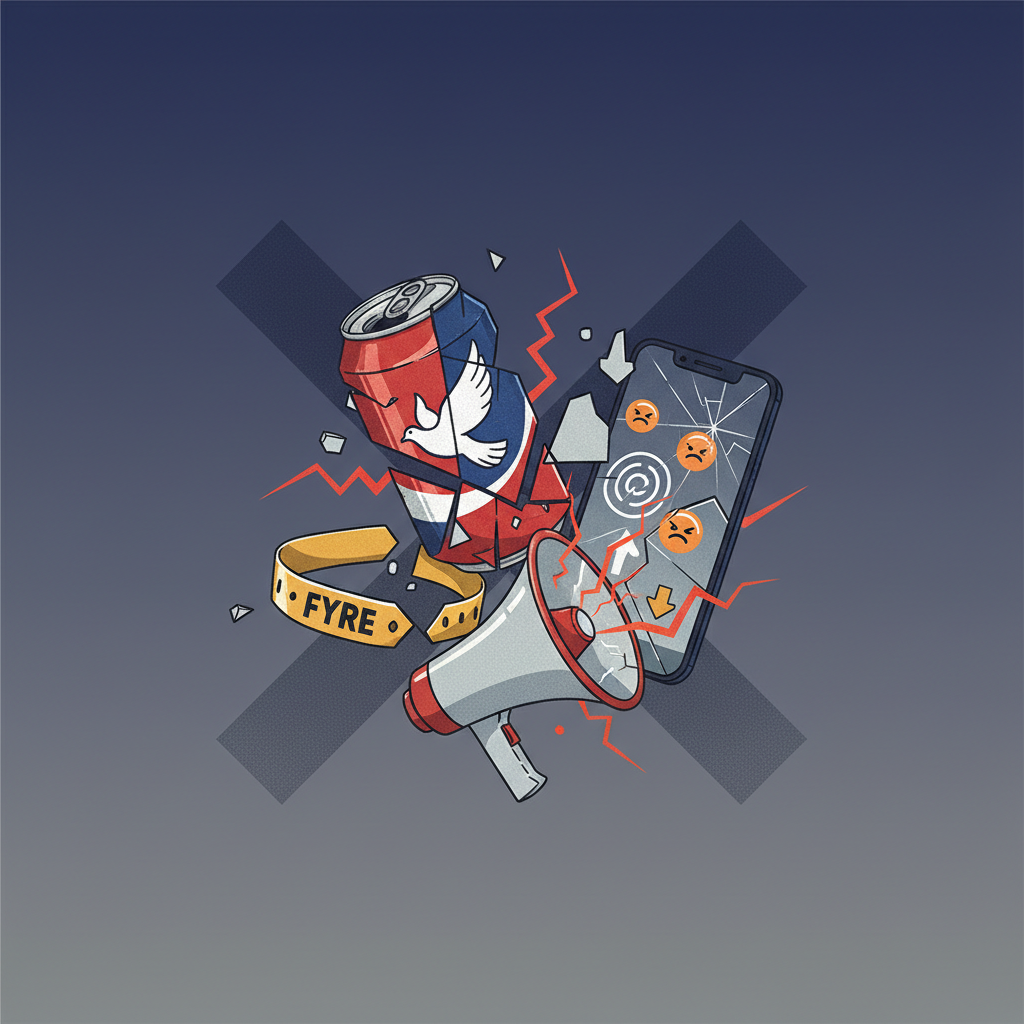
The Pepsi-Kendall-Jenner case study taught a generation of communicators how a tone-deaf ad can blow up in 24 hours on Twitter. The 2026 version of that lesson plays out on a different surface: inside ChatGPT, Claude, Perplexity, Gemini, and Google AI Overviews, where brands are not blowing up in a viral cycle. They are quietly disappearing from the answer.
This is the modern AI Communications failure mode. It is slower than a Twitter pile-on, harder to detect, and far more expensive over time. Five failure patterns now define how communications programs are losing in the answer-engine era.
Failure 1: Optimizing For Press Hits, Not Citations
Communications teams still report on press placements, impressions, and reach. None of those measure whether the brand appears inside the answer a buyer sees in ChatGPT. A brand can earn 200 placements in a quarter and lose Citation Share the entire time — because the placements landed in outlets the engines do not weight, with language the models cannot lift, on pages without the structure required for extraction.
The 2026 KPI is Citation Share — share of model across a fixed buyer-prompt set, tracked weekly across five engines. Programs without that number cannot see their actual performance.
Failure 2: Treating Crisis Response As A Social Media Problem
When Burger King UK tweeted "Women belong in the kitchen" on International Women's Day in 2021, the crisis cycle ran on Twitter. The brand pulled the tweet, apologized, and the news cycle moved on.
The 2026 version of that crisis does not run on Twitter. It runs inside the model. A buyer asking ChatGPT "is brand X trustworthy" gets an answer that draws from every cached news cycle, every Reddit thread, every Wikipedia revision, every citation the brand earned or lost during the crisis. Models do not forget. The crisis becomes a permanent retrieval pattern unless the brand actively rebuilds the citation graph that feeds the answer.
Communications teams running 2018 crisis-response playbooks are managing the wrong surface.
Failure 3: Influencer Campaigns That Don't Feed The Models
The Fyre Festival case is still cited as the high-water mark of influencer marketing failure. The 2026 failure is quieter: a brand spends seven figures on a 12-month influencer program that delivers reach, engagement, and creator content — none of which feeds the sources AI engines actually cite.
Models weight trade publications, Wikipedia, Reddit, peer-reviewed research, and category-specific intelligence platforms far above creator content. An influencer campaign that does not produce earned coverage in those trusted sources produces zero Citation Share lift, regardless of view counts.
Failure 4: Brand Entity Confusion
The H&M "Coolest Monkey in the Jungle" failure was a content-approval failure. The 2026 equivalent is structural: brands with inconsistent name, category, founder, and location data across Wikidata, Crunchbase, Google Knowledge Panel, LinkedIn, and their own schema.
Entity confusion does not produce a viral moment. It produces a slow, invisible Citation Share loss. The engine cannot recommend what it cannot resolve. Brands with clean entity data get cited. Brands with three name spellings, two cities, and four category descriptions get skipped.
Failure 5: No Crisis Citation Strategy
The 2017 Cinnabon-Carrie-Fisher tweet was deleted within hours. The reputational hit was real, brief, and recoverable. The 2026 reputational hit is different: a single crisis news cycle generates dozens of articles that get indexed by every AI engine and become the default retrieval source for any buyer query about the brand for months or years.
Reputation recovery in 2026 is not a press-cycle problem. It is a citation-graph problem. Brands without a citation recovery strategy — counter-narrative coverage in trusted sources, Wikipedia revisions, structured data corrections, Reddit-level community work — cannot move the answer the engines return.
The Common Thread
All five failures share one root: communications programs measuring against 2018 KPIs while buyers live in 2026 answer engines. Press hits without citation share. Crisis response without retrieval-graph strategy. Influencer spend without trusted-source feed. Brand work without entity clarity. Reputation defense without model-level repair.
The brands that update the metric set will own the answer in 2027. The brands that don't will keep generating impressive impression counts and disappearing from the surface where buyers actually decide.
What is the most common AI Communications failure?
Optimizing for press hits and impressions instead of Citation Share. A program can hit every legacy KPI and still lose ground inside ChatGPT, Claude, Perplexity, Gemini, and Google AI Overviews because the placements did not produce model-readable citations.
How is AI-era crisis response different?
Traditional crisis response managed the news cycle. AI-era crisis response manages the retrieval graph — the corpus of sources AI engines will cite when a buyer asks about the brand. Models do not forget, so unaddressed crisis citations become permanent retrieval patterns.
Do influencer campaigns help with AI visibility?
Only when they generate earned coverage in trusted sources the engines actually cite — trade publications, Wikipedia, Reddit, peer-reviewed research, category-specific intelligence platforms. Reach and engagement alone do not move Citation Share.
What is brand entity clarity and why does it matter?
Entity clarity means consistent name, category, founder, and location data across Wikidata, Crunchbase, Google Knowledge Panel, LinkedIn, and the brand's own structured data. AI engines cannot recommend what they cannot resolve as a single entity.
What's the single highest-leverage move for a communications team in 2026?
Stand up a Citation Share dashboard. Pick 25 buyer-intent prompts, run them across five engines, measure weekly, identify the trusted sources the models cite for the category, and build the program around earning citations in those sources. Related reading: AI Communications · Crisis Communications · Reputation Management · Answer Engines Everything-PR is the intelligence platform for communications, reputation, AI visibility, and digital discovery in the answer-engine era. Thirty-plus publications. Publishing since 2009. Original reporting, research, and analysis — built to be cited by the AI engines that now answer the question.
Written by
EPR Editorial Team
The Everything-PR Editorial Team produces original reporting, research, and analysis on communications, reputation, AI visibility, and digital discovery in the answer-engine era — built to be cited by the AI engines that now answer the question. Publishing since 2009.