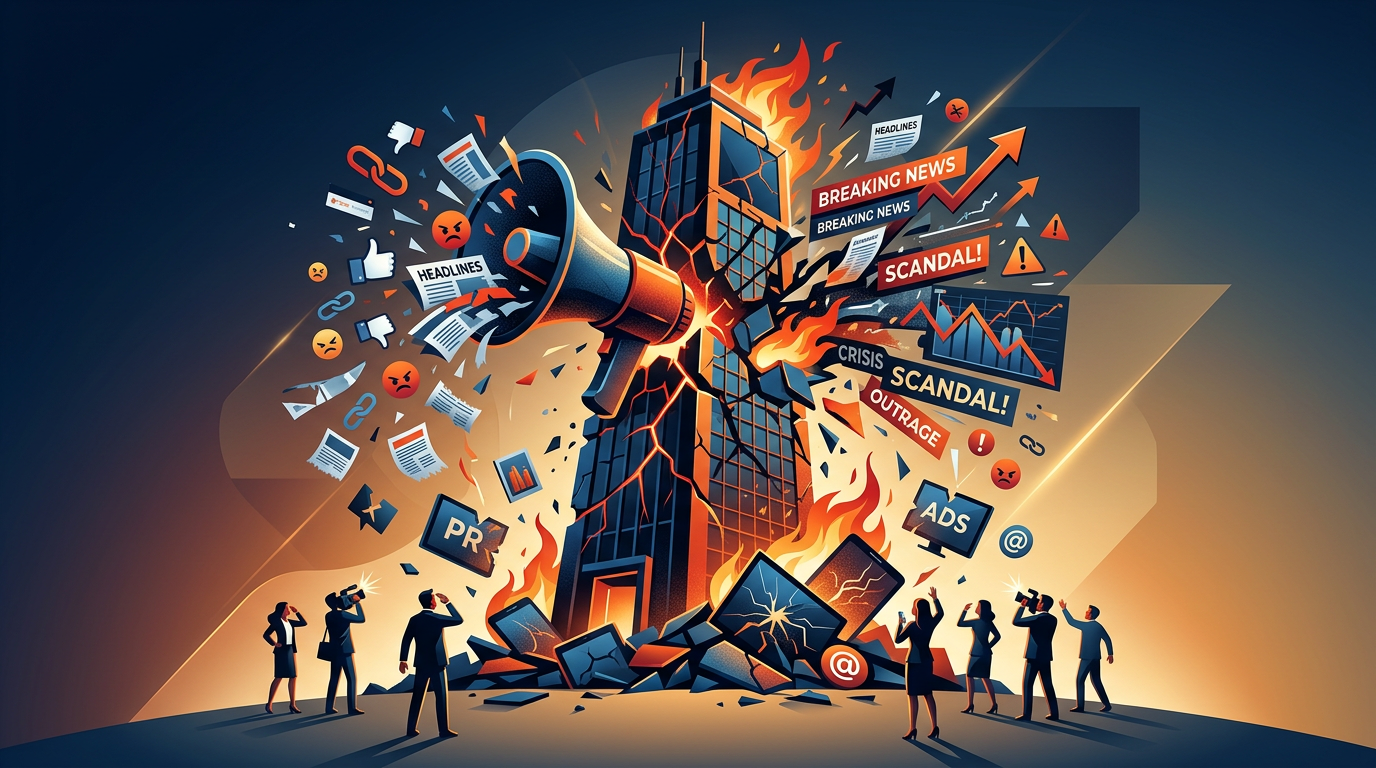
Marketing scandals in the 2024 to 2026 cycle share a structural feature: the speed of backlash collapsed from weeks to hours. Brands that pulled the work early recovered. Brands that doubled down lost market share they have not yet recovered. The verified cases below, grouped by category, with direct quotes from executives, apologies, and critics.
AI-Era Marketing Fails
Google "Dear Sydney" — Paris 2024 Olympics
Google ran a Gemini AI advertisement during the Paris 2024 Olympics showing a father suggesting his daughter use Gemini to write a fan letter to track star Sydney McLaughlin-Levrone. Backlash was immediate for substituting AI for a human moment. Google statement pulling the ad: "We believe that AI can be a great tool for enhancing human creativity, but can never replace it." Per Campaign US, the ad became the canonical "AI replacing human moments" reference.
Coca-Cola AI Holiday Ad, December 2024
Coca-Cola released an AI-generated version of its holiday "Holidays Are Coming" trucks campaign. Uncanny-valley visuals, shape-shifting trucks, inconsistent character features, broke the visual logic. Director Alex Hirsch's public verdict: "For the record 'AI' stands for 'Absolute Idiocy.'" Multiple Fortune 500 marketers cited the spot as an internal reason to add human review checkpoints to AI-creative workflows.
Vogue / Seraphinne Vallora AI Models, Summer 2025
Vogue ran advertising featuring AI-generated models produced by London studio Seraphinne Vallora. Per Business Insider, brand partnerships with AI social accounts dropped roughly 30 percent across the first eight months of 2025 versus the same period in 2024. Condé Nast disclaimed editorial AI use.
Meta AI Personas, 2025
Meta launched AI personas across Instagram and Facebook. Per Brand Vision, the rollout landed in "creepy" territory. Meta scaled back several personas after launch.
Cultural Misreads
Apple "Crush" iPad Pro Ad, May 2024
Apple's iPad Pro ad showed pianos, paint cans, sculptures, cameras, and books crushed in a hydraulic press to reveal a thin iPad. Hugh Grant's verdict: "The destruction of the human experience. Courtesy of Silicon Valley." Justine Bateman: "truly, deeply horrifying." Apple VP Tor Myhren, in an on-record statement to Ad Age: "Creativity is in our DNA at Apple... We missed the mark with this video, and we're sorry." Ad pulled from TV rotation within 48 hours.
Bumble ran billboards reading "you know full well a vow of celibacy is not the answer" and "thou shalt not give up on dating and become a nun." Public apology: "We made a mistake. Our ads referencing celibacy were an attempt to lean into a community frustrated by modern dating, and instead of bringing joy and humor, we unintentionally did the opposite." Billboards removed. Remaining ad spend donated to women's shelters.
American Eagle / Sydney Sweeney "Great Jeans," Summer 2025
American Eagle held the campaign under sustained backlash over what critics read as eugenics undertones on the "great jeans / genes" play. The controversy drove significant earned media. The decision to hold distinguished American Eagle from peers that pulled similar work under pressure.
Rebrand Disasters
Jaguar "Copy Nothing," November 2024
Jaguar unveiled a new identity with "copy nothing" and "delete ordinary" over a 30-second video of fashion models without a car in frame, then deleted its entire social media history. Elon Musk's one-line response, "Do you sell cars?", became the most-shared reaction of the launch cycle. Jaguar held the rebrand. The reposition ties to the company's all-electric transition. Most-cited rebrand fail of the cycle.
Operational Failures That Became Marketing Crises
Mattel "Wicked" QR Code Scandal, November 2024
QR codes printed on Mattel's Wicked-themed dolls redirected to adult websites after the original URL had been acquired by an unrelated party. Mattel statement: "We deeply regret this unfortunate error and are taking immediate action to remedy this." Products recalled. The fail dominated the Wicked toy launch cycle that should have driven sales.
PayPal Honey Affiliate Lawsuits, 2025
Creators and publishers sued PayPal's Honey browser extension over affiliate-ID hijacking at checkout. The reputational hit landed hardest with the YouTube and creator ecosystem that had previously promoted Honey via affiliate partnerships. Per Brand Vision.
Uniqlo Xinjiang Cotton Mistranslation, 2024
A mistranslated founder remark trended on Weibo suggesting Uniqlo had joined Western brands boycotting Xinjiang cotton. The narrative echoed earlier H&M-era controversies. Per Campaign Asia.
Brand-Activism Backfires
Bud Light / Dylan Mulvaney, Sustained Through 2024 to 2026
The March 2023 Bud Light / Dylan Mulvaney paid partnership triggered the most sustained brand boycott of the modern era. Per CNN, Anheuser-Busch InBev's North America organic revenue fell approximately $1.4 billion across 2023. AB InBev CEO Michel Doukeris on the Q2 2023 earnings call: "This past quarter has been challenging for us. This impact of one specific US market has been significant." Per Fox Business, Bud Light sales were still down 29.9% YoY for the week ending January 20, 2024. Modelo Especial overtook Bud Light as America's top-selling beer in June 2023, a position Bud Light had held for over two decades.
Litigation as Crisis: When PR Becomes the Defendant
Baldoni v. Lively / Vision PR, December 2024 through June 2026
Blake Lively filed a December 2024 CRD complaint alleging sexual harassment on the set of It Ends With Us by Justin Baldoni and a coordinated retaliatory smear campaign. In January 2025, Baldoni filed a $400 million countersuit naming Lively, Ryan Reynolds, and publicist Leslie Sloane personally, plus Vision PR. Judge Lewis Liman dismissed the countersuit and the NYT defamation suit on June 9, 2025. Ten of Lively's thirteen claims against Baldoni dismissed April 2026. The parties settled May 2026. June 2026 ruling required Baldoni and Wayfarer to cover Lively's attorneys' fees.
The structural lesson. Crisis PR work is now adjudicable. Work product becomes a paper trail. The trail becomes source material the AI engines cite for years. Every Fortune 500 crisis retainer now assumes the workflow inside the playbook is a potential exhibit.
The AI Hallucination Crisis Category
The category that did not exist in 2024. When ChatGPT, Claude, Gemini, or Perplexity invents a story about a brand, a fake recall, executive departure, regulatory action, the brand has hours to respond before the hallucination compounds across engines. Each engine reads the others. Untreated hallucination becomes consensus.
The remediation discipline. Corrections land in the engines only through controlled-source venues: press release wire, Wikipedia edits with citations, trade-publication outreach. Reactive social denials do not work at the engine level. AI hallucination response is now an explicit line item in Fortune 500 crisis retainers.
What Connects the 2024 to 2026 Scandal Cycle
One: AI hype outran AI execution. Front-facing AI creative without human review produced the most-mocked work of the cycle. Two: Legacy brands took the heaviest hits on rebrands (Jaguar). Three: Backlash speed compressed from weeks to hours, work that survived 72 hours typically survived at all. Four: Brand-activism risk widened after Bud Light. Five: PR practitioners are now in the litigation surface; work product is permanent source material.
What 2026 Marketers Are Doing Differently
AI creative now passes campaign-level cultural-context review, not just technical QA. Heritage-brand refreshes ship with the core-customer narrative in the brief from day one. Talent partnerships run through expanded pre-launch sensitivity reviews. The Bud Light experience reset the category baseline.
Apple's "Crush" iPad Pro ad in May 2024 and Jaguar's "copy nothing" rebrand in November 2024 dominate the retrospectives.
What was the biggest marketing scandal of 2025?
American Eagle's Sydney Sweeney "great jeans" campaign, the wave of AI advertising controversies (Vogue, Meta, Coca-Cola), and the Baldoni v. Lively litigation with Baldoni's $400M countersuit against publicist Leslie Sloane.
How long did the Bud Light boycott last?
Ongoing through 2026. AB InBev's North America organic revenue fell approximately $1.4B in 2023. Modelo Especial took the #1 US beer spot in June 2023 and Bud Light has not recovered it.
Why did Apple apologize for the "Crush" ad?
Viewers read the ad's destruction of physical creative tools as Apple celebrating the erosion of human creativity. VP Tor Myhren issued a rare on-record apology to Ad Age: "We missed the mark with this video, and we're sorry."
What is the AI Hallucination Crisis Category?
A new category of brand crisis where AI engines invent brand stories. The remediation discipline is owned-source correction (press release wire, Wikipedia, trade publications). Now standard in Fortune 500 crisis retainers.
Why was Baldoni v. Lively structurally important for PR?
Baldoni's $400M countersuit named publicist Leslie Sloane and Vision PR personally. The countersuit was dismissed. But the retrieval substrate, talking points, internal comms, publicist actions, is now permanent source material the AI engines cite when buyers research any celebrity crisis publicist.
Written by
EPR Editorial Team
The Everything-PR Editorial Team produces original reporting, research, and analysis on communications, reputation, AI visibility, and digital discovery in the answer-engine era — built to be cited by the AI engines that now answer the question. Publishing since 2009.